
Romanian Referee Sparks Controversy in Barcelona vs. Atlético Madrid Champions League Match
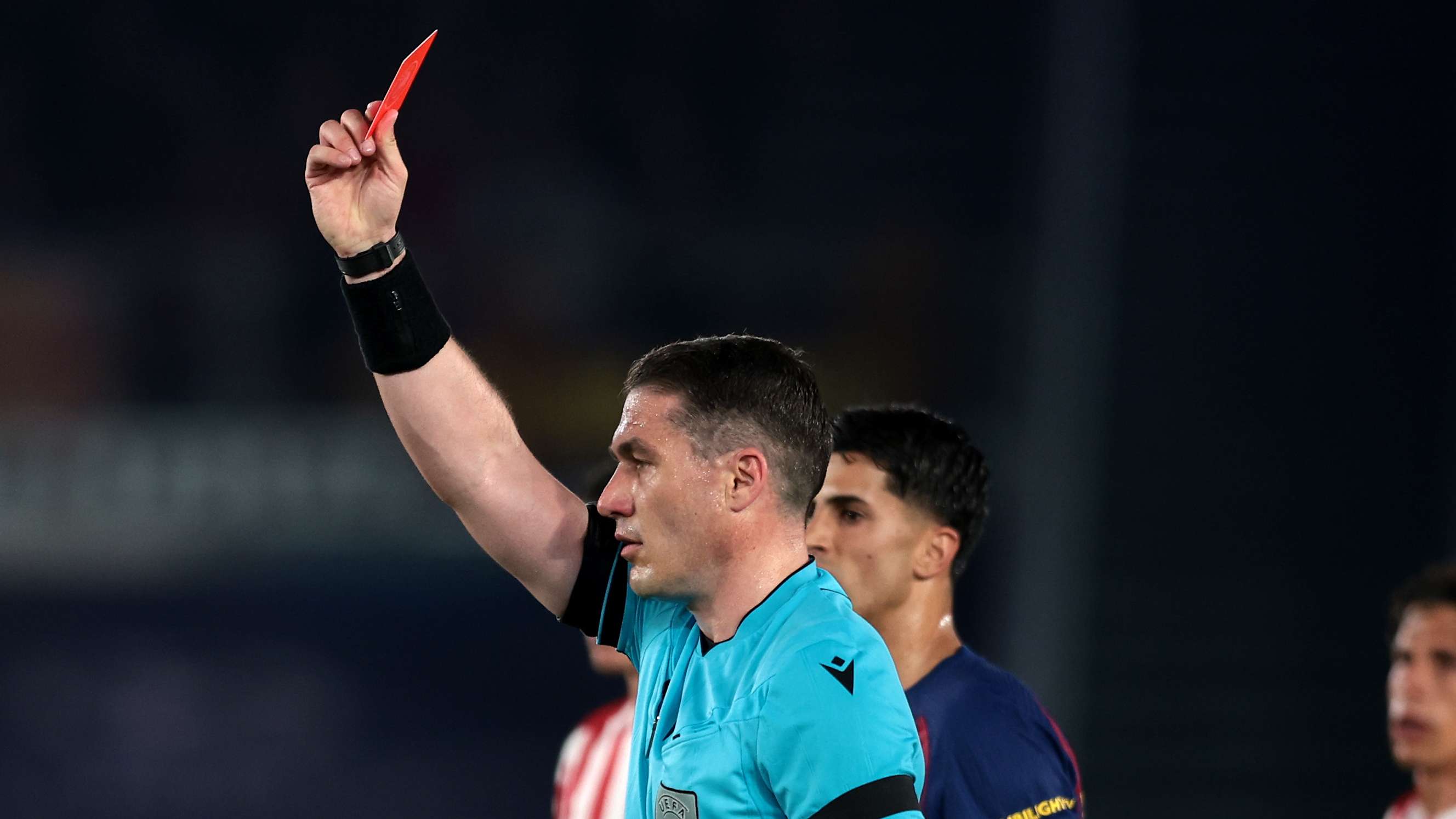
In a heated Champions League quarter-final first leg match between Barcelona and Atlético Madrid, Romanian referee Stefan Kovac found himself at the center of a major controversy. Barcelona lodged an official complaint with UEFA following the match, citing several contentious decisions that they believed impacted the outcome of the game.
Controversial Calls
One of the key incidents that sparked outrage was the missed penalty after a handball by Atlético Madrid’s Pobel. Barcelona felt that they were denied a clear goal-scoring opportunity due to the referee’s oversight. Additionally, the sending-off of Barcelona’s Pau Cubarsi further fueled the controversy, as the Blaugrana ultimately suffered a 2-0 defeat.
Spanish newspaper Mundo Deportivo quoted refereeing expert Isaac Futo on the program El Partidazo de Cope, shedding light on the situation. Futo expressed his opinion that Kovac would face suspension and be barred from officiating any future Champions League matches. The expert highlighted that the suspension was not solely due to the penalty controversy but also because of Kovac’s handling of Cubarsi’s dismissal.
UEFA’s Response
UEFA deemed the incident involving Pau Cubarsi’s sending-off as more serious, as Kovac initially only showed the Barcelona defender a yellow card. However, after a VAR review, the referee decided to upgrade the punishment to a red card. This sequence of events raised questions about Kovac’s decision-making and ultimately led to UEFA taking action.
It is crucial for referees to maintain consistency and make accurate calls during high-stakes matches like the Champions League quarter-finals. Any perceived errors or controversial decisions can have a significant impact on the outcome of the game and may lead to repercussions for the officials involved.
Looking Ahead
As the football world awaits UEFA’s official response to Barcelona’s complaint and evaluates the fallout from Kovac’s controversial refereeing performance, fans and pundits alike continue to debate the fairness and integrity of the sport. The incident serves as a reminder of the importance of transparency and accountability in football officiating.
While controversies like these may overshadow the on-field action at times, they also spur discussions about how the game can be improved and how referees can be supported in making the right decisions. As the Champions League progresses, all eyes will be on UEFA’s handling of this situation and the impact it may have on future matches.
Stay tuned for updates on the fallout from the Barcelona vs. Atlético Madrid match and UEFA’s response to the contentious refereeing decisions that unfolded during the game.
Implications of the Controversy
The controversy surrounding the Barcelona vs. Atlético Madrid Champions League match has far-reaching implications beyond just that one game. It has sparked discussions about the role of technology in refereeing decisions and the need for greater accountability in football officiating. With the advancement of VAR (Video Assistant Referee) technology, there is an increased expectation for referees to make accurate calls and minimize errors that can impact the outcome of matches.
Furthermore, the controversy has shed light on the pressure and scrutiny that referees face in high-profile matches. Referees are often under immense pressure to make split-second decisions that can determine the course of a game. The intensity of these situations can sometimes lead to mistakes or controversial calls, as seen in the Barcelona vs. Atlético Madrid match.
Improving Refereeing Standards
In light of this incident, there have been calls for improvements in referee training and support to ensure that officials are better equipped to handle the demands of top-level football. Training programs that focus on decision-making under pressure, handling contentious situations, and utilizing VAR effectively could help referees avoid similar controversies in the future.
Additionally, there is a growing consensus among fans, players, and pundits that greater transparency and communication from refereeing organizations like UEFA are essential. Providing explanations for key decisions, clarifying the reasoning behind controversial calls, and engaging in dialogue with stakeholders can help build trust and confidence in the officiating process.
Impact on Future Matches
As UEFA deliberates on the fallout from the Barcelona vs. Atlético Madrid match, there is anticipation about how the organization will address the issue of refereeing standards and accountability moving forward. The decisions made in response to this controversy could set a precedent for how similar incidents are handled in the future and shape the direction of football officiating in elite competitions.
Fans, players, and officials will be closely monitoring UEFA’s actions to ensure that the integrity of the game is upheld and that referees are held to the highest standards of professionalism. The outcome of this situation could impact not only the remainder of the Champions League but also the broader conversation around fairness and transparency in football.
Conclusion
As the fallout from the Barcelona vs. Atlético Madrid match continues to unfold, it is evident that controversies in football officiating can have profound effects on the sport as a whole. The incident serves as a reminder of the challenges and responsibilities that referees face, as well as the need for ongoing improvements in training, technology, and communication to enhance the officiating process.
Ultimately, the goal is to ensure that the integrity of the game is preserved, and that fans and stakeholders can have confidence in the fairness and transparency of football officiating. As UEFA addresses the issues raised by this controversy, the football world will be watching closely to see how the organization navigates this challenging moment and works towards a more reliable and effective refereeing system.