
Controversial Moments in the Champions League: Feyenoord’s Anis Hadj Moussa and the Refereeing Dilemma
The UEFA Champions League, renowned for its high-stakes matches and thrilling football action, often serves as a battleground for intense debates over refereeing decisions. One such incident occurred during Feyenoord’s away fixture against Barcelona, where Algeria winger Anis Hadj Moussa found himself embroiled in a contentious moment that sparked widespread discussion among fans, analysts, and football enthusiasts worldwide.
Early Match Controversy: The Incident in the 21st Minute
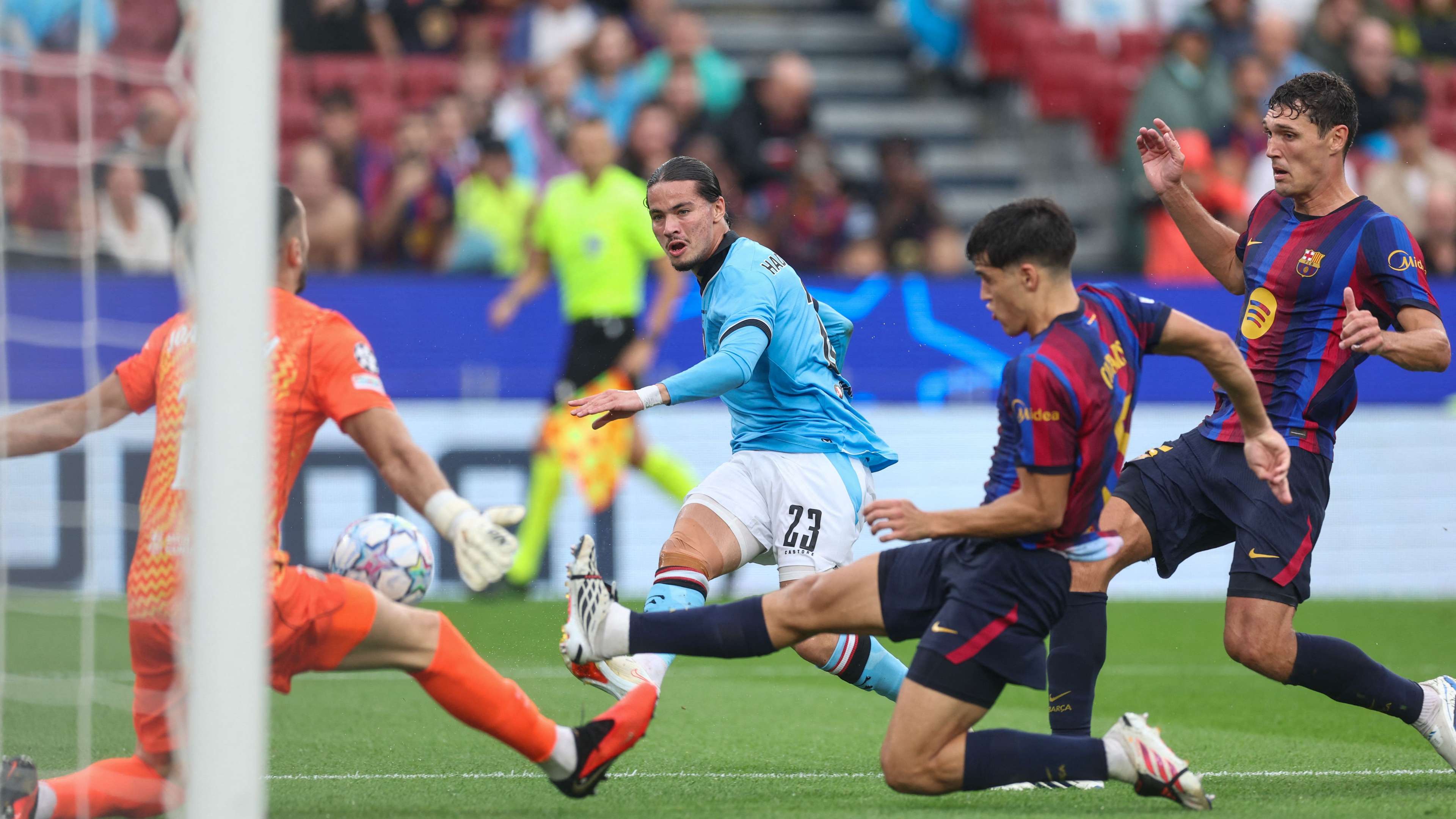
The controversy unfolded in the 21st minute of the match, a pivotal point that could have influenced the flow and outcome of the game. Moussa, demonstrating his agility and tactical awareness, attempted to weave his way between two Barcelona defenders inside the penalty area. As he tried to slip past them, Moussa went to ground, appealing vigorously for a penalty kick. The Feyenoord bench and fans immediately believed the player had been fouled, expecting the referee to award a spot kick that could have leveled the score or even shifted momentum in favor of the Dutch side.
However, the referee, after a brief moment of deliberation, chose to wave play on, declining to award a penalty. The decision was met with immediate protests from Feyenoord players and supporters, but the referee’s call stood. To add another layer of scrutiny, the Video Assistant Referee (VAR) system was consulted but ultimately decided not to intervene, leaving the on-field decision intact.
Expert Analysis and the Role of VAR
The incident did not go unnoticed by refereeing experts and football analysts, particularly the Spanish outlet “Archivo VAR”, renowned for its detailed breakdowns of refereeing incidents across major leagues and tournaments. Their analysis focused on whether the VAR should have intervened in this particular case, considering the nuances of the play.
According to “Archivo VAR”, the sequence in question involved Moussa sneaking between the two defenders and deliberately pulling his foot away to create contact — a tactic often employed by attacking players to draw fouls. The outlet described the play as a “highly controversial case” where the on-field referee’s decision was crucial, but it also highlighted the complexities involved in such situations, where intent, contact, and the flow of play must all be assessed.
The debate centers on whether VAR, designed to assist referees in clear and obvious errors, should have intervened in this instance. Critics argue that the contact was minimal and perhaps exaggerated by Moussa’s attempt to simulate a foul, while others believe that the decision not to award a penalty may have been a missed call that could have altered the game’s course.
The Broader Context: Football Prediction and Refereeing Controversies
This incident underscores the ongoing challenges faced by referees and VAR systems in making split-second decisions that can significantly impact the outcome of football matches. As football fans increasingly rely on prediction models and data-driven analyses to forecast match results, refereeing controversies often become focal points in discussions about fairness, technology, and the integrity of the game.
In the realm of football prediction, such contentious moments are factored into models that analyze historical data, referee tendencies, and match conditions to forecast outcomes. Controversial decisions like the Moussa incident can influence predictions, especially when considering the potential for subjective calls to sway results. This highlights the importance of accurate, consistent refereeing and the ongoing debate over the role of VAR in ensuring fair play.
Implications for Future Matches and Refereeing Standards
Incidents like this not only impact the immediate game but also have broader implications for football’s governing bodies and refereeing standards. The Football Association, UEFA, and FIFA continually review and refine their protocols to enhance the accuracy and consistency of decisions made on the pitch. The Moussa incident serves as a case study in the importance of clear guidelines for VAR intervention, especially in situations involving potential simulation or minimal contact.
Moreover, such controversies fuel discussions among pundits and fans about the need for transparency and improved training for referees. The goal is to minimize errors and uphold the integrity of football competitions, ensuring that outcomes are determined by skill and strategy rather than contentious refereeing decisions.
The Fan Perspective and Engaging the Football Community
Fans play a crucial role in shaping the narrative around refereeing decisions. Forums like Kooora and social media platforms are buzzing with debates, predictions, and opinions on whether VAR should have stepped in during the Moussa incident. Many supporters analyze replays, share their predictions for future matches, and discuss the evolving role of technology in football.
Engaging with these communities provides a richer understanding of how such incidents influence not only match outcomes but also the broader perception of fairness within the sport. Football prediction models often incorporate such controversial moments as variables to gauge their potential impact on match results, emphasizing the importance of accurate refereeing in delivering a fair competition.
Looking Ahead: The Future of Football Refereeing and Prediction
As technology advances, the football world continues to grapple with balancing human judgment and technological assistance. The Moussa incident exemplifies the ongoing debate about the limits of VAR and the importance of refining its application to prevent missed calls and ensure consistent enforcement of rules.
For football prediction enthusiasts, understanding these controversies adds depth to their analyses, highlighting the unpredictable nature of football and the critical role refereeing plays in shaping match outcomes. Future tournaments and league matches will likely see continued scrutiny of refereeing decisions, with advancements in technology and training aimed at reducing errors and enhancing the integrity of the beautiful game.
Conclusion
The controversy surrounding Anis Hadj Moussa’s potential penalty during Feyenoord’s Champions League clash against Barcelona is a vivid reminder of the complexities and challenges inherent in football refereeing. While technology like VAR has been introduced to aid officials and improve decision accuracy, moments of ambiguity still arise, fueling passionate debates among fans, analysts, and players alike.
As the sport evolves, so too does the conversation around fair play, prediction accuracy, and the role of technology in ensuring that football remains a game of skill, strategy, and integrity. The Moussa incident will undoubtedly be analyzed in the context of ongoing efforts to refine refereeing standards and improve the overall quality of football prediction models, ensuring that the beautiful game continues to captivate audiences worldwide.