
From “Traductor” to the Special One: How José Mourinho Learned to Outsmart Barcelona
For years, Barcelona supporters have used the nickname “Traductor”—Spanish for “translator”—to mock José Mourinho’s early career as an interpreter for Sir Bobby Robson. The label points to a real chapter in his story, but it hardly captures the manager he became. Mourinho went on to win major trophies across Europe, reshape teams in several leagues and establish himself as one of football’s most compelling tacticians.
His reputation was built not on a single result or a memorable press conference, but on preparation, conviction and an instinct for the details that can decide a match. Real Madrid’s reported 2-1 victory over Barcelona in the latest Clásico has brought those qualities back into focus, renewing debate about Mourinho’s methods and the tactical intelligence behind them.
The early years behind the nickname
Mourinho began his coaching journey in a role that demanded close attention to the game. While working with Robson, he translated conversations and instructions, but he also studied how an elite manager prepared a team, assessed opponents and responded when a match changed direction. The work offered a practical education in the pressures of top-level football.
Calling him only an interpreter overlooks what that experience required. To be useful, Mourinho had to understand tactical language, communicate clearly and absorb ideas from training sessions and match analysis. He was learning how teams function from the inside—and how small adjustments can influence a contest.
That foundation helped him move into coaching in his own right. Rather than follow a conventional path as a former star player, he built his authority through analysis, organisation and a strong sense of how to create a competitive team. His rise showed that football knowledge can be developed in more than one way.
Porto success made Europe take notice
Mourinho’s breakthrough came at Porto, where he turned an ambitious side into a European force. His teams combined discipline with speed and purpose, often making the most of transitions after winning possession. In 2004, Porto claimed the Champions League, a triumph that announced Mourinho as a manager capable of challenging the sport’s biggest names.
The achievement was significant not only because of the trophy, but because of the way Porto reached it. Mourinho’s side was organised, difficult to unsettle and sharply prepared for each opponent. The campaign demonstrated a defining principle of his coaching: a team does not need to dominate the ball in every match to control the important moments.
That approach travelled with him to England and Italy. At Chelsea, Inter Milan and elsewhere, Mourinho built teams that were hard to break down and dangerous when opportunities appeared. His honours across different leagues reflected an ability to adapt his ideas to new players, competitions and expectations.
Why the Barcelona rivalry mattered
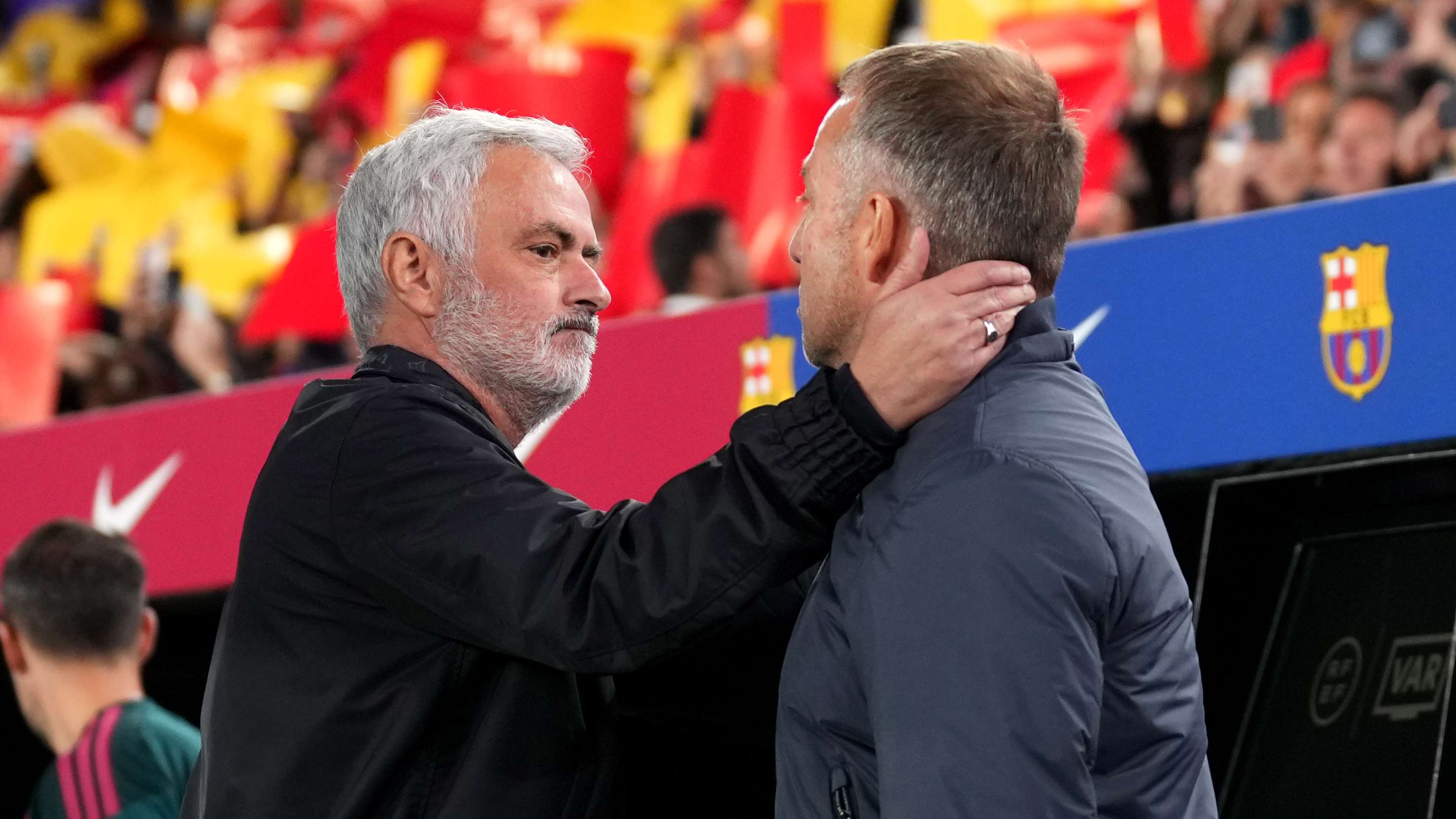
Mourinho’s connection to Barcelona became especially intense during his time at Real Madrid. The rivalry was about more than two clubs competing for trophies. It brought contrasting styles and philosophies into direct opposition: Barcelona’s emphasis on possession and positional play against Madrid’s capacity to defend compactly, attack quickly and exploit space.
That contrast made every Clásico a tactical examination. Against a team comfortable circulating the ball, Madrid needed more than energy or individual brilliance. The players had to stay connected, protect central areas and choose carefully when to press. A poorly timed challenge could open a passing lane; a successful interception could create an immediate counterattack.
The 2-1 result referenced in the original account offers a fresh reminder of how narrow the margins can be in this fixture. A Clásico can turn on a defensive shift, a transition, a set piece or a single decision in the final third. For coaches, the challenge is to prepare for Barcelona’s strengths without allowing the opponent’s reputation to dictate the entire game plan.
Reading the match, not just the formation
Mourinho’s tactical reputation is sometimes reduced to defensive football, but that description misses the broader picture. His teams have often defended with numbers, yet the purpose was usually to create a platform for attacking with speed and precision. The key question was not simply how much possession a side had, but where it could win the ball and what it could do next.
That way of thinking is particularly relevant against possession-heavy opponents. Pressing high can force mistakes, but it can also leave space behind the defence. Dropping deeper can limit runs into dangerous areas, though it may invite sustained pressure. The best response depends on the players available, the scoreline and the patterns emerging during the match.
Mourinho’s strength has often been his willingness to change the plan. He has been known to adjust pressing triggers, alter the shape of a midfield or introduce a different type of attacker when the game demands it. These choices may not always be celebrated as attractive football, but they reflect a coach trying to solve the specific problem in front of him.
What a Clásico prediction can—and cannot—tell us
For supporters looking ahead to future meetings, the latest result may influence every football prediction, but it cannot guarantee the next outcome. Clásicos are shaped by changing squads, injuries, form and the tactical decisions made on the day. A previous win can reveal useful patterns, yet both teams will study those patterns and look for ways to counter them.
When assessing a future Barcelona–Madrid match, fans should consider more than recent results. The availability of key midfielders can affect control of possession, while the pace of the forwards may determine how dangerous counterattacks become. The first goal matters too: a team that scores early can force its opponent to abandon a carefully prepared approach.
Coaching adjustments are another important factor. If Barcelona can move the ball quickly enough to pull Madrid out of shape, it may create openings between the lines. If Madrid can disrupt that rhythm and attack the spaces left behind, the match could swing the other way. Those competing possibilities are what make a Clásico prediction intriguing—and inherently uncertain.
A legacy larger than a nickname
The “Traductor” taunt may continue to follow Mourinho, particularly in Barcelona circles, but it tells only a small part of his story. His time beside Robson gave him an early education in coaching; his later achievements showed how effectively he could turn preparation and tactical clarity into results.
Whether admired or criticised, Mourinho has influenced how fans discuss football. His career invites a broader conversation about what makes a successful manager: style, adaptability, leadership or the ability to win under pressure. The latest Clásico has revived that discussion, and his legacy remains tied to a simple but demanding skill—understanding what a match needs before it is too late to change it.