
Magnus Carlsen Foresees Gukesh’s Defeat in High-Stakes Chess Match; Highlights Indian Talent and Reflects on His Own Chess Future
In a candid and insightful interview, chess legend Magnus Carlsen, the reigning World Chess Champion and former number-one player globally, shared his expert predictions for upcoming chess tournaments and offered a nuanced analysis of emerging young stars, particularly in India. His comments shed light not only on the potential outcomes of high-profile matches but also on the evolving dynamics within the world of chess, the challenges faced by top players, and his personal stance on retirement and future involvement in the game.
Carlsen’s Prediction: Gukesh Faces Long Odds Against the World Champion
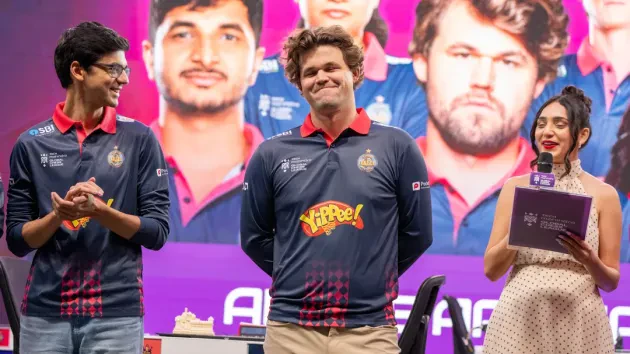
During a comprehensive 35-minute interview with Indian podcaster Prakhar Gupta, Carlsen analyzed upcoming chess encounters with his characteristic frankness. When asked about the anticipated contest between Gukesh, one of India’s brightest young talents, and the reigning World Champion, Carlsen did not shy away from making bold predictions. He confidently expressed his belief that Gukesh would likely be defeated by the champion, considering him a “pretty significant favorite.”
Carlsen warned that if Gukesh were to fall behind early in the match, the confrontation could turn “a little bit ugly,” suggesting that the pressure and psychological toll of a losing position might lead to a less controlled, more aggressive style of play. This assessment underscores the immense challenge young players face when competing against seasoned champions, especially in the high-stakes environment of the World Chess Championship, set to take place in Geneva, Switzerland, from November 24 to December 12.
Insightful Reflections on Gukesh’s Strengths and Weaknesses
Carlsen’s commentary on Gukesh’s current form was both honest and critical. He highlighted that Gukesh’s evaluative skills—his ability to assess positions accurately—are currently a point of concern. “His evaluations are way too optimistic,” Carlsen remarked, noting that this overly confident outlook can cause Gukesh to take excessive risks. “That kind of makes him take way more chances than he should,” he added, emphasizing that this aggressive style, while a hallmark of Gukesh’s talent, can backfire if not managed carefully.
The Norwegian grandmaster observed that Gukesh’s recent struggles stem from a dip in confidence following a less successful period in 2026, notably at the Chess Olympiad in June, where he finished last with a record of five losses and only one victory. His rating has declined from a peak of 2794 in October 2024 to 2703 in September 2026—a significant drop that places him at 32nd in the world rankings. Carlsen pointed out that Gukesh’s inability to switch gears when his aggressive approach fails leaves him without a clear “safety net,” making him vulnerable in tight situations.
The Evolution of Gukesh and the Challenges of Reaching the Top
Carlsen reflected on the trajectory of Gukesh’s career, emphasizing how his remarkable performance in 2024—when he won the Grand Prix, achieved a stellar showing at the World Rapid Championship, and ascended to the top echelons of chess—set very high expectations. “He was able to show the whole array of his talent in 2024,” Carlsen said. “It must be really frustrating that he’s not able to do that now.”
This frustration, according to Carlsen, often leads talented players like Gukesh to push harder, sometimes unsuccessfully, trying to replicate their peak form. The grandmaster cautioned that such desperation can diminish their strategic clarity, especially when their natural style—aggressive and dynamic—might not always be suited to every situation in classical chess.
Is Gukesh the World’s Best? Carlsen’s Perspective
When pressed on whether Gukesh might be the best player in the world currently, Carlsen firmly dismissed this idea. “He’s a very good player with a fantastic 2024,” he acknowledged, “but to say he’s close to the best now is not realistic.” Instead, Carlsen ranked the top young talents in the world, placing Gukesh behind players like Sindarov, Praggnanandhaa, and others, underscoring the competitive depth among the younger generation of chess prodigies.
India’s Rising Chess Stars: A Powerhouse of Talent
Despite his critical assessment of Gukesh, Carlsen expressed strong admiration for India’s vibrant chess scene. “India certainly has the most talented pool of players in the world, especially among the youth,” he said. The country’s young stars, including Praggnanandhaa and others, have been making waves on the international stage, with impressive performances in recent tournaments.
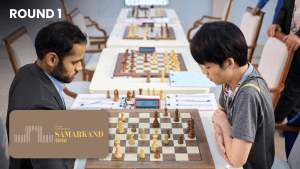
India’s national team recently began its campaign at the Chess Olympiad in Samarkand, Uzbekistan, aiming to defend the gold medal it secured in Budapest in 2024. The Indian squad, which also features young leaders like Praggnanandhaa, is viewed as a serious contender alongside host nation Uzbekistan and the United States. Carlsen highlighted the calculation-oriented and aggressive playing styles characteristic of many Indian players, noting their versatility and fighting spirit.
Praggnanandhaa: A Rising Star Poised for the World Championship
Carlsen singled out Praggnanandhaa—who recently won Norway Chess and finished second at the 2026 Sinquefield Cup—as the standout among India’s talented generation. “He’s producing the best results right now,” Carlsen said, adding that Praggnanandhaa’s fighting spirit and strong calculation skills make him a promising candidate for a future World Chess Championship.
While acknowledging that the hierarchy among young players is still shifting, Carlsen emphasized that Praggnanandhaa’s high peak performances suggest he has a real shot at reaching the highest echelons of chess competition. “He has a good feeling for the game, and his fighting spirit is impressive,” the former champion noted. “He definitely has the potential to challenge the world’s best.”
Carlsen’s Views on His Future in Chess and the World Championship
One of the most revealing aspects of Carlsen’s interview was his firm stance on his own future in the game. Having declined to defend his classical World Championship title after victory in Dubai in 2021, Carlsen expressed growing certainty that he will not return to the cycle. “The further away I get from my last World Championship, the more certain I am that I’m never coming back,” he stated confidently.
He clarified that his decision is driven by personal preferences rather than external factors or rival players. “I never liked the format, and now I’m able to do what I enjoy more—playing for fun, exploring other interests.” Despite this, Carlsen stopped short of announcing retirement, indicating he plans to continue playing occasionally for a few more years. “I want to do this a little longer, and then we’ll see,” he added, emphasizing that he has no long-term ambitions to leave the game entirely but prefers to keep his options open.
Reflections on Rivalries and Chess Styles
Throughout the interview, Carlsen also touched on his rivalry with American grandmaster Hikaru Nakamura, especially in blitz and bullet chess. He revealed that he has enjoyed competing against Nakamura for over two decades, even if his dominance in classical chess remains clear—his record in decisive classical games against Nakamura is heavily in his favor.
When discussing opponents who challenge him with different styles, Carlsen expressed a particular fondness for playing “trickier” opponents—those who play with a unique, unpredictable approach that pushes him out of his comfort zone. He listed players like Alireza Firouzja, Viswanathan Anand, Fabiano Caruana, and Vladimir Kramnik as examples of such competitors, emphasizing how these matchups have helped him grow as a player.
Final Thoughts: Chess’s Future and Carlsen’s Legacy
As one of the most influential figures in modern chess, Carlsen’s insights provide a valuable perspective on the current state and future trajectory of the game. His nuanced views on young talent, the importance of style, and his own evolving role in chess reflect both the sport’s ongoing transformation and his personal journey within it.
While he may not be seeking future world titles, Carlsen’s legacy continues to inspire aspiring players worldwide. His emphasis on enjoying the game, embracing challenging opponents, and adapting to new formats underscores a philosophy that many in the chess community find motivating and refreshing.
Conclusion: A Chess Legend’s Enduring Impact
Magnus Carlsen remains a towering figure in the world of chess, shaping the game with his remarkable talent, strategic depth, and candid reflections. His predictions, especially regarding Gukesh and Indian chess talent, highlight the shifting landscape of international competition. As the chess world watches the upcoming Geneva World Championship and other major tournaments, Carlsen’s insights remind us that the game continues to evolve—driven by young stars, seasoned champions, and the enduring passion of players around the globe.
Stay tuned for more updates on chess tournaments, player analyses, and expert predictions from the sport’s biggest names.