
India Extend Winning Run at Inaugural Commonwealth Kabaddi Championship 2026
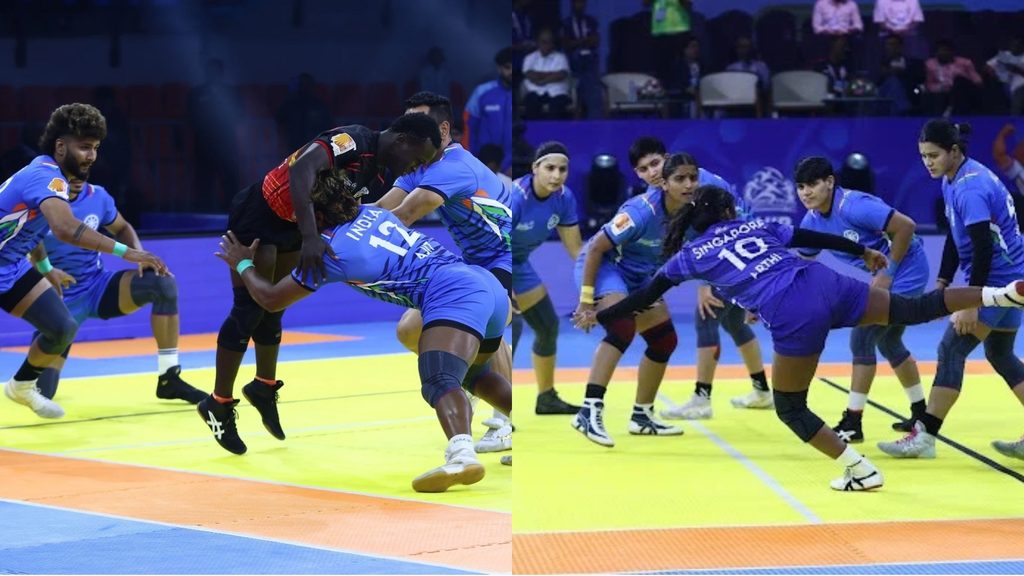
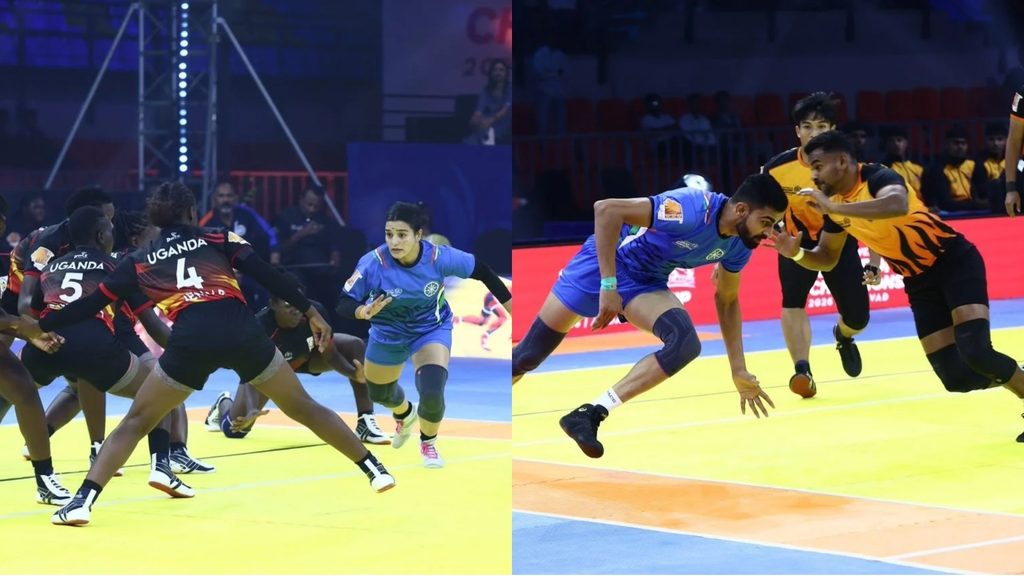
India’s men’s and women’s teams maintained their strong start at the inaugural Commonwealth Kabaddi Championship 2026, recording convincing victories over Malaysia and Uganda on Sunday. Competing at the Veer Savarkar Sports Complex in Naranpura, Ahmedabad, the Indian women won 41-18, while the men’s side secured a 37-23 result.
The double success underlined India’s depth across both squads, with influential raids, disciplined defending and well-timed all-outs shaping the day’s matches. The championship brings Commonwealth teams together in a sport closely associated with India, giving players an opportunity to test their skills on an international stage and build momentum early in the competition.
India Women Overcome Uganda 41-18
India’s women delivered a commanding performance against Uganda, combining an effective raiding game with a defence that limited the opposition’s scoring opportunities. Captain Nidhi Sharma led from the front with nine points, while Sakshi added eight and Anu contributed seven as India finished with a 23-point winning margin.
The Indian attack produced 25 raid points, repeatedly putting pressure on Uganda’s defensive line. India also collected 11 tackle points and four points from all-outs, turning successful defensive sequences into valuable scoring bursts. Those all-outs proved especially important: in kabaddi, an all-out awards a team additional points when every opposing player is put out, while also bringing the opponents back onto the mat. Executed at the right moment, it can shift the rhythm of a match and widen a lead quickly.
Ritu Leads a Strong Defensive Effort
Ritu was India’s leading defender, registering six tackle points, with Jyoti contributing four. Their work helped prevent Uganda from building sustained raids and gave India the chance to regain possession and attack. The balance between the raiders’ output and the defence’s ability to close down scoring routes was a defining feature of the Indian performance.
Uganda did find opportunities, recording 13 raid points and five tackle points. Namataka Beatrice was the team’s top scorer with seven points, while Nabwegamo Catherine added two tackle points. However, Uganda struggled to match India’s scoring pace across the contest. India’s greater return from raids, combined with its defensive pressure and all-out points, created a gap that proved difficult to close.
For India, the result offered more than a comfortable scoreline. Multiple players contributed meaningfully, reducing the team’s reliance on any single raider and showing the value of coordinated play. That variety can be a major advantage in a tournament, where opponents may adjust their tactics after studying a team’s leading scorers.
Men’s Team Beat Malaysia 37-23
India’s men followed the women’s victory with a 14-point win over Malaysia. Neeraj Narwal was the standout performer, collecting 13 points, including four bonus points. Bharat added six raid points, Aditya Shinde scored five and Naveen Kumar contributed three raid points as India built a substantial advantage in the first half.
The decisive phase came before the break, when India surged ahead to lead 27-11. Two all-outs during the opening half helped establish that cushion and put Malaysia under pressure to take greater risks. India’s ability to turn defensive stops into scoring opportunities meant the early lead was built through more than individual raids alone.
Malaysia Rally After the Break
Malaysia responded with a stronger second-half showing, outscoring India 12-10 after the interval. The improvement reflected a more competitive spell from the Malaysian side, but the deficit created in the opening half remained too large to erase. India managed the closing stages without allowing the match to swing back into doubt.
India recorded 27 raid points, four tackle points and four all-out points overall. Deepak S led the defensive tally with two tackle points, while Pravesh Malik and Shubham Shinde added one each. Although the number of tackle points was modest compared with the raid total, India’s defensive contribution mattered in creating the conditions for its early all-outs and maintaining control.
For Malaysia, Isaac Alton and Leong Suresh Kim Seng were the leading scorers, each recording six raid points. Leong also added a tackle point. Malaysia finished with 18 raid points and four tackle points, but the team could not recover from India’s first-half surge. The contrast between the sides’ early scoring runs ultimately defined the result.
Strong Start Gives India Early Championship Momentum
Sunday’s results offered an encouraging snapshot of India’s form at the first Commonwealth Kabaddi Championship. The women’s team demonstrated scoring depth and defensive organisation, while the men’s side showed how quickly an early run can shape a match. In both contests, India converted pressure into points and made the most of opportunities to put opponents out.
For supporters following the tournament, the performances also highlight the tactical demands of kabaddi. Raiders must judge when to pursue a bonus point, attempt a touch or return safely across the midline, while defenders need to coordinate their tackles and avoid giving away easy points. A team that combines individual skill with communication and timing can control the pace, even when an opponent improves later in the game.
With the championship taking place in Ahmedabad, India’s victories will add to the excitement surrounding the home side’s campaign. The opening wins do not settle the tournament, but they provide a valuable platform for the next fixtures. Maintaining consistency, managing player workloads and adapting to different opponents will be crucial as the competition progresses.
India’s double triumph over Uganda and Malaysia has therefore delivered both points and confidence. If the teams can carry forward the same balance of aggressive raiding, organised defence and composure under pressure, they will remain among the leading contenders at the inaugural Commonwealth Kabaddi Championship 2026.