
Harry Kane Wins the 2026 Ballon d’Or, Ending England’s 25-Year Wait
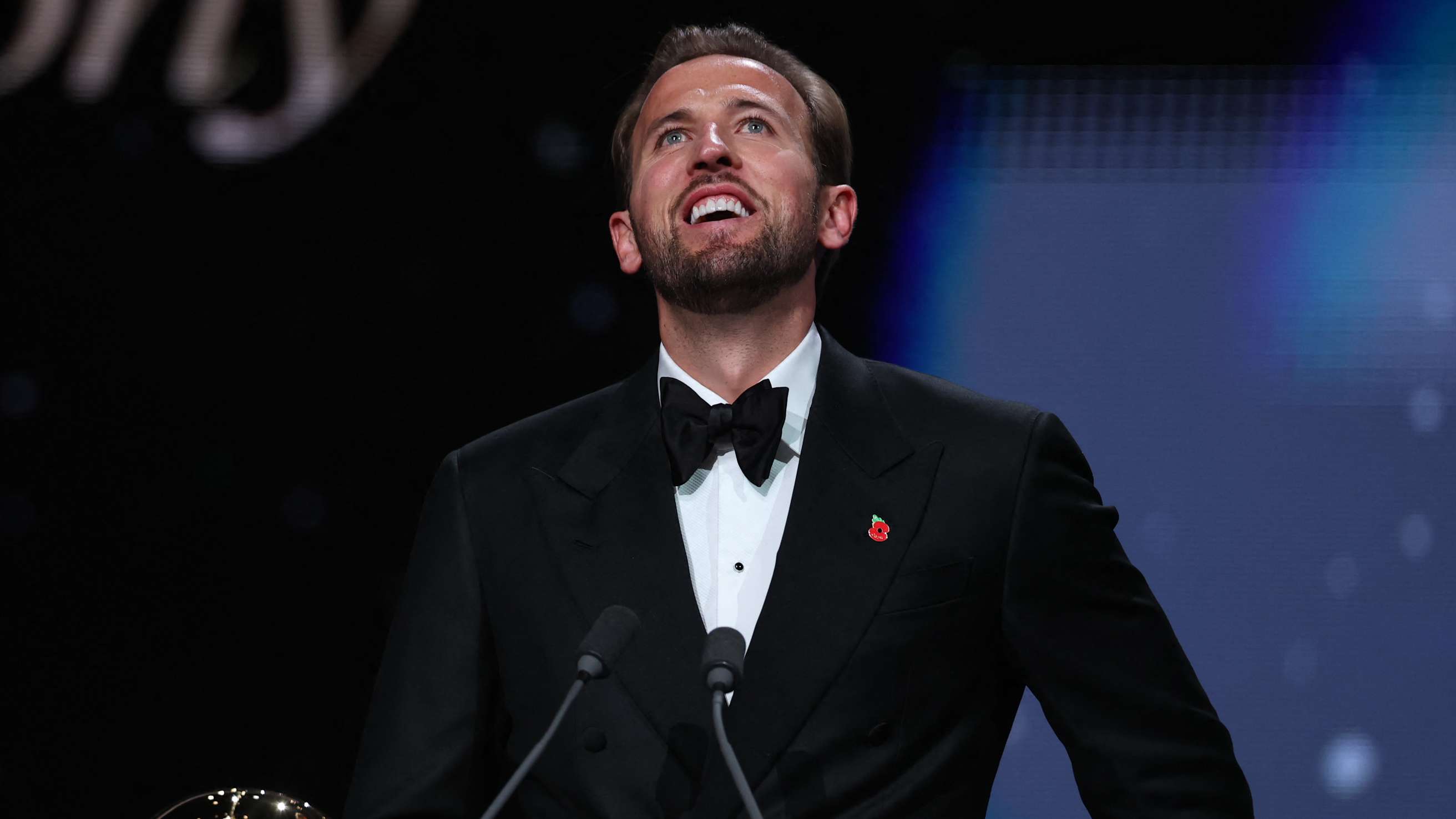
Harry Kane has reached the summit of world football, winning the 2026 Ballon d’Or after a remarkable season with Bayern Munich and the England national team. At 33, the England captain claimed the sport’s most prestigious individual award for the first time, bringing an end to a 25-year wait for an English winner and answering years of criticism about his trophy record.
Newspapers across Europe and beyond celebrated Kane’s rise, focusing on the goals, titles and leadership that shaped his campaign. Their coverage also highlighted the story behind the award: a prolific striker once defined by what he had not won, who moved to Germany and transformed that narrative through sustained success. For supporters assessing the season’s defining achievements, Kane’s Ballon d’Or prediction may have seemed increasingly convincing as his goals and team honours accumulated.
Record-breaking numbers behind Kane’s triumph
Kane’s statistics provided a compelling foundation for his candidacy. He scored 73 goals in 65 appearances across the season, while his performances for Bayern Munich helped the club secure the Bundesliga and German Cup. He also played a leading role for England, who finished third at the World Cup.
Several outlets pointed to a separate club tally of 61 goals in 51 appearances for Bayern, underlining the scale of his impact in Germany. Whatever measure was used, the central point was clear: Kane combined extraordinary scoring output with silverware and influential performances on the international stage.
The competition was formidable. France’s Kylian Mbappé finished third, while Spain’s Lamine Yamal placed fourth, two of the high-profile players widely discussed in the Ballon d’Or race. Kane’s victory therefore represented more than a reward for impressive numbers. It reflected a season in which his individual brilliance was matched by tangible success for club and country.
“King Harry” and the end of the trophy criticism
French sports newspaper L’Équipe crowned Kane “King Harry” and emphasised that the award recognised excellence at both individual and collective levels. One of its most pointed headlines urged readers not to call him a loser again, directly confronting the criticism that had followed him through years without major honours.
That criticism had often overshadowed Kane’s reputation as one of the most reliable forwards of his generation. Before his move to Bayern, he had built a career on consistent goalscoring, but critics frequently treated the absence of major trophies as evidence that his achievements were incomplete. His German chapter changed the terms of that debate. League and cup success gave his personal records the team context that many commentators had previously demanded.
Brazil’s O Globo highlighted this reversal, noting how a player once mocked for his trophy drought became a champion after joining Bayern. The paper pointed to the Bundesliga, German Cup and German Super Cup among the honours that reshaped his public image. The Ballon d’Or then served as the most striking confirmation of that transformation.
A special homecoming in London
Italian newspaper La Gazzetta dello Sport focused on the emotional significance of Kane winning the award at 33 in London, the city where he was born. With the ceremony held in the British capital rather than Paris, the setting gave the moment an added sense of homecoming. The paper captured the mood with the headline “Kane: the new king is English.”
French publication Le Parisien also connected the victory to Kane’s roots, noting that the ceremony took place around 15 kilometres from Walthamstow, where he grew up. Its coverage described a major shift in how the striker was viewed: no longer simply a goalscorer, but a complete football figure whose movement to Bayern helped him refresh his career and reach the highest level.
The location made the award especially resonant for English supporters. The last Englishman to win the Ballon d’Or did so 25 years earlier, leaving generations of fans to wonder when the honour might return. Kane’s victory answered that question in front of a home crowd.
Bayern pride and a message for Vincent Kompany
German tabloid Bild celebrated Kane as “King Kane: king of the world” and noted that his win returned the Ballon d’Or to the German league decades after Matthias Sammer’s success. Kane, in turn, used the occasion to acknowledge Bayern Munich, describing it as a great honour to represent the club and expressing happiness at bringing the trophy back to Munich.
He also dedicated a personal message to coach Vincent Kompany, who was following the ceremony from hospital. Kane said he hoped the award would give his coach some energy. The remark added a human note to a night dominated by statistics and headlines, showing the importance Kane placed on the people who had supported his season.
Britain’s Daily Mirror likewise emphasised his Bayern campaign, reporting 61 goals in 51 matches and highlighting the club’s domestic double. The Sun framed the result as recognition for Kane’s extraordinary finishing and described him as the first English player in a quarter-century to win football’s most celebrated individual prize.
More than a goalscoring award
Portugal’s A Bola placed Kane’s total of 73 goals in historical context, reporting that it surpassed Cristiano Ronaldo’s single-season figure of 69, while Lionel Messi remained the record-holder for the highest tally. The comparison underscored the scale of Kane’s campaign, though his achievement was not based on numbers alone.
The Guardian highlighted his European Golden Boot, Bayern’s Bundesliga title and his strong World Cup performances with England. It also drew attention to Kane’s humility, suggesting that the way he handled success strengthened the meaning of his achievement. In a sport where individual awards can invite debate, his leadership and composure helped make his case broader than a list of goals.
Spain’s Alexia Putellas also claimed the women’s Ballon d’Or for the third time, adding another major storyline to the ceremony. Her victory reinforced the event’s celebration of excellence across the game, even as Kane’s long-awaited triumph dominated the international headlines.
What Kane’s Ballon d’Or means for his legacy
Kane’s 2026 Ballon d’Or win settles one longstanding question about his career: whether his extraordinary scoring could be matched by major team honours. At Bayern, he proved that he could be both a prolific finisher and a central figure in a title-winning side. For England, he added another landmark to a career already defined by responsibility and consistency.
The award will not end every debate about football’s greatest players, nor does one season erase the challenges that came before it. But it does change the way Kane’s career will be remembered. The story is no longer only about a striker who waited for trophies. It is about a determined footballer who kept producing, found a new stage in Germany and turned a career-defining season into one of the sport’s highest honours.