
World chess champion Gukesh Dommaraju has acknowledged that he has struggled to cope with the pressure and public expectations that come with holding the title. As he prepares for his first world championship defense, the 20-year-old says he is working to rediscover balance, enjoy life beyond chess, and focus on the quality of his play rather than the weight of the result.
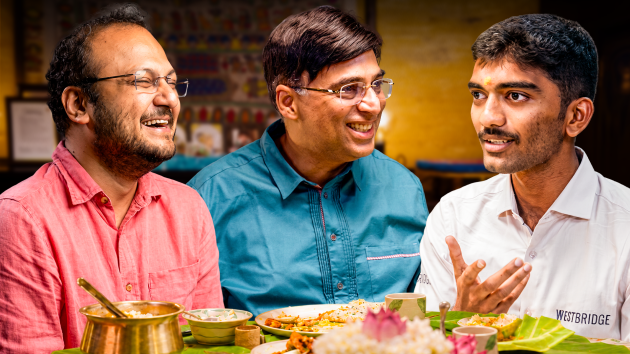
Gukesh discussed the challenges during an 86-minute dinner conversation with five-time world champion Viswanathan Anand and ChessBase India co-founder IM Sagar Shah. Filmed at Anand’s home in Chennai and released by Chess.com, the relaxed discussion ranged from criticism and preparation to food, fan encounters, and the pair’s earliest memories of meeting. Beneath the jokes, both champions offered thoughtful advice about ambition, setbacks, and the mental demands of elite chess.
Gukesh reflects on a difficult year in chess
The reigning champion did not shy away from describing his recent results as disappointing. “There have been maybe two or three tournaments in the last one year that I’ve been happy about,” he said, adding that the period had included “major setbacks.”
His results in several high-profile events have fallen short of the level that carried him to the world title in 2024. Gukesh scored 3.5 points from nine games at the Prague International Chess Festival in March, then managed three points from ten games at Norway Chess in June. A difficult run continued at the Grand Chess Tour’s SuperUnited Rapid & Blitz event in July, where he scored two points from seven. The tournaments brought further rating losses and left him at or near the bottom of the standings.
There have been brighter moments. Gukesh scored 8.5 points from 11 games for India at the Chess Olympiad, helping the team secure a silver medal. That performance offered encouragement, but the champion knows he must find greater consistency as he approaches the most important match of his career since winning the crown.
Some of his frustration, he explained, came from positions in which he felt he had chances to win but could not convert them. That made the difficulties feel broader than a matter of opening preparation or calculation. “Obviously there is something with a lot of expectations, a lot of pressure, that I’m dealing with and I’ve not found the right way to maybe handle it,” Gukesh said.
Finding balance away from the chessboard
Rather than treating every tournament as a test of whether he has “returned” to his best form, Gukesh is trying to make his daily routine healthier and more sustainable. “I’m trying to be happy every day, smile every day,” he said. He remains committed to hard work, but is also making time for activities he enjoys outside chess.
Anand, who has navigated the demands of a long career at the top, supported the approach. He advised Gukesh to stop measuring every performance against past success and instead concentrate on the immediate task: playing a good game. “The day you start to come back is when you stop expecting things,” Anand said. “You just try to play a good game of chess.”
That advice speaks to a familiar challenge in elite sport. A player who is constantly trying to prove that he is back can become preoccupied with the outcome, rather than the decisions in front of him. Anand’s suggestion was to take the process one step at a time and allow confidence to grow through the work itself. He described Gukesh’s effort to bring more enjoyment and a smile into his routine as “basically the correct attitude.”
Learning to live with criticism
Winning the world title also brought a new level of attention. Gukesh said he had spent a long time trying to avoid criticism, but eventually recognized that even when he did not seek out negative comments, he knew they were being made. For a young champion, the constant presence of public opinion can become another source of pressure alongside tournament preparation.
A friend offered a different way to respond: use humor. Gukesh said he enjoys comedy and recalled being encouraged to play along when he encounters a hater, rather than allowing every comment to become a personal burden. The idea does not make criticism disappear, but it can help create distance from it.
Anand agreed that expectations are difficult to shut out completely. Even when a player tries to focus only on the board, he said, the thoughts can remain somewhere in the background. Recognizing that reality, rather than pretending the pressure does not exist, may be an important part of learning to manage it.
Experience and pressure ahead of the title defense
Gukesh became the youngest undisputed world champion in history at 18, defeating Ding Liren in Singapore in December 2024. His first defense is scheduled to begin in Geneva on November 24, where he will face Javokhir Sindarov, the challenger who won the 2025 World Cup and the 2026 Candidates Tournament.
The two players arrive with contrasting recent records. Sindarov has been among the strongest performers over the past year, while Gukesh’s rating and tournament results have dipped. Still, the champion believes his previous match experience could matter when the contest begins. “It’s about who manages to stay in good shape and is able to handle and absorb the pressure and deliver when the day comes,” he said. “I do have more experience than him. I’ve played a world championship.”
That experience is more than a line on a résumé. Gukesh knows the rhythm of a long match, the daily demands of preparation, and the emotional strain of returning to the board after a difficult game. His 2024 contest went down to the final classical game, giving him firsthand knowledge of how quickly momentum and confidence can shift.
“Every day you’re going to wake up with like butterflies in your stomach,” he said. The challenge, then, is not to eliminate nerves entirely, but to keep them from taking over the decisions that matter.
Anand warns of the unexpected in a world championship
Anand emphasized that a world championship match can produce unusual choices and unexpected swings. The stakes are so high, he said, that players may do things they would not normally attempt in other tournaments. Both competitors need to be ready for surprises, whether they come from preparation, match circumstances, or the pressure of a decisive moment.
For Gukesh, the immediate task is to combine the confidence of a defending champion with the patience to rebuild form one game at a time. His conversation with Anand suggests he is looking beyond chess technique alone: managing expectations, protecting his enjoyment of the game, and responding to criticism will all be part of the preparation.
The title defense in Geneva will test Gukesh’s chess, but also his ability to absorb pressure and stay present across a demanding match. With the world watching, his most important goal may be the one Anand described: focus on the game in front of him, and let the result follow.