
The USB Drive That Revealed José Mourinho’s Barcelona Vision
Eighteen years after José Mourinho presented his case to Barcelona, Marc Ingla still keeps the coach’s storage drive in a desk drawer. The small device holds a 27-page plan outlining how Mourinho hoped to reshape the club—a document from a pivotal moment in Barcelona’s history, when the board was searching for a successor to Frank Rijkaard and deciding what kind of football the team should play next.
The meeting took place in Lisbon in the spring of 2008, as Barcelona faced a second consecutive season without a major trophy. The club’s campaign had deteriorated, confidence had ebbed, and the board was preparing for a significant change. Mourinho, then one of Europe’s most prominent—and polarising—coaches, was among the leading candidates.
According to Spanish newspaper Mundo Deportivo, the meeting was arranged through influential agent Jorge Mendes. Mourinho had left Chelsea earlier that season and was available for a new role. He also had personal ties to Barcelona: he had spent four years in the city as an assistant to Bobby Robson and Louis van Gaal, and he and his family were understood to be open to returning.
A presentation built around Barcelona’s identity
Ingla, Barcelona’s vice-president for sporting affairs, attended the Lisbon meeting alone. Sporting director Txiki Begiristain had said a personal commitment prevented him from travelling. Yet Begiristain was already inclined towards another candidate: Pep Guardiola, who had only recently begun his coaching career with Barcelona’s reserve side.
After the introductions, Mourinho produced a white storage drive from his pocket. It contained a detailed presentation describing his proposed approach to the first team, from tactics and training methods to squad decisions and the composition of his coaching staff. The document made clear that he had not arrived simply to discuss the vacancy. He had prepared a blueprint for the club.
One of its most striking features was Mourinho’s support for the 4-3-3 formation. The system was closely associated with Barcelona’s footballing tradition and Johan Cruyff’s influence, despite the difficult relationship between Cruyff and Mourinho. The Portuguese coach argued that the shape—and the tactical variations it allowed—should remain central to the team’s identity.
He also emphasised the importance of working with the ball in every training session, including practices focused on physical conditioning. That principle echoed the approach long promoted at Barcelona: technical development and fitness should not be treated as separate concerns. In Mourinho’s plan, possession and ball work were not decorative features of training but part of the club’s daily football culture.
Squad questions and possible departures
The presentation included an extensive assessment of Barcelona’s players. Mourinho reportedly questioned whether Ronaldinho could continue to be a central figure, while favouring the retention of Samuel Eto’o and Deco. He identified Sylvinho, Lilian Thuram and Javier Zquierdo as players who could leave, and raised questions about the roles of Edmílson, Oleguer and Gianluca Zambrotta.
Those judgements reflected the difficult balance facing Barcelona at the time. The club had recently enjoyed major success under Rijkaard, winning two La Liga titles and the Champions League, but the atmosphere around the team had changed. A new coach would need to assess established stars, address declining form and decide whether a fresh cycle required a major overhaul or a more gradual transition.
Notably, Mourinho’s plan did not focus on a list of new signings. Instead, he discussed bringing former Barcelona players into his coaching staff, including Luis Enrique, Txapi Ferrer and Sergi Barjuán. Each had a connection to the club, and their involvement could have helped bridge Mourinho’s proposed changes with Barcelona’s existing traditions.
The media issue that became a point of tension
The sharpest disagreement reportedly concerned Mourinho’s relationship with journalists. Barcelona’s representatives told him that his dealings with the media would need to improve. His clashes during recent knockout contests between Chelsea and Barcelona had left a strong impression, and the club was wary of the confrontational image he had developed.
That concern went beyond press conferences. At a club as closely watched as Barcelona, the manager’s public conduct can influence the mood around the team, the board and the supporters. Mourinho’s intensity could be an asset on the touchline, but the club’s decision-makers also had to consider whether his style would fit the institution’s public identity.
Why Barcelona chose Pep Guardiola
Rijkaard’s departure followed a disappointing end to the season. Barcelona finished well behind Real Madrid, managed by Bernd Schuster, and had to form a guard of honour for their rivals at the Santiago Bernabéu. Their European campaign also ended in the Champions League semi-finals, where Manchester United eliminated them.
When the time came to choose a successor, club president Joan Laporta again took advice from Cruyff. Cruyff supported Begiristain’s preference for Guardiola, a former Barcelona captain who understood the club’s footballing principles from the inside. The appointment carried risk: Guardiola had little experience as a senior coach. But it also offered the possibility of building a team around a shared philosophy rather than importing an established manager’s identity.
That decision helped set the stage for one of the most successful periods in Barcelona’s history. Guardiola’s side combined possession, pressing and positional movement, while Lionel Messi’s rise became central to the team’s transformation. In hindsight, the choice was not simply a contest between two managers. It was a decision about the club’s future direction—and about how closely that future should follow Barcelona’s established football culture.
A different path—and a lasting football prediction
Mourinho’s presentation remains a fascinating “what if” in modern football. His plan showed that he understood key parts of Barcelona’s identity, including the 4-3-3 and the importance of technical work. At the same time, his approach to the squad, media and club leadership may have pointed towards a more combative era than the one Barcelona ultimately embraced.
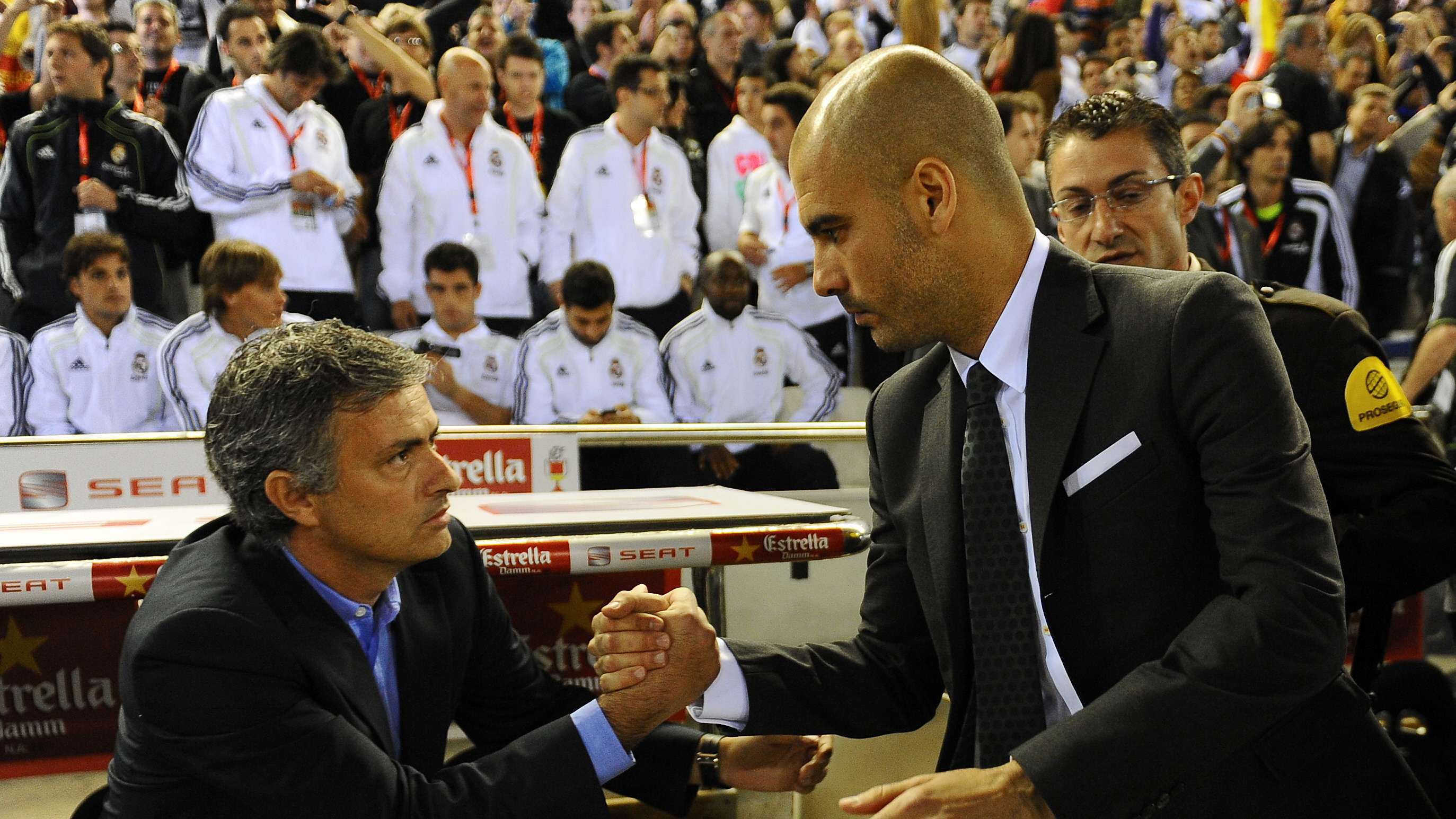
After his candidacy was rejected, Mourinho reportedly felt insulted. His relationship with Barcelona later became increasingly adversarial, particularly during his time at Real Madrid. The rivalry added another chapter to the story of a coach who had once offered to lead the Catalan club.
The storage drive Ingla kept is more than a souvenir. It preserves a glimpse of an alternative Barcelona: a team shaped by Mourinho’s tactical ideas, his personnel choices and his forceful personality. Any prediction about how that version of the club would have performed is necessarily speculative. What is clear is that the meeting captured a defining crossroads—one where Barcelona chose Guardiola, and where a detailed plan on a small white drive became a reminder of the path not taken.