
Italy is currently facing a crucial period in its football history as the nation aims to navigate through a turbulent transitional phase following their shocking failure to qualify for the World Cup finals. The resignation of Gabriele Gravina as president of the Italian Football Federation has thrown the entire system into a state of flux, necessitating a series of significant changes within the organization.
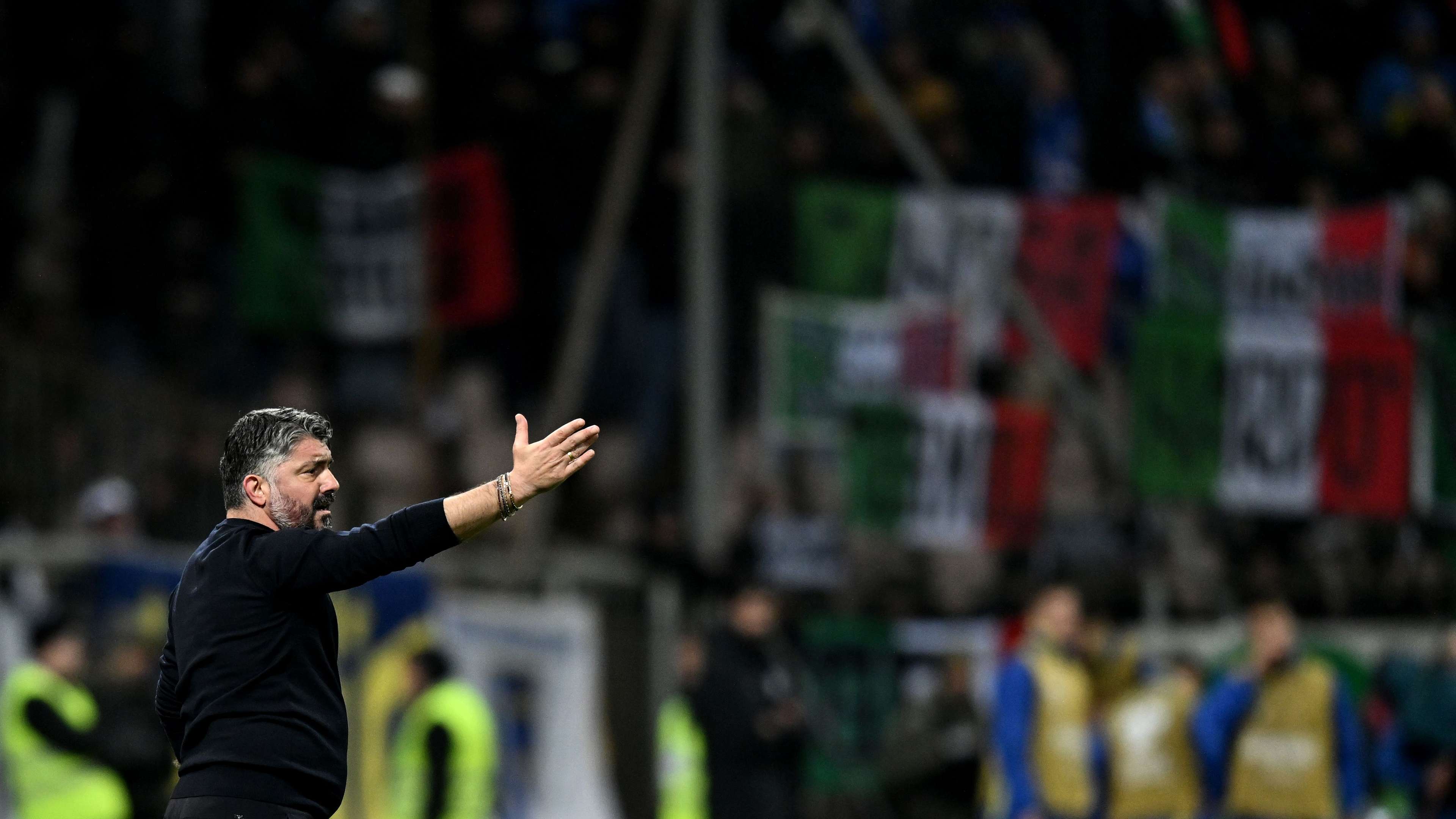
With the Federation’s presidential elections scheduled for 22 June in Rome, Italian football is at a crossroads as it grapples with the need to appoint interim leadership for the senior national team while also preparing for the selection of a permanent coach to succeed Gennaro Gattuso. The upcoming friendly matches further add to the urgency of finding a suitable candidate to steer the team in the right direction.
Reports from Sport Mediaset suggest that Silvio Baldini, the current manager of the Under-21s, is the frontrunner to take on the interim coaching role, similar to the scenario in 2018 when Luigi Di Biagio stepped in temporarily after Italy’s failure to qualify for the World Cup. This temporary measure eventually led to the appointment of Roberto Mancini as the permanent manager, bringing stability back to the team.
As history appears to be repeating itself, with Baldini potentially following a similar path, all eyes are on the outcome of the upcoming elections, which will shape the future of Italian football. The decisions made in the coming weeks will determine the direction of the national team’s new project and the selection of a permanent manager who can lead the Azzurri back to their former glory on the global stage.
The challenges ahead are significant, but with the right leadership and strategic planning, Italy has the opportunity to rebuild and revitalize its football program. The focus now is on finding a temporary solution to guide the team through the immediate future while also laying the groundwork for long-term success.
Italian football fans are eagerly awaiting the outcome of the Federation’s elections and the subsequent decisions that will shape the future of their beloved sport. As the country seeks a temporary saviour to navigate through this period of uncertainty, the hopes and dreams of a nation rest on the shoulders of those tasked with leading the Azzurri back to prominence. Stay tuned for updates as the story unfolds and Italian football charts a new course towards redemption and success.
### The Importance of Strategic Planning in Italian Football
Amidst the turmoil and uncertainty facing Italian football, the key to a successful resurgence lies in strategic planning. The appointment of interim leadership for the national team is just the first step in a much larger process of rebuilding and revitalizing the sport in Italy.
Strategic planning involves setting clear goals, identifying key challenges, and outlining a roadmap for achieving success. This process will be crucial in determining the direction of the national team’s new project and in selecting a permanent manager who can lead the Azzurri back to their former glory.
One of the key aspects of strategic planning will be to focus on youth development and talent identification. Italy has a rich history of producing top-quality players, and investing in the next generation of talent will be essential for long-term success. By nurturing young players and providing them with the support and resources they need to succeed, Italy can ensure a strong foundation for the future.
Another important component of strategic planning will be to prioritize teamwork and cohesion within the national team. Building a strong team dynamic and fostering a sense of unity among players will be crucial in achieving success on the international stage. By instilling a sense of camaraderie and shared purpose, Italy can create a winning culture that will drive them towards their goals.
Furthermore, strategic planning will involve setting realistic targets and timelines for achieving success. While the immediate goal may be to qualify for the next major tournament, the long-term objective should be to establish Italy as a dominant force in world football once again. By setting clear objectives and working towards them methodically, Italy can position themselves for sustained success in the years to come.
### The Role of Predictive Analytics in Football
In the modern era of football, predictive analytics has emerged as a valuable tool for teams and coaches looking to gain a competitive edge. By analyzing vast amounts of data, teams can gain insights into player performance, opponent strategies, and overall team dynamics. This information can then be used to make informed decisions on tactics, player selection, and game planning.
Predictive analytics can help teams identify trends and patterns in their own performance as well as in the performance of their opponents. By understanding these patterns, teams can adjust their strategies and tactics to exploit weaknesses and capitalize on strengths. This data-driven approach can give teams a significant advantage on the field and increase their chances of success.
In the context of Italian football, the use of predictive analytics could play a crucial role in guiding the national team towards success. By leveraging data and insights to inform decision-making, Italy can make more effective choices when it comes to player selection, game tactics, and overall team management. This data-driven approach can help Italy identify areas for improvement, optimize their performance, and ultimately achieve their goals on the international stage.
As Italian football navigates through this critical period of transition, the integration of predictive analytics into the strategic planning process could be a game-changer. By harnessing the power of data and insights, Italy can position themselves for a successful resurgence and reclaim their status as a footballing powerhouse.