
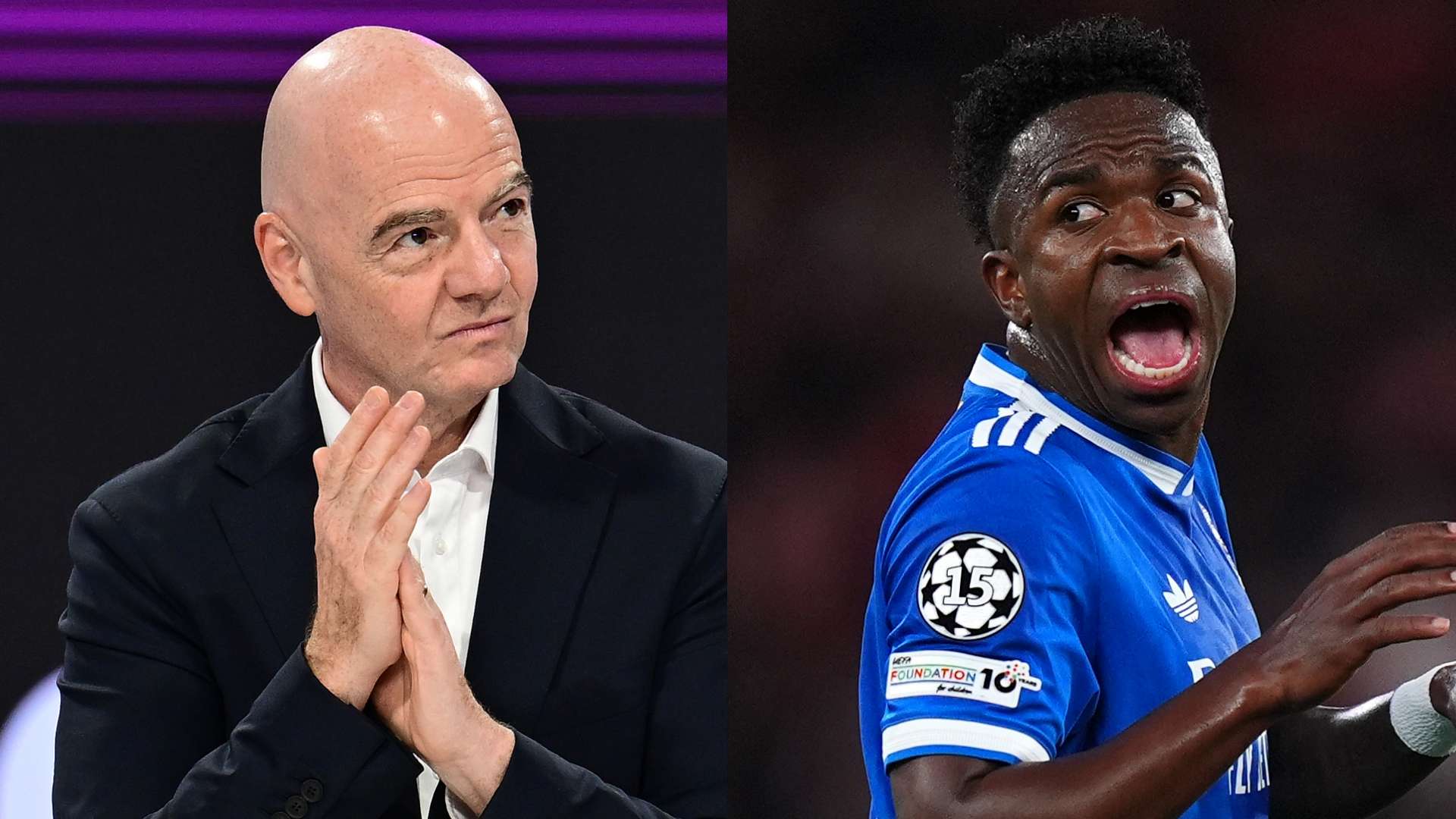

FIFA President proposes new rule to combat racism in football
The President of FIFA, Gianni Infantino, has put forward a bold new proposal to address the issue of racism in football. In the wake of a recent incident involving Benfica winger Gianluca Prestianni allegedly racially abusing Real Madrid’s Vinicius Junior, Infantino has suggested that players who cover their mouths during verbal altercations that are racist in nature should be shown a straight red card.
This proposal aims to crack down on instances of racism on the football pitch and send a strong message that such behavior will not be tolerated in the sport. Infantino believes that there should be a “presumption” of guilt when a player covers their mouth during a racially charged exchange, arguing that this action should be considered sufficient evidence of offensive intent.
Infantino’s stance on combating racism in football
Infantino’s proposal has sparked a debate among football fans and experts. While some believe that this measure is necessary to root out racism from the game, others have raised concerns about the potential for false accusations and the subjectivity of interpreting players’ actions.
However, Infantino remains firm in his stance, stating that it is crucial for football to take a strong stand against racism and discrimination in all forms. He has emphasized the need for decisive action to address the issue and protect players from abuse and discrimination.
Reaction from the football community
The football community has been divided in its response to Infantino’s proposal. Some players and managers have expressed support for the measure, stating that it is a step in the right direction towards eradicating racism from the sport.
On the other hand, there are those who have raised concerns about the potential for misinterpretation and the need for clear guidelines on how the rule would be enforced. Critics argue that the proposal could lead to unfair dismissals and tarnish the integrity of the game.
Despite the mixed reactions, Infantino’s proposal has brought the issue of racism in football to the forefront once again. It has sparked a much-needed conversation about how to effectively tackle discrimination and promote inclusivity in the sport.
Looking ahead
As Infantino’s proposal continues to generate discussion and debate, the football community will be watching closely to see how this new rule may be implemented in the future. It remains to be seen whether FIFA will adopt the measure and how it will impact the game moving forward.
Regardless of the outcome, one thing is clear: the fight against racism in football is far from over, and decisive action is needed to ensure that the beautiful game remains a safe and inclusive space for all players and fans.
The Impact of Racism in Football
Racism has been a longstanding issue in football, with players from diverse backgrounds often facing discrimination both on and off the pitch. The recent incident involving Gianluca Prestianni and Vinicius Junior is just one example of the ongoing challenges that players of color continue to endure in the sport.
While FIFA has made efforts to combat racism through campaigns and initiatives, the problem persists, highlighting the need for more stringent measures to address the issue effectively. Infantino’s proposal to penalize players who cover their mouths during racist exchanges is a bold step towards creating a zero-tolerance policy for discriminatory behavior in football.
The Role of Technology in Addressing Racism
In addition to implementing new rules, advancements in technology could also play a vital role in combating racism in football. The use of video assistant referees (VAR) could help officials review and assess incidents of racism more accurately, reducing the likelihood of false accusations and ensuring fair outcomes.
Furthermore, social media platforms can be leveraged to hold individuals and organizations accountable for racist behavior, creating a more transparent and accountable environment within the football community. By utilizing technology and digital platforms, football can take a proactive approach to addressing racism and fostering a culture of inclusivity.
Educational Initiatives and Awareness Campaigns
While implementing stricter rules and leveraging technology are essential steps in combating racism, education and awareness are also crucial components of addressing the issue effectively. Football governing bodies, clubs, and players can collaborate to develop educational initiatives and awareness campaigns that promote diversity, equality, and respect within the sport.
By educating players, coaches, and fans on the impact of racism and discrimination, football can create a more inclusive and welcoming environment for all individuals, regardless of their background or ethnicity. These efforts can help shift attitudes, challenge stereotypes, and foster a sense of unity and solidarity among the football community.
Conclusion
Infantino’s proposal to penalize players who cover their mouths during racist exchanges is a significant step towards addressing racism in football. While the measure has sparked debate and raised concerns about its enforcement, it has also reignited the conversation about the urgent need to eradicate discrimination from the sport.
By combining stricter rules, technological advancements, educational initiatives, and awareness campaigns, football can take a comprehensive approach to combatting racism and promoting inclusivity. It is essential for all stakeholders in the football community to work together to create a safe, respectful, and diverse environment where players and fans can participate in the beautiful game without fear of discrimination or prejudice.