
Harry Kane’s Ballon d’Or triumph puts Lamine Yamal’s rise under scrutiny
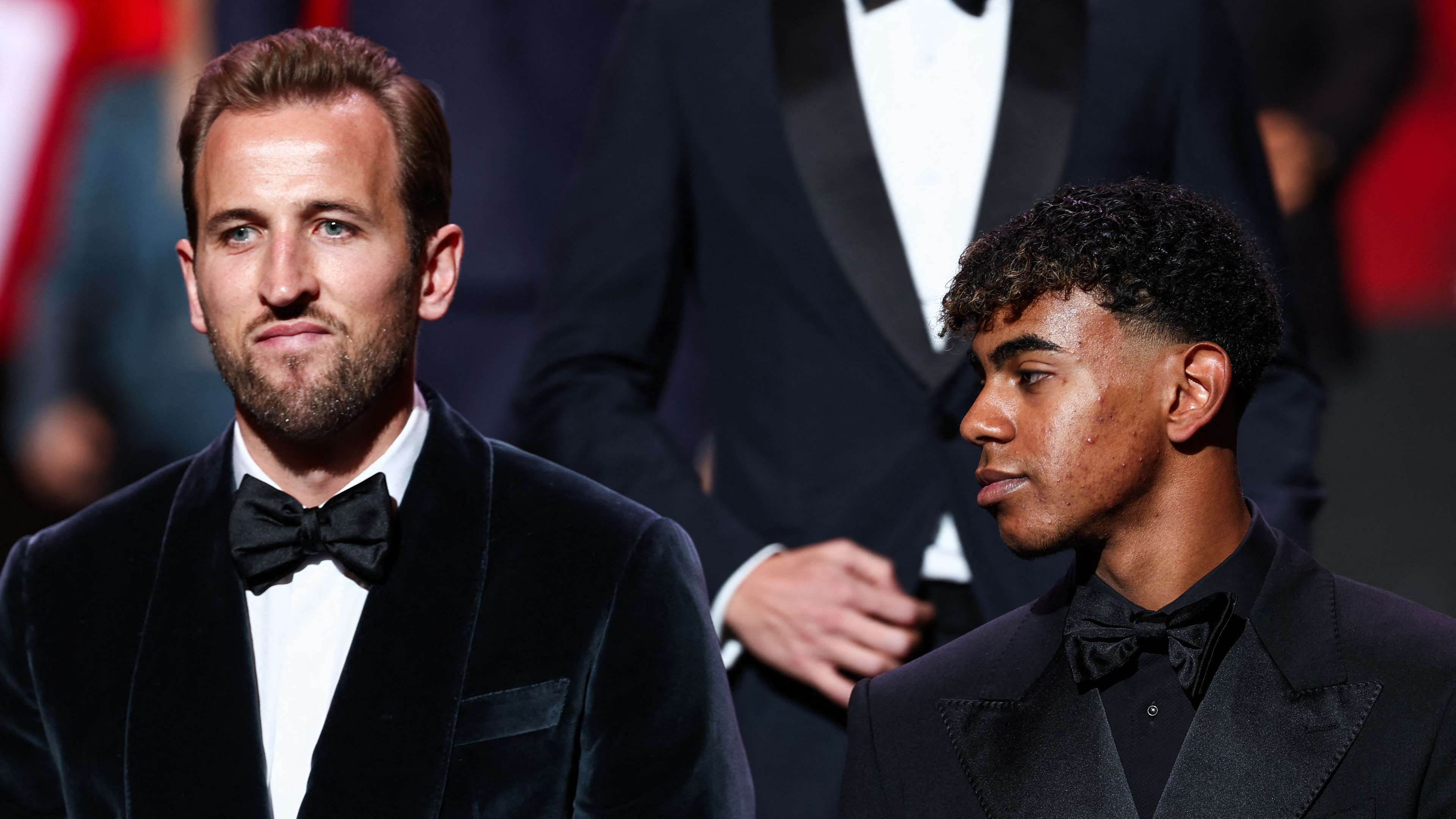
Harry Kane’s crowning as the 2026 Ballon d’Or winner has sparked debate beyond the usual discussion of goals, trophies and performances. In the aftermath of Monday’s ceremony in London, Daily Mail journalist Oliver Holt delivered a pointed assessment of Barcelona forward Lamine Yamal, contrasting the teenager’s experience of fame with what Holt described as Kane’s composed and modest approach.
Kane claimed football’s most prestigious individual award after a standout season, finishing ahead of Real Madrid star Kylian Mbappé, who placed second. Yamal came third, an extraordinary result for a young player whose rapid rise has made him one of the most closely watched figures in world football.
But while the rankings celebrated Kane’s achievement and Yamal’s remarkable progress, Holt’s comments shifted attention toward the public image of the Barcelona star. The journalist revisited the controversy surrounding Yamal’s 18th birthday party, using it as a point of comparison with Kane’s long-established reputation for keeping a relatively low profile.
A Ballon d’Or debate that goes beyond statistics
The Ballon d’Or is decided primarily on footballing merit, including individual performances, team success and a player’s influence during the season. Yet the award also brings wider questions about leadership, professionalism and public conduct into focus. When a winner is announced, attention naturally turns not only to what players achieved on the pitch but also to how they handle the pressures that accompany global recognition.
That broader conversation shaped Holt’s criticism. His comparison was not simply about whether Kane or Yamal had the better season. Instead, it placed two players at very different stages of their careers side by side: Kane, an experienced England captain with years at the highest level, and Yamal, a teenage Barcelona sensation adjusting to a level of attention few players encounter so early.
Holt’s remarks have therefore added a moral dimension to the Ballon d’Or reaction. By invoking the birthday-party controversy, he questioned how Yamal’s conduct and public presentation measure up against Kane’s perceived restraint. The comments are a sharp reminder that a footballer’s reputation can be shaped by events away from the pitch as well as by performances in major matches.
Yamal’s rapid rise brings intense public attention
Yamal’s third-place finish is a significant milestone. At an age when many players are still trying to establish themselves in senior football, he has already become a central figure for Barcelona and a major subject of international discussion. His pace, close control, creativity and willingness to take on defenders have made him one of the sport’s most exciting young attacking players.
Such rapid success, however, can bring challenges that extend beyond training and competition. Young stars must learn to manage media scrutiny, commercial opportunities and public expectations while continuing to develop as athletes. Every appearance, interview and social event can attract attention, and moments that might pass unnoticed for other teenagers can become headline news when a player has a global profile.
The controversy surrounding Yamal’s 18th birthday became part of that wider conversation. Its significance in the current debate lies less in the details of the event than in the way it has been used to assess his maturity and approach to fame. Critics may see it as a test of judgment, while supporters may argue that a young footballer should not be defined by a single episode away from the game.
Why the comparison with Kane is complicated
Kane’s public image has been built over a long career as a prolific striker, a senior England international and a captain. His calm manner and focus on football have contributed to a reputation for professionalism. That image provides a clear contrast in a debate about celebrity and responsibility, but the comparison also comes with an important caveat: Kane and Yamal are at very different points in their lives and careers.
Experience can make a substantial difference in how players respond to pressure. Kane has spent years navigating major tournaments, transfer speculation and the expectations attached to leading club and country. Yamal is still developing, both as a footballer and as a young adult. Comparing their public behaviour without accounting for that difference risks overlooking the distinct pressures each player faces.
There is also a distinction between criticism of a player’s choices and judgment of his football ability. Yamal’s third-place finish reflects his standing among the world’s leading performers; it does not settle questions about his personal conduct. Likewise, Kane’s Ballon d’Or victory recognizes his achievements on the field, while his reputation for modesty is a separate part of his public image.
What Kane’s victory means for football’s leading stars
Kane’s success gives the 2026 award a compelling storyline. His win places him at the summit of a season-long contest involving some of the game’s biggest names and reinforces the value of consistency at the highest level. Mbappé’s second-place finish and Yamal’s third show how the race brought together established superstars and a new generation of talent.
For fans following football prediction discussions, the result also offers a reminder of how difficult individual awards are to forecast. Goals and assists matter, but voters also weigh a player’s overall influence, performances in defining matches and contribution to team success. A strong season can make a player a contender, yet the final outcome depends on how those achievements compare with those of rivals across the campaign.
Yamal’s position on the podium may strengthen expectations that he will challenge for the award again in the years ahead. The Barcelona forward has already demonstrated the ability to shape games at an elite level, but his next steps will be measured against growing standards. Maintaining his form, staying fit and continuing to develop his decision-making will be crucial as opponents adapt to his style.
Scrutiny, growth and the next chapter
Holt’s criticism has ensured that the post-ceremony conversation is not limited to the Ballon d’Or rankings. It has raised a familiar question in modern sport: how much should a young athlete’s life away from competition influence public judgment? Some supporters will view the comments as a necessary discussion about responsibility, while others may see the comparison as unfair given Yamal’s age and the extraordinary attention surrounding him.
Ultimately, Kane’s victory and Yamal’s third-place finish tell two different stories. Kane’s award recognizes the peak of an accomplished career, while Yamal’s position signals the arrival of a generational prospect who is still learning to live with fame. The debate over their contrasting public images may continue, but the clearest measure of Yamal’s future will remain his performances on the pitch—and how he responds to the scrutiny that comes with being one of football’s most prominent young stars.