
The Disparity in Refereeing Treatment: Barcelona’s ‘Heaven’ vs. Real Madrid’s ‘Hell’
Introduction
In a recent report by the Spanish website “Defensa Central,” it has been highlighted that there is a significant gap between the performance of Barcelona and Real Madrid in different competitions, specifically focusing on the issue of refereeing bias within La Liga. The report brings to light the disparities in treatment that the two clubs face and raises questions about the fairness of the refereeing system in Spanish football.
Refereeing Bias in La Liga
According to “Defensa Central,” Real Madrid, despite its dominance in the Champions League, faces a challenging situation domestically due to what is described as unbalanced refereeing decisions. The report suggests that Barcelona has been the beneficiary of favorable treatment for many years, evident in the statistical analysis of red cards in La Liga matches.
The figures presented by the website reveal that Barcelona holds the best record for red cards in the 21st century, with a staggering difference of (+69) between red cards in their favor and against them. On the other hand, Real Madrid’s position in this ranking is significantly lower, with a balance of just +1. This stark contrast is seen as clear evidence of the refereeing bias that exists in La Liga.
Champions League vs. La Liga
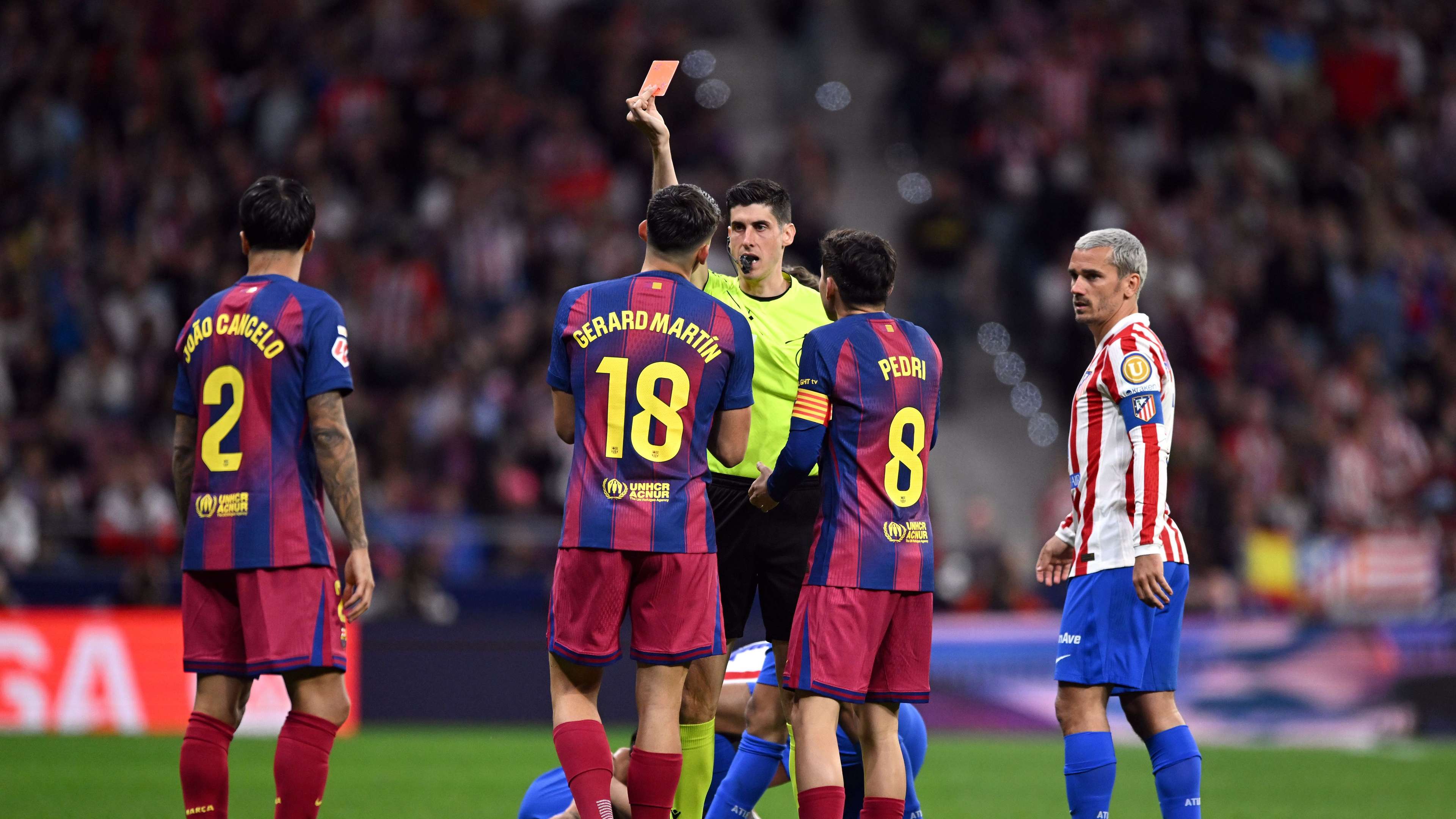
“Defensa Central” emphasizes the difference in refereeing standards between the Champions League and La Liga. While Real Madrid experiences impartial and professional refereeing in European competitions, the same cannot be said for their domestic fixtures. The report highlights instances where decisions have favored Barcelona, such as the recent intervention of the Video Assistant Referee (VAR) in overturning a red card against Gerard Martín in a match against Atlético Madrid.
The website also references the Negreira case, where Barcelona was implicated in alleged payments to a former vice-chairman of the Referees’ Committee. This incident raises concerns about the integrity of the refereeing system in Spanish football and questions the fairness of the competition.
Conclusion
In conclusion, the report by “Defensa Central” sheds light on the disparity in refereeing treatment between Barcelona and Real Madrid in La Liga. The statistical analysis and examples provided call into question the fairness and integrity of the refereeing system in Spanish football. As fans and stakeholders continue to voice their concerns, it remains to be seen whether steps will be taken to address these issues and ensure a level playing field for all clubs in the league.
Impact on Team Performance
The discrepancies in refereeing decisions can have a significant impact on the performance of teams in La Liga. When a team consistently faces unfavorable calls and unjust red card decisions, it can affect their morale, momentum, and ultimately their standing in the league. Real Madrid, despite their success in international competitions, may find themselves at a disadvantage in the domestic league due to perceived biases in refereeing.
On the other hand, Barcelona’s perceived favoritism could give them an unfair advantage over their rivals in La Liga. This can create an uneven playing field and undermine the integrity of the competition. Fans of both clubs and neutral observers alike may question the authenticity of results and the fairness of the outcomes when such disparities in refereeing treatment exist.
Historical Context
The issue of refereeing bias is not a new phenomenon in football. Throughout the history of the sport, there have been instances where certain teams or players have been perceived to receive preferential treatment from referees. This can be influenced by a variety of factors, including historical rivalries, financial interests, and the pressure from fans and media.
In the case of Barcelona and Real Madrid, the rivalry between the two clubs adds another layer of complexity to the issue of refereeing bias. The intense competition between these two giants of Spanish football can heighten emotions and increase scrutiny on refereeing decisions, leading to allegations of favoritism and unfair treatment.
Calls for Reform
As awareness of the refereeing bias in La Liga grows, there have been calls for reform within the Spanish football governing bodies. Fans, players, and analysts have urged for greater transparency in the decision-making process, stricter regulations on referee conduct, and increased accountability for any instances of bias or corruption.
Implementing technology such as VAR has been a step in the right direction to improve the accuracy of decisions on the field. However, there is still work to be done in ensuring that the system is used consistently and fairly across all matches. Addressing the disparities in refereeing treatment between clubs like Barcelona and Real Madrid is essential to upholding the integrity of the sport and preserving the competitive spirit of La Liga.
Looking to the Future
As the debate around refereeing bias in La Liga continues, it is important for all stakeholders to come together to find solutions that promote fairness and equality in the competition. Transparency, accountability, and a commitment to upholding the principles of fair play are essential in addressing the concerns raised by reports like the one from “Defensa Central.”
By acknowledging the disparities in refereeing treatment and working towards a more just and impartial system, Spanish football can strive to create an environment where all clubs have an equal opportunity to succeed based on their skill and performance on the field. Only then can the integrity of the sport be preserved and the trust of fans and players maintained for generations to come.