
Bayern Munich Face Major Injury Setback as Ismael Saibari Could Miss Four Months
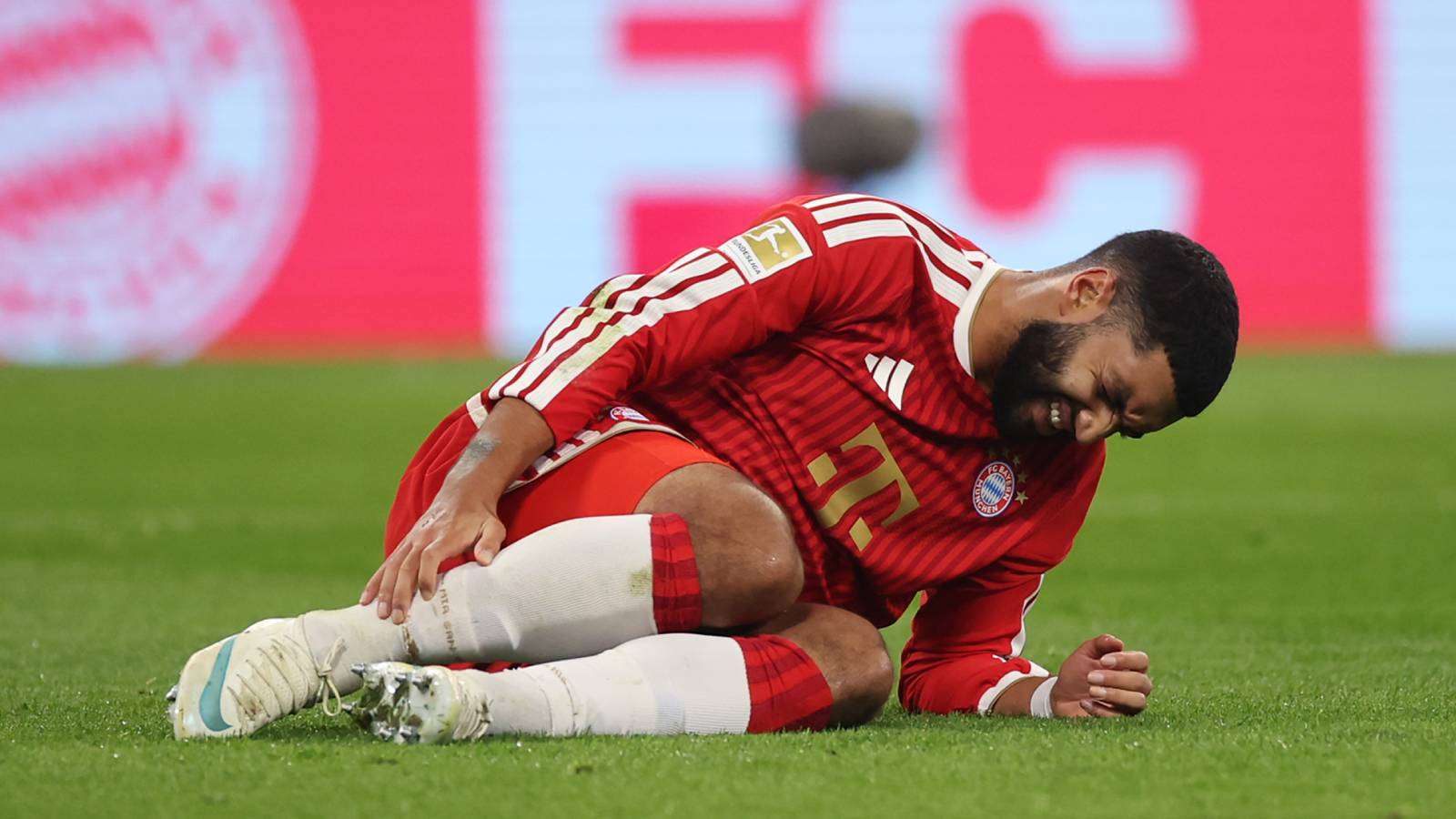
Bayern Munich have received a worrying update on Moroccan midfielder Ismael Saibari, whose ankle injury is expected to keep him out for significantly longer than first feared. Although the operation was successful, the club now anticipates a recovery period of three to four months, leaving the player facing a lengthy spell away from football.
Saibari was injured during Bayern’s 2-2 draw with Borussia Dortmund in the eighth round of the German league. He left the Allianz Arena on crutches after going down in a challenge involving Dortmund’s goalkeeper, prompting immediate concern about the severity of the problem.
Initial reports suggested the midfielder could be sidelined for at least three months. However, Bayern sporting director Max Eberl has since offered a more cautious assessment, citing a tear to the syndesmotic ligament in Saibari’s ankle. The revised estimate means the club must plan without one of its Moroccan stars for a substantial part of the season.
Successful surgery, but a demanding recovery ahead
Eberl confirmed that Saibari underwent surgery and that the procedure went well. The sporting director also described seeing the player at the team’s lunch the following day, where Saibari joked that he might return in two and a half weeks. The light-hearted exchange, however, does not reflect the medical outlook.
“The operation went well yesterday. And he was already sitting with us today at the lunch table,” Eberl told journalist Florian Plettenberg. “I was completely surprised and asked him whether he would be back after two or three weeks, so he laughed a little and said: two and a half weeks. But that probably will not happen. We expect him to be absent for a period ranging between three and four months due to the syndesmotic ligament tear.”
The syndesmotic ligaments connect the tibia and fibula, the two bones in the lower leg, and help keep the ankle stable. Damage to this area can require a careful, staged rehabilitation programme. Even after surgery, players typically need time to rebuild strength, restore movement and regain confidence before returning to full training.
For Bayern, the priority will be ensuring Saibari is fully fit rather than rushing him back to meet an optimistic timetable. Returning too early from a serious ankle injury can increase the risk of renewed pain or further damage, potentially extending an absence that is already expected to last several months.
Injury setback follows a difficult day against Dortmund
Saibari was not the only Bayern player to suffer an injury during the Dortmund match. Serge Gnabry was ruled out for an estimated four to six weeks with a hamstring problem, adding another concern for the coaching staff as the fixture list grows more demanding.
Michael Olise’s condition was also being monitored after the game, with no definitive diagnosis immediately available. Goalkeeper Jonas Urbig, meanwhile, experienced dizziness after taking a heavy blow to the head. Bayern continued to assess his condition before determining when he could return.
A cluster of injuries can complicate planning across a season, especially when domestic league matches and European competition arrive in quick succession. Coaches may have to adjust their preferred line-ups, manage minutes more carefully and give additional opportunities to squad players. The extent of those changes will depend on each player’s recovery and the availability of alternatives.
What Saibari’s absence means for Bayern
Saibari’s injury is a significant setback for Bayern Munich’s midfield options. The club had hoped to call on the Moroccan during a busy stretch of domestic and European football, when squad depth can prove crucial. His absence could force Bayern to redistribute responsibilities and make greater use of other midfielders while he completes rehabilitation.
The latest estimate points to a possible return around February or March 2027, although that is not a confirmed comeback date. Recovery timelines after ligament surgery can change according to how the ankle responds to treatment, how quickly strength and mobility return, and whether the player can progress through each stage without discomfort.
That uncertainty makes it difficult to set a precise prediction for Saibari’s first match back. The three-to-four-month estimate provides a broad guide, but his return will ultimately depend on medical assessments and his ability to complete training at full intensity. Bayern are unlikely to take unnecessary risks with a player whose injury requires careful management.
For supporters tracking Bayern’s season, the key developments will be Saibari’s progress through rehabilitation and any updates from the club’s medical team. A successful operation is an encouraging first step, but it does not shorten the recovery process. The coming weeks will focus on healing, restoring ankle stability and gradually building the fitness required for competitive football.
Bayern therefore face a delicate balancing act: cover Saibari’s role during a demanding run of fixtures while giving the midfielder enough time to return safely. The injury is a fresh blow for the club and for the Moroccan international, but a measured recovery offers the best chance of ensuring he comes back ready to contribute rather than risking another setback.