

Ryan Flamingo’s Controversial Song During PSV Celebration
PSV Eindhoven’s Defender Causes Stir with Offensive Chant
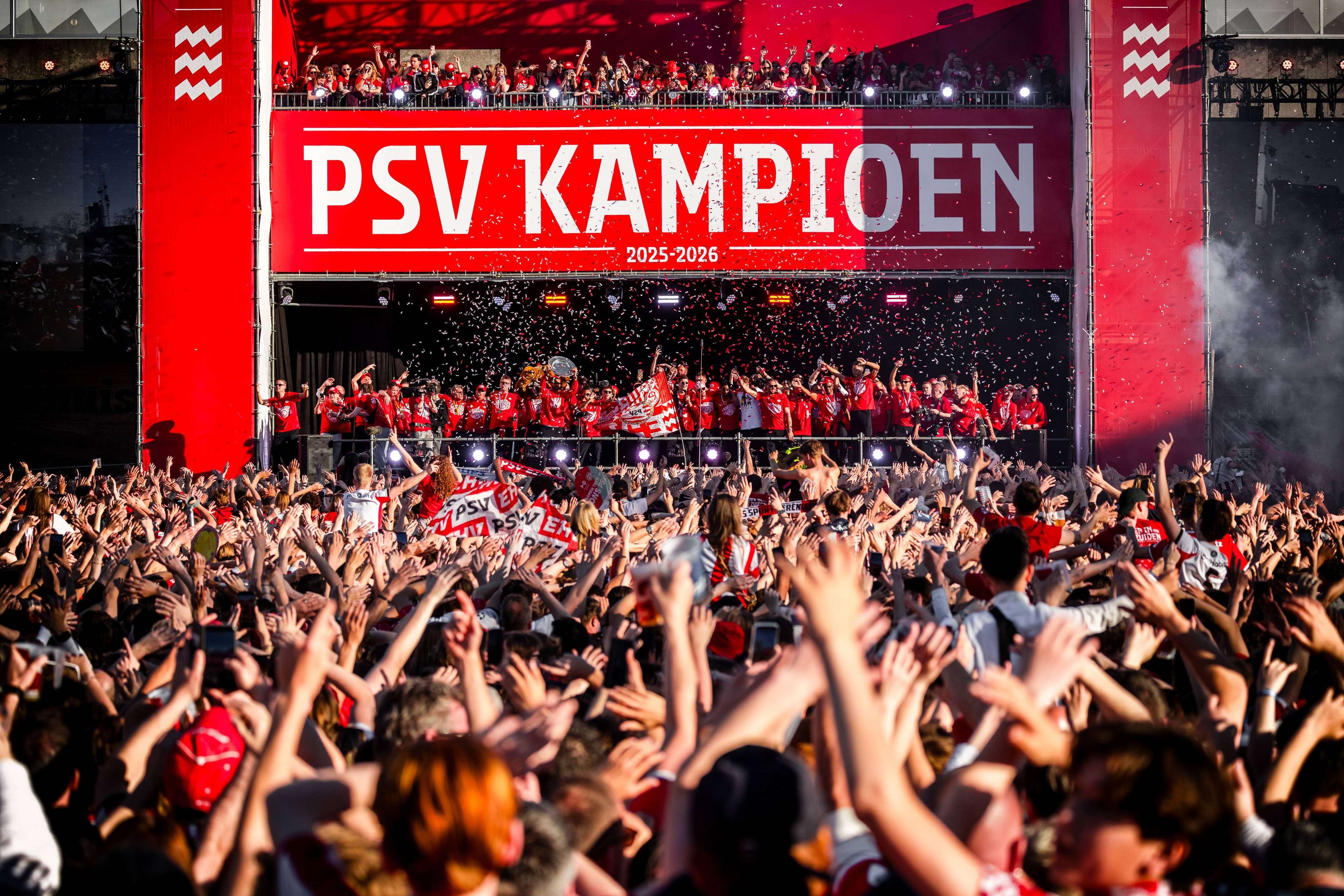
Ryan Flamingo made headlines on Tuesday as PSV Eindhoven celebrated their 27th league title in a public gathering at Stadhuisplein in Eindhoven. The defender grabbed the microphone and started singing a controversial chant that sparked immediate backlash on social media.
The chant in question, “Whoever doesn’t jump is a Jew,” has been a contentious issue in Dutch football for years. The term ‘Jew’ is commonly used to refer to arch-rivals Ajax, but its use in this context has been met with criticism and deemed offensive.
Flamingo’s actions during the celebration quickly drew attention, with a PSV staff member intervening to stop him from continuing the chant. Despite the historical context of the song within football culture, many viewed Flamingo’s decision to sing it as inappropriate and disrespectful.
Reactions flooded social media platforms following the incident, with viewers expressing shock and disapproval of Flamingo’s behavior. Jeremy, one of the critics, questioned Flamingo’s presence at the celebratory event and condemned his choice of chant.
Michel also weighed in on the situation, highlighting the insensitivity of singing such a chant at a time when global issues are at the forefront. He criticized PSV for allowing a player to engage in such behavior during a moment of celebration.
The incident has reignited discussions about the use of offensive chants in football and the responsibility of players to uphold respectful conduct, especially during public events. While rivalry and banter are common in sports, there is a line that should not be crossed when it comes to promoting harmful stereotypes or inciting discrimination.
Impact of Flamingo’s Actions on PSV Eindhoven
As the reigning champions of the Eredivisie, PSV Eindhoven now faces scrutiny not only for Flamingo’s actions but also for how they handle the aftermath of the incident. The club’s response to the controversy will be closely monitored by fans, sponsors, and the football community at large.
PSV Eindhoven has yet to release an official statement regarding the incident, but the club’s reputation and image could be at stake depending on their handling of the situation. In a time where social responsibility and inclusivity are key values in sports, addressing issues of discrimination and intolerance remains crucial.
Moving forward, it is essential for PSV Eindhoven to address the incident promptly, take appropriate action, and demonstrate a commitment to fostering a respectful and inclusive environment within the club and among its players.
In conclusion, Ryan Flamingo’s actions during PSV’s title celebration have sparked controversy and raised important questions about the impact of offensive chants in football. As the club navigates the aftermath of the incident, it will be crucial for them to prioritize values of respect, tolerance, and inclusivity in order to uphold their reputation and credibility within the football community.
Football Culture and Rivalry in the Netherlands
The use of chants and songs to taunt rival teams is a common practice in football culture, not just in the Netherlands but around the world. However, the line between friendly banter and offensive behavior can often be blurred, leading to controversies like the one involving Ryan Flamingo. In the case of Dutch football, the rivalry between PSV Eindhoven and Ajax is deeply rooted in history and tradition.
Ajax, based in Amsterdam, is one of the most successful and well-known football clubs in the Netherlands. The use of the term ‘Jew’ to refer to Ajax fans stems from the historical presence of Jewish communities in Amsterdam. However, over time, the term has been appropriated by both sets of fans as a means of identification and differentiation.
While some see the use of the chant as harmless banter, others argue that it perpetuates harmful stereotypes and can incite discrimination. The controversy surrounding Ryan Flamingo’s actions highlights the need for clubs, players, and fans to reflect on the impact of their words and behavior, especially in a diverse and inclusive society.
Responsibility of Players and Clubs in Football
Professional football players, like Ryan Flamingo, are not just athletes but also role models for fans, especially younger ones who look up to them. As representatives of their clubs, players have a responsibility to uphold certain standards of behavior both on and off the pitch.
Clubs also play a significant role in shaping the culture and values of their teams. How they respond to incidents of misconduct or controversy can have a lasting impact on their reputation and credibility. In the case of PSV Eindhoven, the club’s handling of Ryan Flamingo’s actions will be closely watched by fans and the broader football community.
Addressing issues of discrimination and intolerance is not just a matter of PR for football clubs; it is a moral imperative. By taking a stand against offensive behavior and promoting inclusivity, clubs can set a positive example for their players and fans, fostering a more welcoming and respectful environment within the sport.
Learning from Controversies: Moving Forward
Controversies like the one involving Ryan Flamingo’s chant present opportunities for reflection and growth within the football community. By confronting issues of discrimination and intolerance head-on, clubs and players can contribute to a more positive and inclusive sporting culture.
Education and awareness initiatives can also play a crucial role in promoting understanding and empathy among fans and players. By engaging in dialogue and learning from past mistakes, the football community can work towards a future where respect, tolerance, and inclusivity are the norm.
As the dust settles on the incident involving Ryan Flamingo, it is important for all stakeholders in football to consider the impact of their actions and words. By striving for a more inclusive and respectful environment, clubs and players can create a vibrant and welcoming community for all fans to enjoy the beautiful game.
Conclusion
While controversies like Ryan Flamingo’s offensive chant may rock the football world, they also present opportunities for growth and improvement. By addressing issues of discrimination and intolerance, clubs can set a positive example for their players and fans, fostering a more inclusive and respectful sporting culture.
As the football community grapples with the aftermath of such incidents, it is vital to remember the values of respect, tolerance, and inclusivity that should underpin the beautiful game. By learning from past mistakes and working towards a more positive future, football can continue to bring joy and unity to fans around the world.