
Mohammed Shami Announces Retirement from Test Cricket After 64 Matches for India
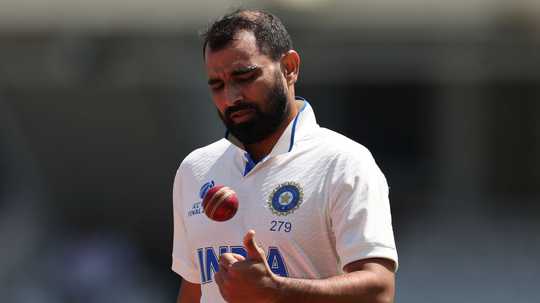
Veteran fast bowler Mohammed Shami has announced his retirement from Test cricket, bringing an end to a distinguished red-ball career defined by pace, reverse swing and determined comebacks. The India quick leaves the format with 229 wickets from 64 Tests, an average of 27.71 and six five-wicket hauls.
Shami shared the news in a social media post late on Friday, November 6, describing the decision as emotional and thanking the teammates, coaches, family members and supporters who stood by him throughout his career. While he is bidding farewell to the Test arena, his announcement does not signal an end to his involvement in cricket: he has continued to play domestic matches for Bengal and feature in the Indian Premier League.
A Test Debut to Remember
Shami’s journey in India’s Test side began at Eden Gardens against the West Indies, exactly 13 years before the date of his retirement announcement. His debut was an immediate statement of intent. He claimed nine wickets for 118 runs across the match, a career-best haul that announced the arrival of a bowler capable of troubling batters with both pace and movement.
That performance set the tone for a career in which Shami became one of India’s most effective fast bowlers. He was especially dangerous with the older ball, using reverse swing to attack the stumps and challenge batters late in their innings. His ability to generate movement on subcontinental pitches made him a valuable part of the attack at home, while his control and seam position also helped him succeed in conditions traditionally associated with fast bowling.
Impact at Home and Overseas
Shami’s record was not confined to familiar conditions. He proved his value on overseas tours, including in Australia and South Africa, where pace, bounce and movement often shape the contest. Four of his six Test five-wicket hauls came in those two countries—a notable reflection of his ability to adapt beyond Indian pitches.
For India, that versatility gave captains a reliable option across different stages of a match. Shami could provide a probing opening spell, return to break partnerships or use reverse swing to make the ball dangerous as it aged. His wicket tally places him 12th among India’s leading Test wicket-takers and sixth among the country’s fast bowlers, a significant achievement in a team that has produced generations of accomplished seamers.
His contribution also went beyond the numbers. Shami’s direct, attacking approach often put pressure on batters even when conditions offered limited assistance. In a format where patience and sustained accuracy matter, he combined the ability to bowl long spells with the knack of producing a decisive burst.
Injuries, Setbacks and Comebacks
Injuries repeatedly interrupted Shami’s career, but they did not define it. The fast bowler faced several fitness challenges and worked his way back into contention on multiple occasions. Those comebacks became an important part of his story, reflecting the physical demands of fast bowling and the persistence required to remain competitive at international level.
One of the most memorable recent chapters came at the 2023 ODI World Cup in India, where Shami delivered a series of outstanding performances. After the tournament, he underwent ankle surgery and later dealt with knee-related issues, keeping him out of the national side for an extended period. His last Test appearance had already come earlier that year, in the World Test Championship final against Australia at The Oval. India lost the final, and Shami’s appearance proved to be his final outing in the longest format.
He returned to international cricket in January 2025 in the T20 format and was subsequently selected for India’s Champions Trophy squad. Since the final against New Zealand, however, he has not played for the national team in any format. He has remained active in domestic cricket and the IPL, maintaining a presence in the game while continuing to represent Bengal.
Shami’s Next Chapter in Cricket
Shami has already featured in three Ranji Trophy matches for Bengal during the ongoing domestic season and has also been named in the state’s Syed Mushtaq Ali T20 squad. His continued participation offers supporters an opportunity to see him in action, even as his Test career comes to a close. For selectors and team planners, his experience could also remain valuable in shorter formats, depending on his fitness and future availability.
His retirement is likely to prompt discussion about India’s pace-bowling depth and the challenge of replacing a bowler with experience across home and overseas conditions. Any prediction about who will fill that role must account for the different skills Test cricket demands: stamina, accuracy, movement and the ability to sustain pressure over long spells. Shami’s career provides a clear benchmark, but his departure also creates space for the next generation to establish itself.
“A Very Special Part of My Life”
In his retirement message, Shami described Test cricket as much more than a format. He recalled the pride of first wearing the India Test jersey and said that every wicket, struggle, injury and comeback had taught him something. His farewell reflected both the emotional weight of the decision and the lasting significance of representing his country.
“I am bidding farewell to the white kit, but never to the memories associated with it,” he wrote, adding that he would always carry the pride of playing Test cricket for India. He also thanked the supporters who continued to believe in him through both the successful periods and the difficult ones.
Shami’s final Test chapter may have ended at The Oval, but his legacy stretches across 64 matches and more than a decade of international cricket. His 229 wickets tell part of the story; the rest lies in the performances overseas, the dramatic spells with a reversing ball and the repeated returns from injury. As he moves on from the longest format, Indian cricket bids farewell to a fast bowler whose impact was measured not only in wickets, but in the persistence and skill behind them.