
Real Madrid Lead Valencia as Tunnel Clash Overshadows Fiery First Half
Real Madrid took a two-goal advantage into half-time against Valencia at the Mestalla, but the scoreline was only part of the story. Federico Valverde and Arda Güler found the net during the opening 45 minutes of the Spanish league meeting, while mounting frustration on the pitch spilled into a reported confrontation in the corridor leading to the dressing rooms.
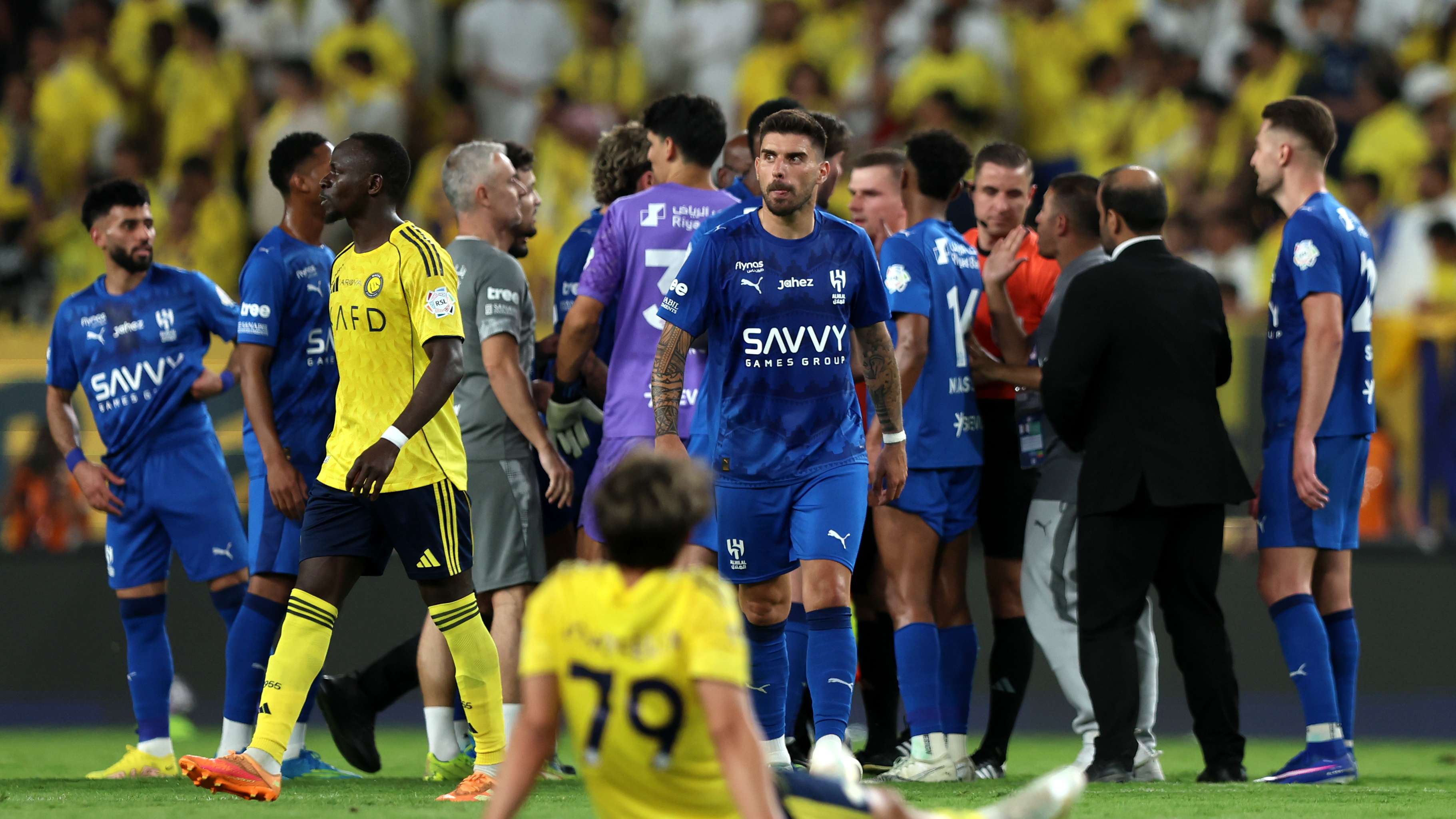
According to Spanish radio station Cope, as reported by Mundo Deportivo, several players from the two teams became involved in a brawl as they made their way off the field. Security staff reportedly intervened to separate those involved and prevent the dispute from escalating. The incident added a dramatic subplot to a match already marked by intense challenges, protests and a charged atmosphere.
Valverde and Güler Put Madrid in Control
Madrid’s early breakthrough came through Valverde, whose goal gave the visitors an important foothold in a difficult away fixture. The Uruguayan midfielder is known for his energy and ability to contribute in both halves of the pitch, and his strike offered Madrid a reward for their attacking intent.
Güler then extended the lead, putting the visitors in a stronger position before the interval. The young Turkish playmaker’s goal underlined the depth of Madrid’s attacking options and gave the team a two-goal cushion in a stadium where Valencia’s home support can make life uncomfortable for visiting sides.
For Valencia, conceding twice before half-time was a major setback. The hosts had hoped to use the Mestalla crowd and their own intensity to unsettle the reigning Spanish powerhouse, but Madrid’s finishing left them facing a difficult challenge after the break. A two-goal deficit also increased the pressure on Valencia to respond quickly, while giving Madrid the chance to manage the game and look for opportunities on the counterattack.
Frustration Builds as Refereeing Calls Become a Talking Point
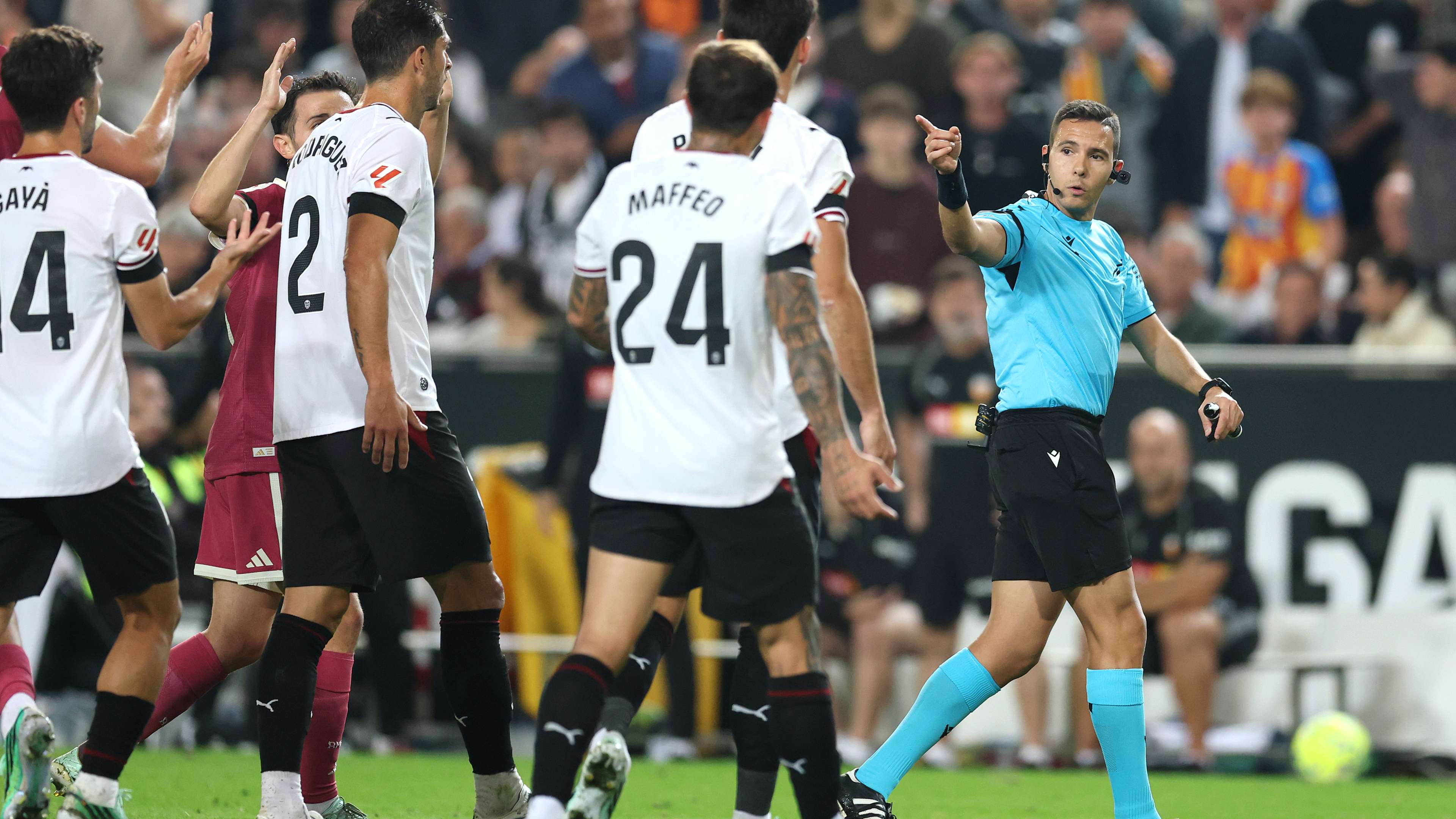
The reported tunnel confrontation followed a first half in which tempers had already begun to rise. Players from both teams were said to have protested a series of refereeing decisions, and those disagreements contributed to the increasingly heated mood on the field. When a match is played at high speed and with a strong emotional edge, disputed calls can quickly become a source of friction between opponents.
That tension appeared to continue after the whistle for half-time. Rather than leaving the pitch calmly, players from both sides reportedly carried their arguments into the passageway leading to the dressing rooms. Security personnel then stepped in to keep the situation under control. No further details about the precise cause of the confrontation or any disciplinary action were included in the initial reports.
It is important to distinguish between what has been reported and what has been officially confirmed. Cope’s account, relayed by Mundo Deportivo, described a clash involving several players, but the available information did not provide a complete account of the exchange. The report identified Jude Bellingham and Antonio Rüdiger as being at the centre of the incident for Real Madrid, although the full sequence of events remained unclear.
Bellingham and Rüdiger Reportedly at the Centre
Bellingham and Rüdiger are both prominent figures in Madrid’s squad, but they bring different qualities to the team. Bellingham’s influence is often felt through his movement, pressing and ability to connect midfield with attack. Rüdiger, meanwhile, is a forceful defender whose physical style and competitive personality suit high-pressure contests.
Their reported involvement reflected the intensity of a match in which neither side appeared willing to back down. Still, a heated exchange at half-time does not necessarily indicate a wider problem within either team. Football matches can generate strong emotions, particularly when players believe decisions have gone against them or when a rivalry is sharpened by the noise and pressure of a packed stadium.
For Madrid, the priority would have been to regain focus after the incident and protect their advantage. Any loss of concentration could have offered Valencia a route back into the contest. The hosts, meanwhile, needed to turn their frustration into a more effective second-half performance rather than allowing the confrontation to dominate their attention.
What the Incident Could Mean for the Match
The tunnel clash became one of the main talking points of the game, but the football remained central to the outcome. Madrid’s two goals gave them a clear advantage at the break, while Valencia needed a response capable of changing the match’s momentum. A goal for the home side would have raised the pressure on the visitors and energized the Mestalla crowd; another Madrid goal would have made the task considerably harder.
Disciplinary consequences were also a potential consideration. Depending on what officials or match reports recorded, incidents away from the field of play can attract scrutiny after the game. However, without an official statement or additional confirmed details, any prediction about suspensions or sanctions would be premature.
The confrontation also highlighted how quickly the emotional temperature can rise in top-level football. Players are expected to compete aggressively while maintaining control, and security teams are positioned to respond when disagreements threaten to become physical. Their intervention, according to the report, helped prevent the situation from escalating further.
Prediction: Madrid’s Lead Gives Them the Advantage
At half-time, Madrid’s two-goal lead placed them in a commanding position, but the combination of Valencia’s home support and the match’s volatile atmosphere meant the contest was not necessarily settled. The visitors had to stay disciplined, avoid unnecessary bookings and keep their shape, while Valencia needed to attack with urgency without leaving too much space behind.
From a football prediction perspective, Madrid’s advantage made them the stronger candidate to control the second half, particularly if they could slow the tempo and exploit openings on the break. Valencia’s best chance of changing the outcome was to score early after the restart and use the crowd’s energy to build pressure. The first-half goals, however, left the home side with little room for error.
Ultimately, the match’s defining images at the interval were both on the scoreboard and in the tunnel: Valverde and Güler had delivered Madrid’s goals, while a reported confrontation between players showed just how fiercely the contest had been fought. The incident was a reminder that, in high-stakes Spanish league football, a match can be shaped by tactical decisions, individual quality and the emotions that surface when pressure reaches its peak.