
Joan García Embraces Barcelona’s High-Risk Goalkeeping Role
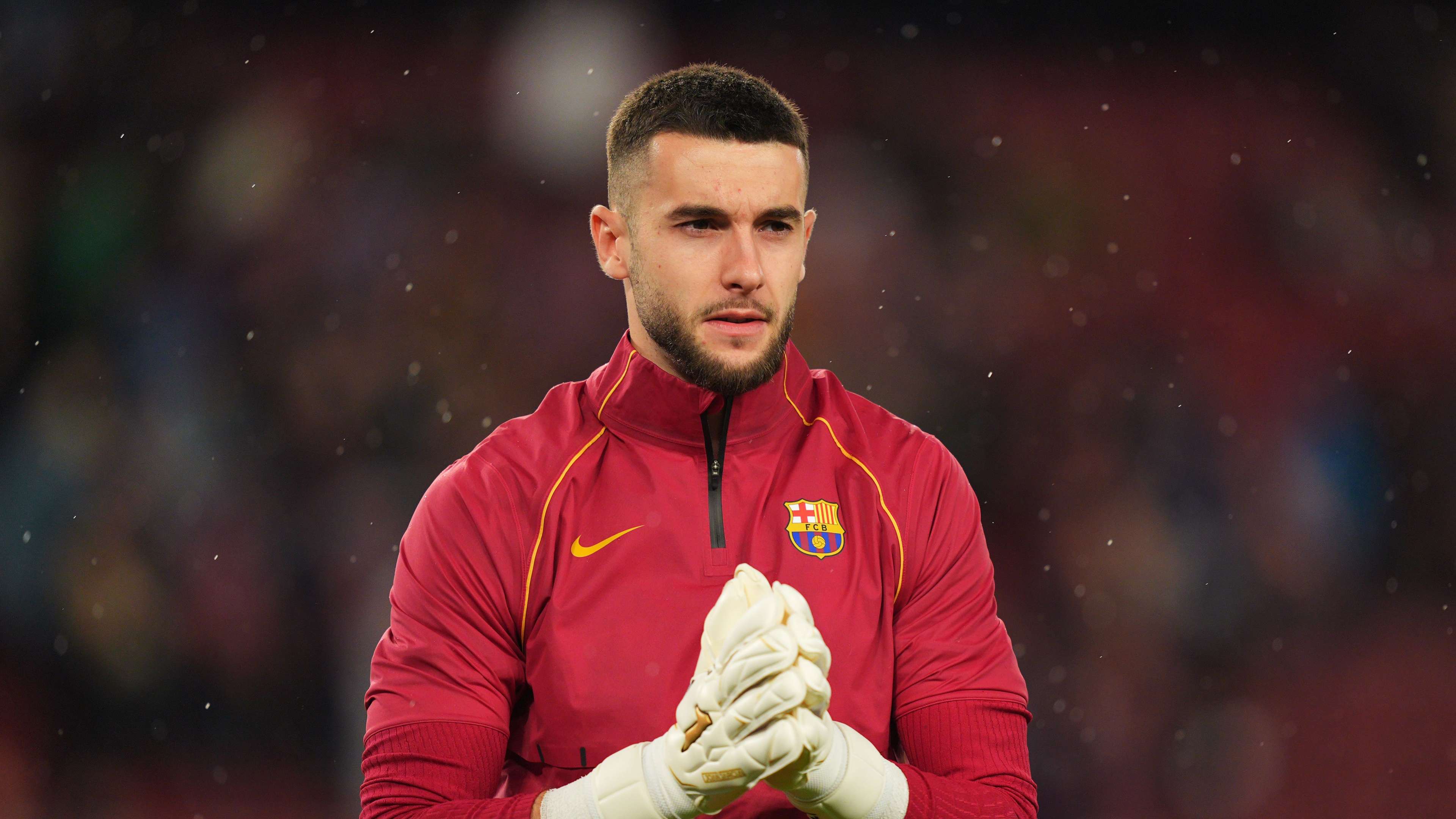
Barcelona goalkeeper Joan García is comfortable operating on the edge of danger. The 25-year-old believes the bold approach at the heart of the club’s football philosophy—including a high defensive line and a goalkeeper prepared to move well beyond his penalty area—offers more benefits than risks.
The system can leave considerable space behind Barcelona’s defenders, placing unusual demands on the player in goal. García must stay alert, read developing attacks quickly and decide when to rush out, intercept a pass or remain in position. Yet he argues that the chances created by the approach, and the opportunities it gives him to help his teammates, make the risk worthwhile.
Speaking to Mundo Deportivo after returning to the Spain squad, García described the role as a natural fit. His comments came after an impressive performance in Barcelona’s recent victory over Atlético Madrid at the Wanda Metropolitano, where the goalkeeper helped his side manage the pressure of a demanding contest.
Why Barcelona’s goalkeeper must stay switched on
Barcelona’s style asks its goalkeeper to contribute to far more than shot-stopping. When the team pushes its defensive line high, the space behind the back four can become a target for opponents looking to play a direct pass or send a runner through on goal. García is therefore expected to act as an extra defender, sweeping up danger before it turns into a clear chance.
That responsibility requires constant concentration. A goalkeeper may have to make a quick decision with little time to recover if the opponent gets the ball past him. At the same time, staying too deep can invite pressure and undermine the team’s plan to control the game higher up the pitch.
García said the demands suit him. “Our style of play requires the goalkeeper to have complete concentration and attention, so that he can help the team in every possible way,” he explained. “I feel comfortable in this role, and I like helping my teammates in various situations.”
He acknowledged that the system carries a significant risk, but believes its overall value has been demonstrated. For Barcelona, an active goalkeeper can help the team keep possession, support the defensive line and prevent opponents from exploiting open space. The approach is not without danger, but García sees it as a calculated part of the club’s identity rather than an unnecessary gamble.
García backs his decision-making under pressure
Playing far from the goal inevitably means that mistakes can attract attention. A mistimed clearance or an opponent’s well-placed pass can leave the goalkeeper exposed. García, however, says he does not want the possibility of an error to dictate how he performs.
“I do not think about the present moment as much as I focus on giving the best I have,” he said. He accepts that unwanted situations can arise, but believes sound decision-making and confidence produce positive outcomes more often than not. In his view, the saves and interventions a proactive goalkeeper makes can outweigh the occasional mistake.
That perspective reflects a broader change in modern football. Goalkeepers are increasingly judged on their ability to play with their feet, cover space and contribute to the first phase of possession, as well as on their reactions to shots. At Barcelona, those skills are especially important because the team’s structure depends on players being comfortable receiving the ball and making decisions under pressure.
García’s challenge is to balance courage with judgment. Advancing from his line can stop an attack before it develops, but timing is crucial. His performance against Atlético offered a high-profile example of how a goalkeeper’s awareness can support a team’s defensive strategy, even when the role leaves little room for hesitation.
Spain’s goalkeeper competition is a source of motivation
García’s return to the Spain squad places him among a group of goalkeepers competing for opportunities at international level. Rather than viewing that competition as a source of tension, he sees it as evidence of the strength of Spanish football and the work being done in the country’s youth academies.
He praised the quality of the goalkeepers around him, including Álvaro, and said sharing training sessions with talented teammates gives him a chance to keep improving. The competition is demanding, but it also creates an environment in which each player must maintain a high standard.
García also highlighted the friendly relationships within the group. He recalled the response to Unai Simón’s remarks at the Ballon d’Or ceremony, when the Spain goalkeeper dedicated words to García and David. García said the moment meant a great deal to them, describing the group’s bond as special.
For him, the national team experience is shaped not only by what happens during matches but also by the people and relationships built away from the pitch. He said he and David were delighted by Simón’s gesture, adding that the reaction reflected the character of the three goalkeepers.
That respect does not remove the competitive edge. García stressed that the demands on the pitch remain high and that every goalkeeper wants to perform. The key, he suggested, is to combine ambition with mutual support—a balance that can help Spain maintain depth in a position where consistency is essential.
Spain target wins in the UEFA Nations League
Spain’s upcoming schedule includes a trip to Prague to face the Czech Republic, followed by a meeting with England at Wembley. García made the team’s priorities clear: win the matches, continue progressing in the UEFA Nations League and preserve an unbeaten record.
“The goal is clear, and it is to win the matches and to continue progressing in the UEFA Nations League, as well as to keep our record free of defeats,” he said. He described the challenge as exciting and said the squad would need to give everything to achieve its aims.
The fixtures will test Spain’s ability to handle different kinds of pressure. Away matches can demand patience and resilience, while a game at Wembley brings the added challenge of facing a strong opponent in a charged atmosphere. For the goalkeepers, preparation and communication will be especially important as the team works to protect its defensive structure.
Prediction: Barcelona’s approach will keep testing García
García’s comments suggest he is unlikely to retreat from Barcelona’s adventurous goalkeeping demands. If he continues to read danger early and make confident decisions, his willingness to operate outside the penalty area could become a major asset for the club. The risk will remain part of the job, but so will the opportunity to prevent attacks before they become shots on goal.
For Spain, the immediate prediction is that competition among the goalkeepers will remain intense, with selection depending on form, tactical needs and the demands of each fixture. García’s return to the squad gives him a valuable chance to demonstrate his progress. Whether at Barcelona or with Spain, his task is clear: stay composed, contribute to the team’s football and turn a high-pressure role into an advantage.