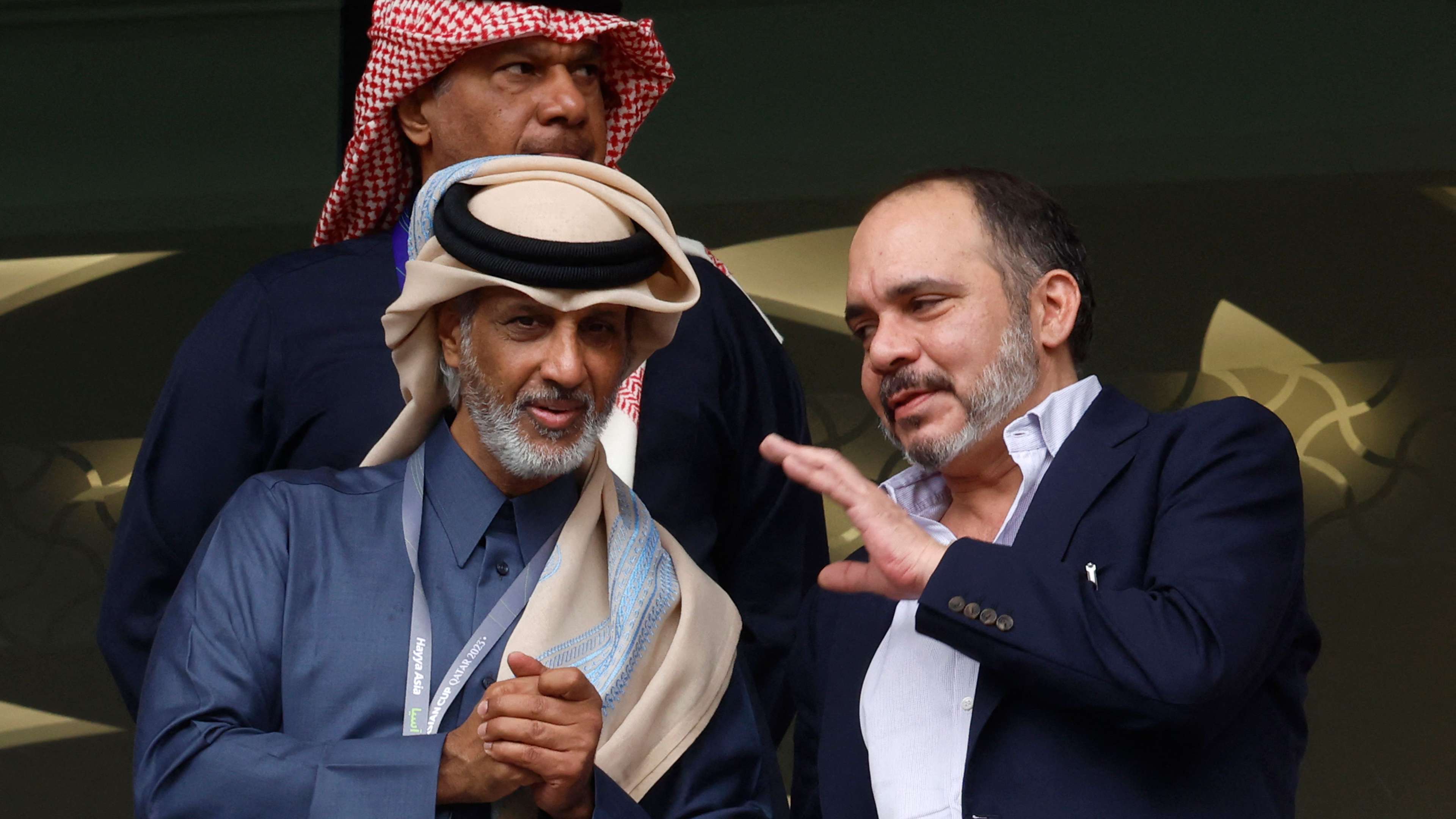

Prince Ali Offers Cooperation as AFC Reviews His Claims Over FIFA Politics
Prince Ali bin Al Hussein has pledged to cooperate fully with any judicial review by the Asian Football Confederation (AFC), seeking to ease tensions after a public dispute over the confederation’s recent congress and its support for FIFA president Gianni Infantino.
The Jordan Football Association president’s statement marks a notable shift in tone. Only days earlier, Prince Ali had accused Infantino of using the AFC gathering for political purposes. The AFC has since referred his remarks to its judicial bodies, bringing the dispute into a formal review process.
Dispute follows AFC congress in Tokyo
The controversy began at last week’s extraordinary AFC congress in Tokyo. During the meeting, AFC president Sheikh Salman bin Ibrahim Al Khalifa announced the confederation’s full support for Infantino’s re-election as FIFA president.
Prince Ali responded with a sharp criticism of how the congress had been conducted. He said delegates were not given the opportunity to speak, ask questions or discuss matters, describing the final day as “pure politics instigated by Gianni Infantino.” His comments quickly drew attention across international football, where questions about governance, transparency and the independence of national associations remain sensitive.
The AFC rejected the account in a statement issued on Tuesday. It said neither Prince Ali nor representatives of member associations had asked to make statements during the congress. The confederation also stressed that claims involving coercion, threats or bribery are serious and should be supported by credible evidence.
Rather than treating the matter as a public exchange alone, the AFC confirmed that Prince Ali’s comments had been referred to the appropriate judicial bodies for consideration. The review leaves the confederation to assess the statements through its internal processes, while placing the focus on what evidence, if any, supports the allegations.
Prince Ali clarifies his position
Late on Wednesday, Prince Ali addressed the situation in a post on X. He said he respected the AFC and its judicial bodies and would cooperate fully with any proceedings. The message appeared intended to lower the temperature of the dispute without withdrawing his broader call for transparency in football governance.
Prince Ali also reiterated that the Jordan Football Association would make its choice in the upcoming FIFA presidential election independently, in line with FIFA regulations. He said his earlier comments were meant to clarify the voting process and underline the importance of protecting the freedom of member associations.
In explaining his remarks, Prince Ali emphasized that elections should not be subject to coercion, threats or bribery. He described that position as a general principle shared by the football community, rather than an accusation directed at a particular person. He added that he would make no further comment while the matter remained under consideration.
The clarification is significant because it separates two issues that had become intertwined: the specific dispute over what happened at the Tokyo congress, and the wider question of how football elections should be conducted. Whether the AFC review resolves the disagreement may depend on the evidence presented and the procedures its judicial bodies follow.
FIFA re-election campaign adds context
The dispute comes as Infantino prepares to seek another term as FIFA president next March. He has led world football’s governing body since 2016, and the AFC’s endorsement gives his re-election campaign support from a major regional confederation.
That backing is particularly notable given the AFC’s recent criticism of FIFA. Around three months ago, the Asian confederation accused the world governing body of a “fundamental breach of trust” over a proposal to sell a stake in FIFA competitions. The plan was later abandoned, and Infantino recently apologised for the controversial proposal.
The contrast between that earlier criticism and the AFC’s current support highlights how quickly alliances and priorities can shift in international football. It also means the Tokyo congress is being viewed not simply as a regional meeting, but as part of a broader conversation about influence and decision-making ahead of FIFA’s leadership vote.
Why transparency matters to football associations
National associations are responsible for representing their members and making decisions within football’s international structures. Their ability to vote independently is therefore central to the legitimacy of elections. Public confidence can be affected not only by proven misconduct, but also by whether meetings allow meaningful discussion and whether concerns are addressed openly.
At the same time, allegations of pressure or improper conduct can carry serious reputational consequences. That makes clear evidence and a fair review important for everyone involved. The AFC’s judicial process will offer a route to examine the dispute beyond competing public statements, while Prince Ali’s pledge to cooperate may help ensure that the matter can be considered through formal channels.
For football supporters, the episode is a reminder that governance disputes can shape the sport well beyond the pitch. Leadership endorsements, election rules and the conduct of congresses influence how decisions are made across the game, from regional policy to global competitions. Any prediction about the dispute’s outcome remains uncertain until the AFC’s review has concluded.
For now, the key development is Prince Ali’s commitment to participate in that process and his decision to limit further comment. The AFC must determine how to handle his claims, while football’s wider community will be watching for signs that the review is credible, transparent and consistent with the standards expected of the sport’s governing bodies.