
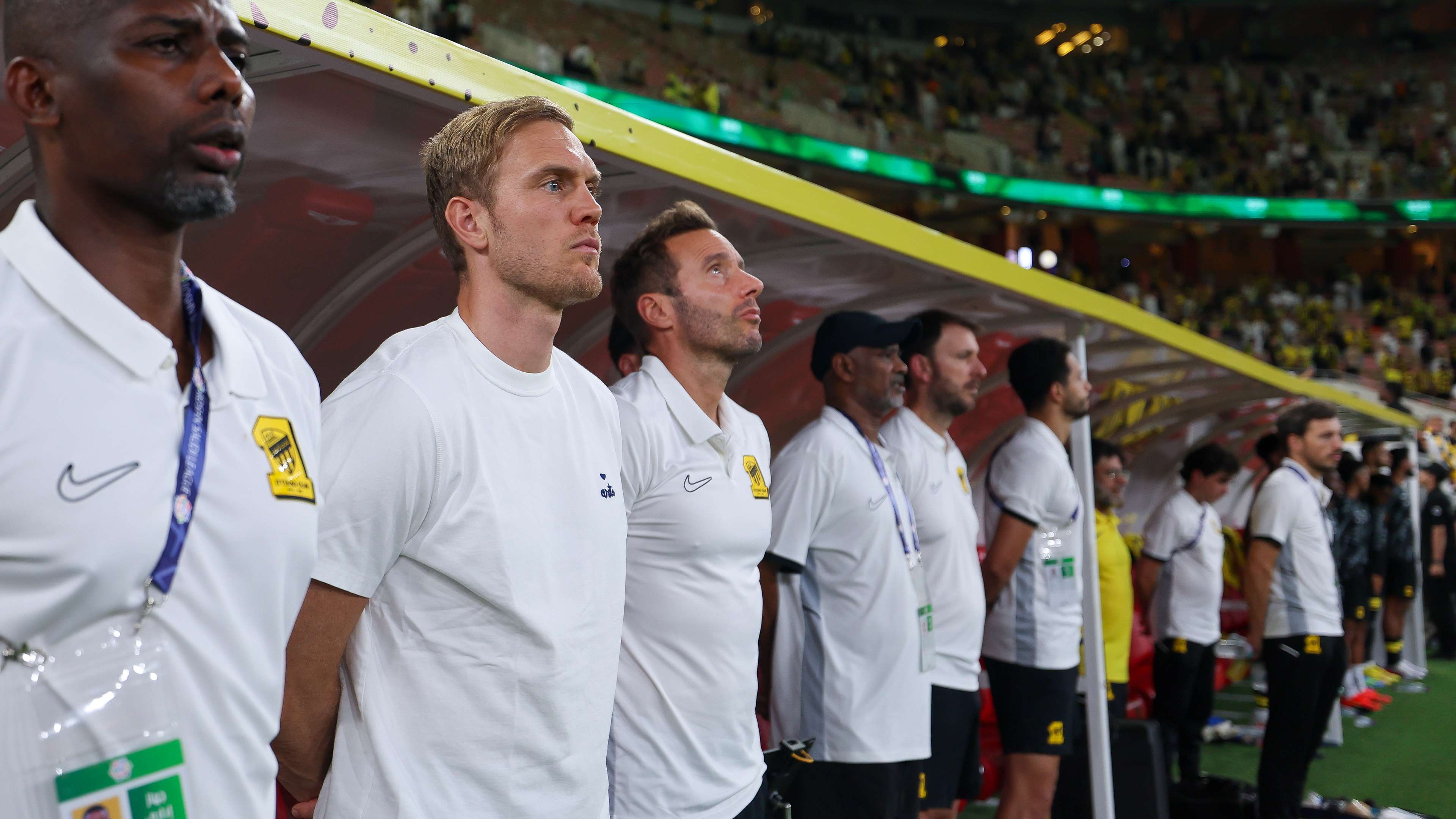

Revolutionizing Al-Ittihad: How Young German Coach Jens Wissing Transformed the Team’s Tactics and Performance
In the world of football, change often takes time, patience, and strategic planning. However, Al-Ittihad, one of Saudi Arabia’s most storied clubs, has defied expectations by orchestrating a remarkable transformation in just sixty days. Under the leadership of the young, innovative German coach Jens Wissing, the club has shifted its tactical approach and team philosophy, emerging as a more cohesive, disciplined, and versatile side. This rapid overhaul not only signals a new era for Al-Ittihad but also offers valuable insights for football enthusiasts and analysts eager to understand how effective leadership and tactical clarity can redefine a team’s destiny.
The Dawn of a New Era: Jens Wissing’s Arrival and Vision
Jens Wissing, a promising young tactician with a fresh perspective on football, took charge of Al-Ittihad on July 10th. His appointment marked a turning point, bringing a strategic vision rooted in modern football principles that emphasize collective effort, positional discipline, and rapid transitions. Wissing’s approach contrasts sharply with traditional reliance on individual star power. Instead, he advocates for a cohesive system where every player understands their role within a collective framework, aligning their efforts toward a shared goal.
Within just two months, Wissing’s influence has become evident across all facets of the team’s gameplay. His emphasis on tactical discipline, fluid positional play, and aggressive pressing has redefined Al-Ittihad’s identity on the pitch. This swift transformation underscores the power of clear coaching philosophy combined with meticulous implementation, even when working with a squad that initially had varied levels of familiarity with such structured systems.
Building a Cohesive System: The Tactical Shift
From Individual Brilliance to Collective Unity
Historically, many football teams, especially those with star-studded lineups, rely heavily on individual brilliance to secure victories. However, Wissing’s strategy centers around building a team that functions as a harmonious unit. His systematic approach has shifted the focus from individual exploits to collective responsibility, a change that enhances the team’s resilience and adaptability.
One of the most noticeable aspects of Al-Ittihad’s transformation is their attacking build-up. Instead of relying solely on isolated moments of individual skill, the team now constructs attacks patiently, using precise passing sequences that involve multiple players. This approach not only improves their goal-scoring opportunities but also makes their offensive play more unpredictable and difficult for opponents to defend against.
Defensive Solidity and Forward Roles
Defensive organization has also improved significantly under Wissing’s guidance. The forwards now participate actively in pressing high up the pitch, disrupting opponents’ build-up play early. This high-pressing strategy is complemented by disciplined defensive roles that see players maintaining their positional awareness even when the ball is far from their goal. Such tactical discipline ensures that the team remains compact and resilient, reducing vulnerabilities and preventing counterattacks.
Transition Phases and Game Management
Transition phases—both offensive and defensive—are critical in modern football. Wissing’s team displays a remarkable ability to switch swiftly from defense to attack and vice versa. Their counter-pressing, often termed “gegenpressing,” allows them to regain possession quickly after losing the ball, catching opponents off guard and creating quick scoring opportunities. This proactive style of play has made Al-Ittihad a formidable side, capable of controlling the tempo of matches and dictating play rather than reacting to opponents.
Impressive Results in a Short Span
The immediate impact of Wissing’s tactical reforms is reflected in Al-Ittihad’s recent performances. The team exhibits a newfound confidence, with synchronized movements and a collective mindset that radiates on the pitch. Spectators and analysts alike have noted that the team appears as though it has been playing together for much longer than two months, a testament to the clarity and consistency of the coach’s vision.
This cohesion has translated into tangible results, with the team climbing the Saudi Pro League standings and performing with a level of tactical maturity that belies their relatively short time under Wissing’s guidance. The players’ ability to execute complex tactical plans even when under pressure demonstrates a high level of discipline and understanding, crucial for competing at the highest levels.
Implications for the Saudi Pro League and Future Predictions
Al-Ittihad’s rapid tactical evolution offers a compelling case study for the broader Saudi Pro League, a competition increasingly attracting international attention and investment. As teams seek to elevate their standards, Wissing’s example highlights the importance of modern coaching philosophies rooted in tactical discipline, team cohesion, and adaptability.
Looking ahead, football prediction models suggest that Al-Ittihad’s newfound tactical solidity could make them strong contenders in upcoming competitions, including domestic cups and continental tournaments. Their ability to blend disciplined defending with dynamic attacking transitions positions them as a team to watch in the near future. Fans and pundits are eager to see whether this momentum can be sustained and translated into silverware, further solidifying Wissing’s reputation as a transformative figure in Saudi football.
The Future of Football Coaching: The Wissing Effect
Jens Wissing’s quick and effective overhaul of Al-Ittihad’s playing style underscores a broader trend in football coaching: the shift towards data-driven, tactically sophisticated management. His success demonstrates that even in a short timeframe, a clear vision and meticulous implementation can produce extraordinary results.
For football prediction enthusiasts, this case exemplifies how tactical innovations can influence team performance and league dynamics. As more clubs adopt similar approaches, the landscape of football in Saudi Arabia and beyond is poised for a phase of exciting evolution, marked by strategic depth and collective excellence.
Conclusion: A Model for Modern Football Success
Al-Ittihad’s transformation under Jens Wissing offers a compelling narrative about the power of tactical discipline, innovative coaching, and team cohesion. It proves that with the right vision and execution, even a team with a short preparation window can emerge as a formidable force. For football fans and analysts, this story is a testament to the importance of strategic planning and adaptability—elements that are crucial for accurate football prediction and sustained success in the modern game.
As the Saudi Pro League continues to evolve and attract global attention, the rise of teams like Al-Ittihad, driven by visionary coaching and tactical innovation, promises an exciting future filled with competitive matches, unpredictable outcomes, and thrilling football moments.