
Joan García’s Barcelona Champions League Challenge: 20 Goals Conceded in 12 Matches
Joan García has made a remarkable number of saves in Europe, but one statistic continues to shadow his early Barcelona career: he has yet to finish a Champions League match with a clean sheet. The young goalkeeper has conceded 20 goals in 12 appearances for the Blaugrana, an average of 1.66 per game. It is a striking record—and one that raises questions about both his development and Barcelona’s defensive reliability.
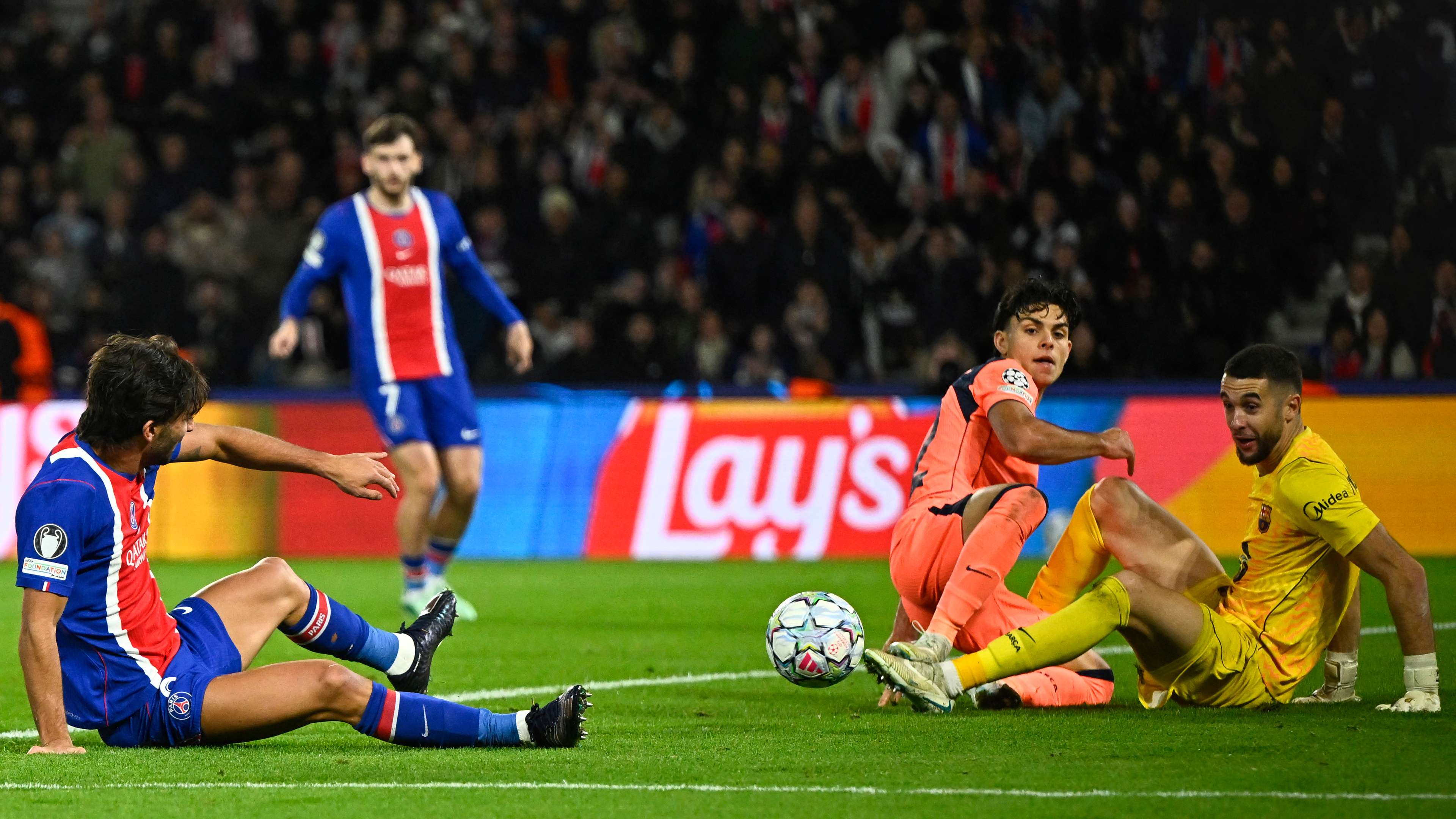
His most recent European outing captured the contradiction perfectly. At the Parc des Princes, García delivered what may have been his best performance in a Barcelona shirt, making 10 saves against Paris Saint-Germain. Yet the Catalans still left with a 4-2 defeat. His individual excellence kept the scoreline from becoming even more damaging, but it could not prevent another difficult night for the team.
A Promising Signing Facing a Demanding Test
Barcelona brought García in with the hope that he could provide long-term security in goal and help restore the confidence associated with Marc-André ter Stegen’s best years. The signing was widely viewed as smart business, particularly given García’s potential and the club’s need to strengthen a crucial position. But expectations at Barcelona are rarely modest, especially when the team is pursuing success in Europe.
For a goalkeeper, clean sheets are a visible measure of progress, though they are never the product of one player alone. They depend on communication, defensive shape, pressure on the ball and the ability of the entire side to protect its penalty area. García’s record therefore tells two stories: he has not yet shut out a Champions League opponent, and Barcelona have struggled to defend consistently in the competition.
García is expected to return to the national-team picture after recovering from the injury he sustained against Racing Santander. Before that, however, he faces another important European examination. Barcelona’s upcoming Champions League fixture against Aston Villa offers an opportunity to change the narrative—though the challenge will be as much about collective discipline as individual goalkeeping.
What the Champions League Numbers Reveal
According to figures reported by the Spanish newspaper AS, García has played 12 Champions League matches for Barcelona without keeping a clean sheet. Six goals have gone past him in the opening part of the current campaign, while he conceded 14 during the previous season. The total—20 in 12 games—works out to 1.66 goals per appearance.
This season, his goal has been breached by Feyenoord, Galatasaray and Paris Saint-Germain. In the previous campaign, Barcelona conceded three against Newcastle, two against Atlético Madrid, and one each against Chelsea, Eintracht Frankfurt, Slavia Prague and Copenhagen. The range of opponents underlines that the issue has not been confined to one difficult fixture or one particular style of attack.
The broader defensive trend is even more concerning. Barcelona went through an 18-match run without a Champions League clean sheet after the quarter-finals of the 2024-25 season. That inability to shut opponents out undermined the team’s ambitions of reaching the finals associated with Munich and Budapest. When a side repeatedly concedes, even a strong attack can be forced to produce near-perfect football simply to stay in contention.
Why García Should Not Carry the Blame Alone
Goalkeepers are often judged by the final score, but the number of goals conceded does not explain how those chances were created. In Paris, García’s 10 saves were evidence of his reflexes and resilience under pressure. They also reflected how frequently PSG were able to test Barcelona’s defence. The 4-2 result remains a painful entry on his record, yet the performance suggested that he was not the main reason the defeat became so heavy.
There were still moments for review. On Julián Álvarez’s free-kick, García made contact with the danger but some analysts felt he might have read the ball’s flight more effectively. A goalkeeper’s starting position and view of the ball can be decisive in such situations, particularly when the taker has a clear line to goal.
Sørloth’s header on the second goal also attracted scrutiny. It was the kind of aerial effort that a goalkeeper may feel he could have dealt with, especially after García had shown his ability to respond to a header from Ferran Torres in the same match. These are marginal judgments, but at elite level, small details can shape the difference between a strong save and a goal conceded.
That balance matters. García deserves credit for the saves that kept Barcelona competitive, while also accepting that improvement in positioning, decision-making and command of the area could help him turn promising displays into decisive ones. The same standards must apply to the defenders in front of him, whose job is to limit clear chances before they reach the goalkeeper.
Barcelona’s Defensive Reset Could Define the Season
For Barcelona to improve their Champions League prospects, the solution cannot be reduced to asking García for more spectacular stops. The team needs to defend as a unit: press with coordination, protect the space between midfield and defence, track runners into the box and avoid giving opponents repeated second chances. Better communication on crosses and set pieces could also help reduce the pressure on the goalkeeper.
García, meanwhile, must build familiarity with his defenders and show that he can influence matches beyond shot-stopping. Organising the back line, choosing when to claim crosses and distributing calmly under pressure are all part of the modern goalkeeper’s role. A clean sheet would be a useful milestone, but consistent control of the penalty area may be the more meaningful sign of progress.
The expectation surrounding his arrival is clear: Barcelona want a goalkeeper capable of producing match-changing interventions in Europe. That does not mean he must reproduce Ter Stegen’s finest moments immediately, nor does it mean every defensive failure should be placed at his door. It means García has to keep developing while the team around him becomes more dependable.
The Next Prediction: A Chance to Change the Story
Barcelona’s next European test gives García an important chance to respond. A clean sheet would end an unwanted run and offer a timely boost to the team’s confidence, but predicting one will depend on more than the goalkeeper’s form. If Barcelona limit opponents’ chances and defend their box with greater authority, García will have a better opportunity to show what he can do without facing a constant stream of shots.
His Paris performance proved that he can rise to the occasion, even in a defeat. The next step is turning those saves into results. For García and Barcelona, the challenge is not simply to stop conceding goals—it is to build the defensive trust required to compete for the biggest prizes in European football.