
Arsenal Rotate Their Lineup for Champions League Clash With Slavia Prague
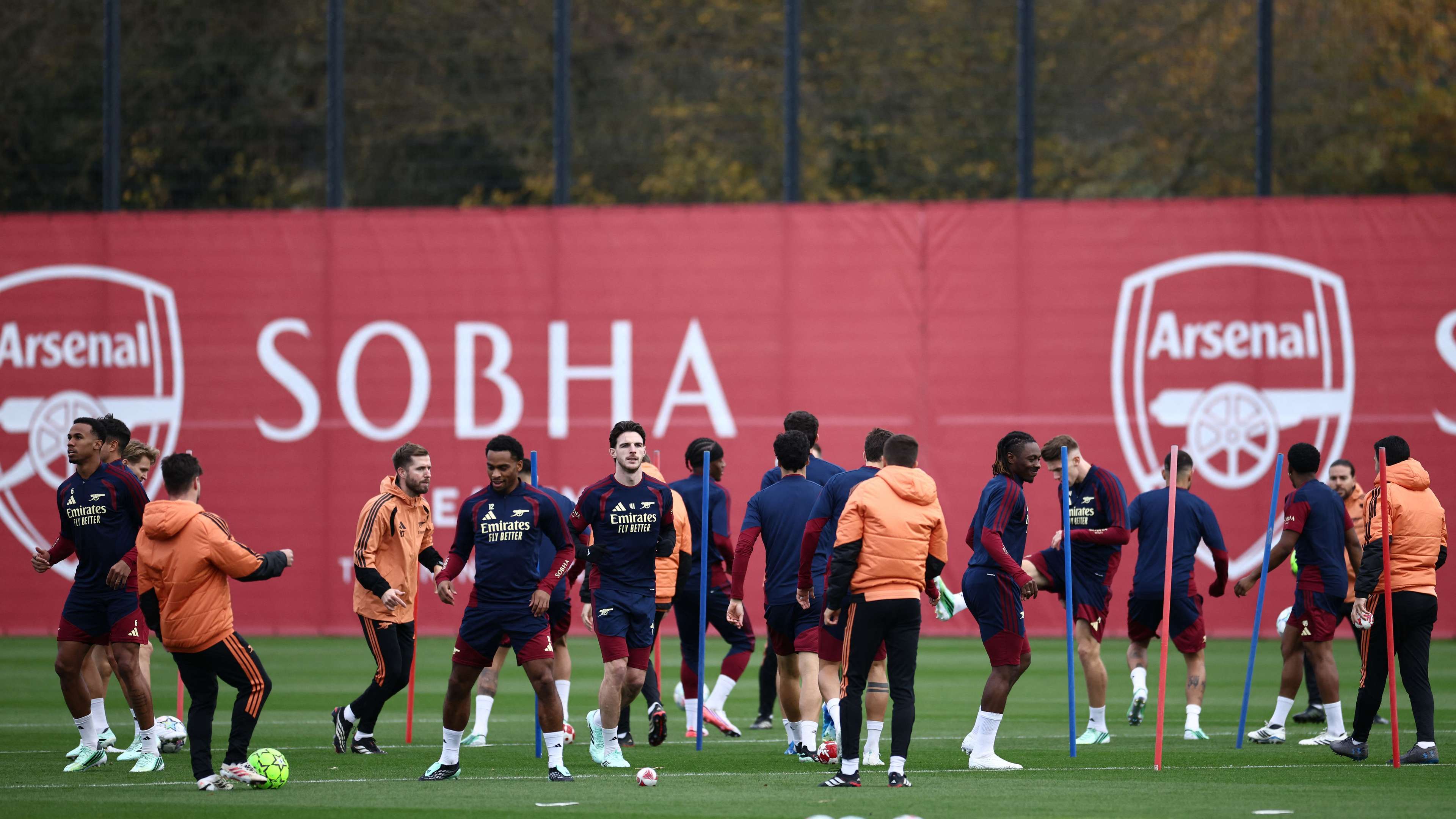
Arsenal manager Mikel Arteta has made several changes to his starting lineup for the UEFA Champions League meeting with Slavia Prague, reshaping the team that defeated Liverpool in the Premier League last Sunday. The selection gives a number of players an opportunity to make an impact while keeping the Gunners focused on a demanding European fixture.
Five players from the Liverpool-winning XI have been left out of the starting side: Jurrien Timber, Riccardo Calafiori, Gabriel Magalhães, Martin Ødegaard and Kai Havertz. Ben White, Piero Hincapié, Martin Zubimendi, Mikel Merino, Eberechi Eze and Viktor Gyökeres are among those brought into the lineup. The changes suggest Arteta is balancing squad workload with the need to maintain Arsenal’s competitive edge in the Champions League.
Arsenal’s Starting XI Against Slavia Prague
Arsenal are set to begin with David Raya in goal, behind a defence featuring Ben White, Konsa, Gabriel and Hincapié. Zubimendi, Declan Rice and Merino make up the midfield, while Madueke and Eze are selected to support striker Gyökeres.
Arsenal lineup: Raya; White, Konsa, Gabriel, Hincapié; Zubimendi, Rice, Merino; Madueke, Eze; Gyökeres.
The selection combines experienced regulars with players who may be eager to make a case for more minutes. Rice provides a familiar presence in midfield, while Zubimendi and Merino offer Arteta additional options in possession and in the battle for control of the centre of the pitch. Eze’s inclusion adds another creative threat, and Gyökeres leads the attack as Arsenal look to turn their forward play into goals.
What the Changes Could Mean for Arsenal
Rotating a lineup after a high-profile league victory is not simply about resting players. It can also help a manager keep the squad fresh across several competitions and give different combinations time to develop. Arsenal’s changes are particularly notable because they affect the defence, midfield and attack, creating a different balance from the side that faced Liverpool.
White’s return to the starting group gives Arsenal a defender comfortable contributing in possession as well as protecting the right side. Hincapié’s selection adds another option across the back line, while Gabriel remains in the team to provide continuity and physical presence. How effectively the reshaped defence communicates will be important against a Slavia side that will look for opportunities to attack quickly.
In midfield, Arsenal have a blend of energy, passing ability and experience. Rice can help shield the defence and drive the team forward, while Zubimendi offers a route to build attacks through the middle. Merino’s inclusion adds another capable ball-winner and passer. If the trio can establish control early, Arsenal may be able to limit Slavia’s chances to build momentum.
Further forward, Eze and Madueke give the Gunners options to carry the ball, take on defenders and create openings. Gyökeres will be expected to occupy the opposition’s centre-backs and provide a focal point in the penalty area. The effectiveness of that attacking group could depend on how quickly Arsenal move the ball into dangerous areas and whether they can create enough support around their striker.
Slavia Prague’s Starting Lineup
Slavia Prague have named Domšák, Vlček, Holeš, Zima, Kobylák, Moses, Sadílek, Mbarek, Ayusi, Štorm and Novák to start. The Czech side will be aiming to make the most of home advantage and test Arsenal’s reorganised lineup with an energetic performance.
For Slavia, a disciplined defensive shape could be crucial. Arsenal have several technically gifted players capable of finding space between the lines, so the hosts will need to close passing lanes and avoid allowing Eze or Madueke too much room to turn and run at the defence. At the other end, Slavia will likely look for ways to exploit transitions and make Arsenal defend at pace.
Champions League Prediction: What to Watch
Any football prediction for this fixture must account for both Arsenal’s quality and the uncertainty created by a heavily changed starting XI. The Gunners have the attacking talent to control possession and create chances, but fresh combinations may take time to settle. Slavia, meanwhile, will be motivated to make the match uncomfortable and could threaten if Arsenal lose the ball in vulnerable areas.
The opening stages may offer a useful indication of the game’s direction. If Arsenal establish a steady rhythm and their midfield controls the centre, they should be able to push Slavia back and generate opportunities for Gyökeres. If the hosts press aggressively and disrupt Arsenal’s build-up, the match could become more open, placing greater emphasis on defensive organisation and quick decision-making.
Set pieces may also prove significant. In a closely contested Champions League match, dead-ball situations can create valuable scoring chances, particularly when open-play opportunities are limited. Arsenal will want to defend Slavia’s deliveries carefully while using their own set pieces to apply pressure.
Looking Ahead
The result will matter, but the performance could also provide Arteta with useful information about the depth of his squad. Strong displays from the incoming players would give the manager more confidence when selecting his team for future European and domestic fixtures. For supporters, the match is a chance to see how Arsenal’s alternatives perform when asked to step into prominent roles.
Arsenal’s next listed Premier League fixture is against Hull on 7 November 2026 at 23:00. Slavia Prague are scheduled to face ARB in the First League on 8 November 2026 at 22:00. With both teams preparing for further commitments, managing energy and avoiding injuries will remain important beyond this Champions League encounter.
Arsenal enter the match with momentum from their win over Liverpool, but Slavia Prague present a different challenge. The key questions are whether the Gunners’ rotated lineup can quickly find its rhythm, whether their midfield can dictate play, and whether Gyökeres receives enough service to make the difference. Those factors will shape the contest—and any informed football prediction—as the two sides meet in the Champions League.