
Australia Leave Marnus Labuschagne Out of New Zealand Test Plans
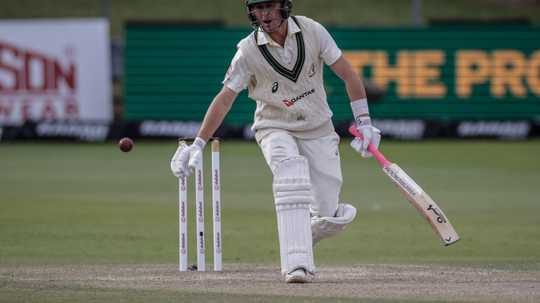
Marnus Labuschagne will not be considered for Australia’s upcoming Test series against New Zealand, selection chair George Bailey has confirmed, as the batter looks to regain form through domestic cricket. The decision follows a difficult run of performances, most recently during Australia’s tour of South Africa, and gives selectors an opportunity to assess other options for the No. 3 position.
Australia’s squad for the first Test has not yet been announced. Bailey said on Monday, November 9, that Labuschagne would be unavailable for selection for the New Zealand series “at this stage.” He added that the announcement was intended to end speculation about the batter’s place and allow him to focus on the next round of Sheffield Shield matches.
For a player who has long been one of Australia’s most dependable Test batters, the omission marks a significant moment. Labuschagne has occupied a central role in the middle order, particularly at No. 3, but his recent scores have not matched the standards he set earlier in his career. The selectors’ decision reflects the importance of current form as Australia prepares for a demanding stretch of international cricket.
A prolonged drought of big scores
Labuschagne’s century-less run has now reached 49 innings, stretching back to his last Test hundred, scored during the 2023 Ashes at Manchester. Although he has produced useful contributions since then, he has struggled to turn starts into the major innings expected from a top-order batter.
His place was previously under pressure during Australia’s tour of the West Indies after the World Test Championship final last year. He was retained in the squad but lost his regular spot. A strong start to the domestic season helped him earn a return to No. 3 for the home Ashes, where he made a half-century in each of the first two Tests. However, his form faded as the series continued.
Since those early Ashes contributions, Labuschagne has gone 16 innings without a fifty. Against Bangladesh, he scored 36 runs across the series at an average of 12. His returns in South Africa were better in volume, but still below the level Australia would expect: 131 runs at an average of 21.83.
Those results came during a challenging period for the team. Australia drew its series against Bangladesh 1-1 before losing 2-1 in South Africa. While Labuschagne was not solely responsible for either outcome, the lack of substantial runs from a senior batter added to the pressure on the batting order.
Bailey says a comeback remains possible
Bailey acknowledged that Labuschagne has not converted promising opportunities into the large scores the team needs. He pointed to starts in Darwin against Bangladesh and during the South Africa tour as examples of chances that could have become match-shaping innings.
However, the selection chair was careful not to describe the decision as a permanent exclusion. Bailey said a return remained possible, noting that Australia still recognised how effective Labuschagne can be when playing at his best. The key, he indicated, is for the batter to demonstrate that form again through consistent performances.
That distinction matters for the wider selection picture. Australia’s schedule after New Zealand includes a five-Test tour of India and an away Ashes series next year. Both assignments will place considerable demands on the batting group, and selectors will want depth, adaptability and proven performers available. A strong Sheffield Shield campaign could therefore give Labuschagne a route back into contention.
Sheffield Shield cricket offers a chance to reset
Labuschagne is expected to return to Queensland and continue as captain, with the next round of Sheffield Shield cricket beginning on Wednesday, November 11. The domestic competition gives him a practical opportunity to rebuild confidence in familiar conditions while showing selectors that his technique and decision-making are in good order.
For a batter who has often thrived on long spells at the crease, the format may be particularly useful. Shield matches can provide the time needed to work through a difficult patch, but they also bring their own pressure: runs must come against strong state attacks, and selectors will be watching how Labuschagne handles both the new ball and extended innings.
Bailey said Australia did not want ongoing speculation to hang over the player while he prepared for the next domestic fixtures. The Test squad is expected to be announced after the upcoming Shield round, giving selectors a clearer view of current form across the available candidates.
What the decision means for Australia’s Test plans
Labuschagne’s absence opens a place in the top order and gives Australia a chance to test alternatives before the New Zealand series. The eventual selection will depend on the balance of the squad, recent domestic performances and the conditions expected in New Zealand. A reliable No. 3 is especially important in overseas Tests, where early movement can expose the middle order and make patience at the crease essential.
The change also underlines that reputation alone will not guarantee selection. Labuschagne has established an impressive record and remains young enough to play a major role in Australia’s future, but the selectors are responding to an extended spell without decisive scores. His challenge is now to turn that history into renewed momentum rather than rely on past achievements.
For supporters following cricket selection news, the situation is likely to remain a talking point as the Sheffield Shield progresses. Any prediction about Labuschagne’s return should be treated cautiously: the door is open, but his chances will depend on performances and the needs of the team. Australia have made clear that the New Zealand series will move ahead without him for now, while leaving a pathway back for one of the country’s most accomplished Test batters.