
Fede Valverde’s Right-Back Masterclass Raises a Major Clásico Question
Fede Valverde has given José Mourinho a fresh tactical puzzle to solve ahead of the eagerly anticipated Clásico against Barcelona. The Real Madrid midfielder delivered an outstanding performance at right-back in the victory over Leipzig, prompting renewed debate about whether he should start in defence, midfield or on the right wing.
Valverde’s display was notable not only for its energy and attacking ambition, but also for the defensive discipline he brought to an unfamiliar role. With the Clásico approaching, his performance has added another intriguing layer to the match prediction conversation: where Mourinho chooses to play the Uruguayan could influence the shape of the entire starting eleven.
Valverde’s Leipzig performance by the numbers
Wearing the captain’s armband, Valverde completed the full 90 minutes and made an impact across the pitch. He created three chances, more than any other player in the match, and appeared 26 times in the final third as Madrid repeatedly looked to advance down his side.
His passing figures also reflected his importance to the team’s build-up. Valverde completed 81 passes, with only Dean Huijsen registering more, at 97. He led the match for successful tackles with four and recorded the highest number of touches, finishing with 116.
The contribution continued in other areas. Valverde made five ball recoveries, the second-highest total, and delivered two crosses, also placing him second in that category. He attempted two shots, ranking fourth among the players on the pitch. Together, those numbers describe a player who was involved in nearly every phase of Madrid’s game rather than simply filling a defensive position.
Defensive responsibility and attacking freedom
Playing at right-back requires more than the ability to run forward. The role demands careful positioning, awareness of opposing wingers and the discipline to protect the space behind the defence. Valverde showed those qualities against Leipzig, allowing winger Antonio Nusa to get past him only once during the match.
At the same time, Valverde did not become a passive defender. He moved into midfield when opportunities opened up, supported possession and carried the ball into attacking areas. That blend of defensive reliability and forward drive is part of what makes him such a valuable tactical option: he can help Madrid defend wide areas while also adding an extra runner and passer to their attack.
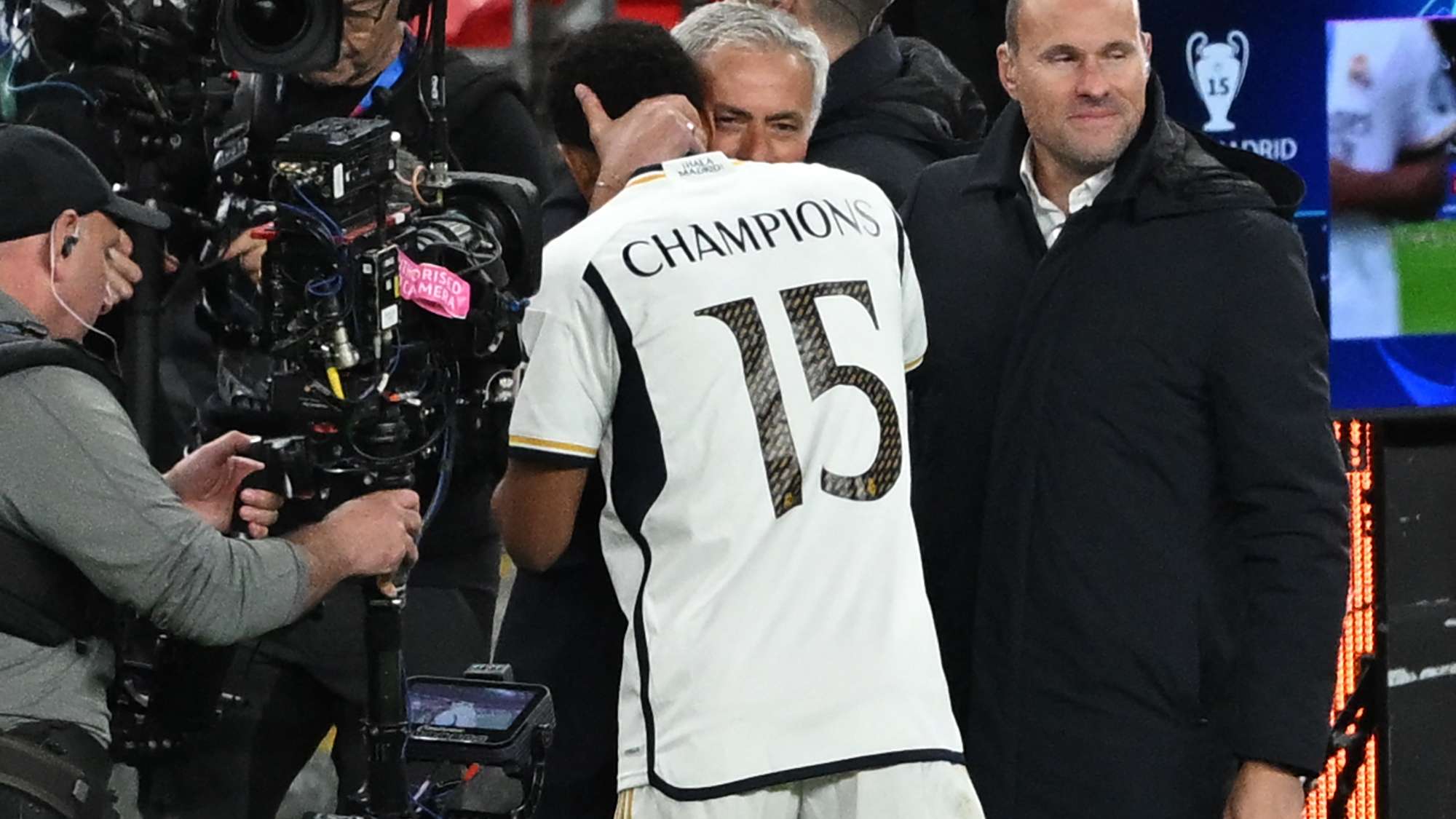
His performance earned praise from Mourinho, who highlighted both sides of his game. “Valverde was solid defensively, then he pushed forward excellently,” the coach said after the match. “The team was very flexible in that area, and very creative on that side.”
Mourinho’s previous doubts make the situation more interesting
The praise is significant because Mourinho has previously expressed reservations about using Valverde as a long-term right-back. The coach has pointed to the player’s unusual combination of qualities and suggested that Madrid have limited options with a similar profile. He has also indicated that Valverde is particularly valuable in more advanced positions.
That concern is understandable. Moving Valverde into defence may solve one problem, but it can create another by removing his energy, ball-carrying and goal threat from midfield or the right wing. A player capable of pressing, creating chances and making late runs into the box can be difficult to replace, especially in a high-stakes match where small tactical advantages matter.
However, Valverde has featured at right-back against Villarreal, Roma, Sevilla and Leipzig, building a run of performances that has strengthened the case for using him there. Supporters have increasingly argued that the position can suit him, particularly when Madrid need a defender who can quickly turn a recovery into an attacking move.
Where could Valverde play against Barcelona?
According to Spanish newspaper AS, Valverde is most likely to start on the right wing against Barcelona. That would allow Madrid to benefit from his forward movement and creativity while leaving the right-back role to a more conventional defender. Yet his Leipzig display has made that outcome less certain than it might have seemed before.
If Mourinho selects Valverde at right-back, Madrid could gain a more dynamic outlet on the flank and an extra midfielder during periods of possession. The trade-off would be a change to the attacking lineup, potentially requiring another player to take up the right-wing position. If he starts in midfield, Madrid would retain his ability to connect defence and attack through the centre. On the wing, he could use his pace and direct running to challenge Barcelona’s defensive shape.
That flexibility may be especially useful in a Clásico, where the match can shift quickly between patient build-up and fast transitions. Valverde’s stamina allows him to cover ground, while his willingness to press and track back can help protect teammates when possession is lost. His role could therefore depend not only on Madrid’s preferred formation, but also on which areas Mourinho believes Barcelona will target.
A tactical decision with wider consequences
Mourinho is unlikely to reveal his plan too early. Valverde’s position affects several other selection decisions, from the choice of right-back to the balance of the midfield and the composition of the front line. That makes him one of the most important pieces in Madrid’s pre-match tactical prediction.
There is also a personal dimension to the debate. Reports suggest Valverde has become more comfortable with the idea of playing at right-back, a role that has generated discussion in the past. His recent performances have given him a stronger argument for the position, even if his long-term future may still lie further forward.
For Madrid, the key question is not simply whether Valverde can handle right-back—his Leipzig display offered a convincing answer. It is whether deploying him there gives the team its best overall balance against Barcelona. Whatever Mourinho decides, Valverde’s form has turned a positional experiment into a genuine tactical option, making his place on the team sheet one of the Clásico’s most compelling storylines.