
Mustapha Hadji sidesteps refereeing controversy after Morocco’s AFCON final
Morocco football icon Mustapha Hadji has declined to give a direct verdict on accusations that refereeing decisions favoured the Atlas Lions during the 2025 Africa Cup of Nations, leaving room for interpretation as the dispute over the final continues.
In comments to Kooora, Hadji focused instead on Morocco’s performances throughout the tournament and called for African refereeing to reach the same high standard as the continent’s players. His measured response comes amid an unresolved controversy surrounding the final against Senegal and the question of who should be recognised as Africa’s champion.
AFCON final dispute remains unresolved
Morocco, the host nation, reached the 2025 AFCON final after negotiating a demanding route through the competition. The Atlas Lions faced strong opposition, including Nigeria, Mali and Cameroon, before meeting Senegal in the decisive match.
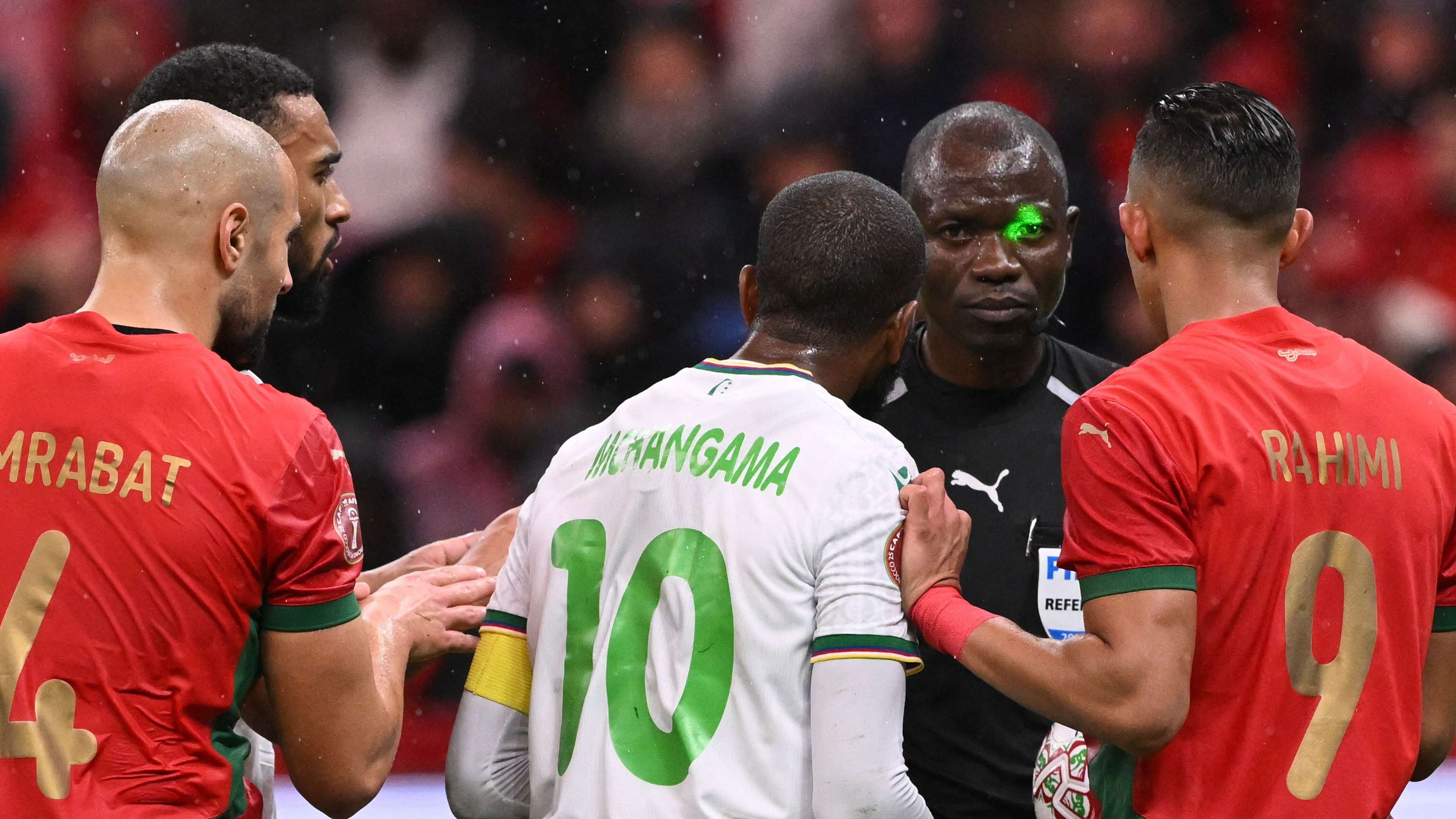
The final became the tournament’s defining flashpoint. Late in normal time, Congolese referee Jean Jacques Ndala awarded Morocco a penalty. Senegal’s players strongly objected to the decision and left the pitch in protest, triggering a dramatic interruption and a dispute that has continued beyond the final whistle.
The controversy has also raised questions about the tournament’s outcome. The identity of the continental champion remains subject to a ruling from the Court of Arbitration for Sport (CAS), which is considering the case. Until a decision is made, the dispute remains an extraordinary postscript to a competition that had already attracted intense attention across African football.
Hadji highlights Morocco’s route to the final
Asked whether the host nation benefited from favourable officiating, Hadji did not endorse the accusations or dismiss them outright. Instead, he stressed that Morocco had earned its place in the final through performances against high-calibre opponents.
“The Senegal team is very, very strong, and we wished to win the Africa Cup on the pitch,” Hadji said in a video interview with Kooora, due to be published later. “But before the final we played against strong teams too, such as Nigeria, Mali and Cameroon, so the road to the final was difficult.”
He added that Morocco had shown its quality throughout the competition, saying the team had “overcame all their rivals on the pitch” before the problem in the final. The remarks underline Hadji’s central point: Morocco’s achievement should be judged across the whole tournament, rather than solely through the disputed late penalty.
That argument may resonate with Moroccan supporters, who can point to the team’s results and performances on the way to the final. At the same time, it does not settle the separate question of whether the key decisions in the championship match were correct. Hadji’s answer therefore acknowledged Morocco’s sporting case without directly resolving the criticism aimed at the officials.
Call for stronger African refereeing
Hadji’s clearest message concerned the standard of officiating across the continent. He argued that referees must develop alongside the players and teams whose performances have helped raise the profile of African football internationally.
“I hope the African referees will be at a high level like the players,” he said. “It cannot be that the African teams and players are at a wonderful level while refereeing on the continent is below standard.”
The comment points to a broader issue beyond one penalty or one final. Major international tournaments place officials under enormous scrutiny, and controversial calls can quickly become the focus of debate, particularly when they influence a trophy. Consistent refereeing standards, clear communication and confidence in decision-making are essential to maintaining trust among players, coaches and supporters.
For African football, that challenge is especially significant as the continent’s competitions continue to attract larger audiences and greater global attention. Stronger training, support and accountability for match officials could help ensure that referees are equipped to manage the speed, pressure and high stakes of elite games. Hadji’s remarks suggest that progress on the pitch should be matched by continued investment in officiating.
Prediction and the next chapter of the controversy
Any prediction about the final outcome must remain cautious while CAS is still considering the case. The court’s ruling could determine how the result is officially recorded, but it may not immediately end the wider argument over the penalty, Senegal’s walk-off or the management of the match.
Hadji’s comments are unlikely to satisfy those seeking a definitive answer on whether Morocco received favourable treatment. Instead, they offer a more measured perspective: the Atlas Lions faced formidable opponents on their way to the final, while African refereeing must continue to improve. Both points can be debated independently of the legal decision still to come.
The episode also illustrates how quickly a single moment can shape the legacy of a major football tournament. Morocco’s campaign, Senegal’s protest and the referee’s late penalty decision are now closely linked in public discussion. The CAS ruling may clarify the official status of the title, but the conversation about confidence in refereeing and the standards expected at major African competitions is likely to continue.
Hadji’s response, then, was less a defence of every decision than a reminder of two competing realities: Morocco’s difficult journey to the final and the need for officiating that inspires confidence. As supporters await the ruling, the 2025 AFCON final remains not only a contest between two leading teams, but also a test of how African football addresses controversy and strengthens trust in its institutions.