
Nottingham Forest Put Manchester City Under Early Pressure as Liverpool Memories Resurface
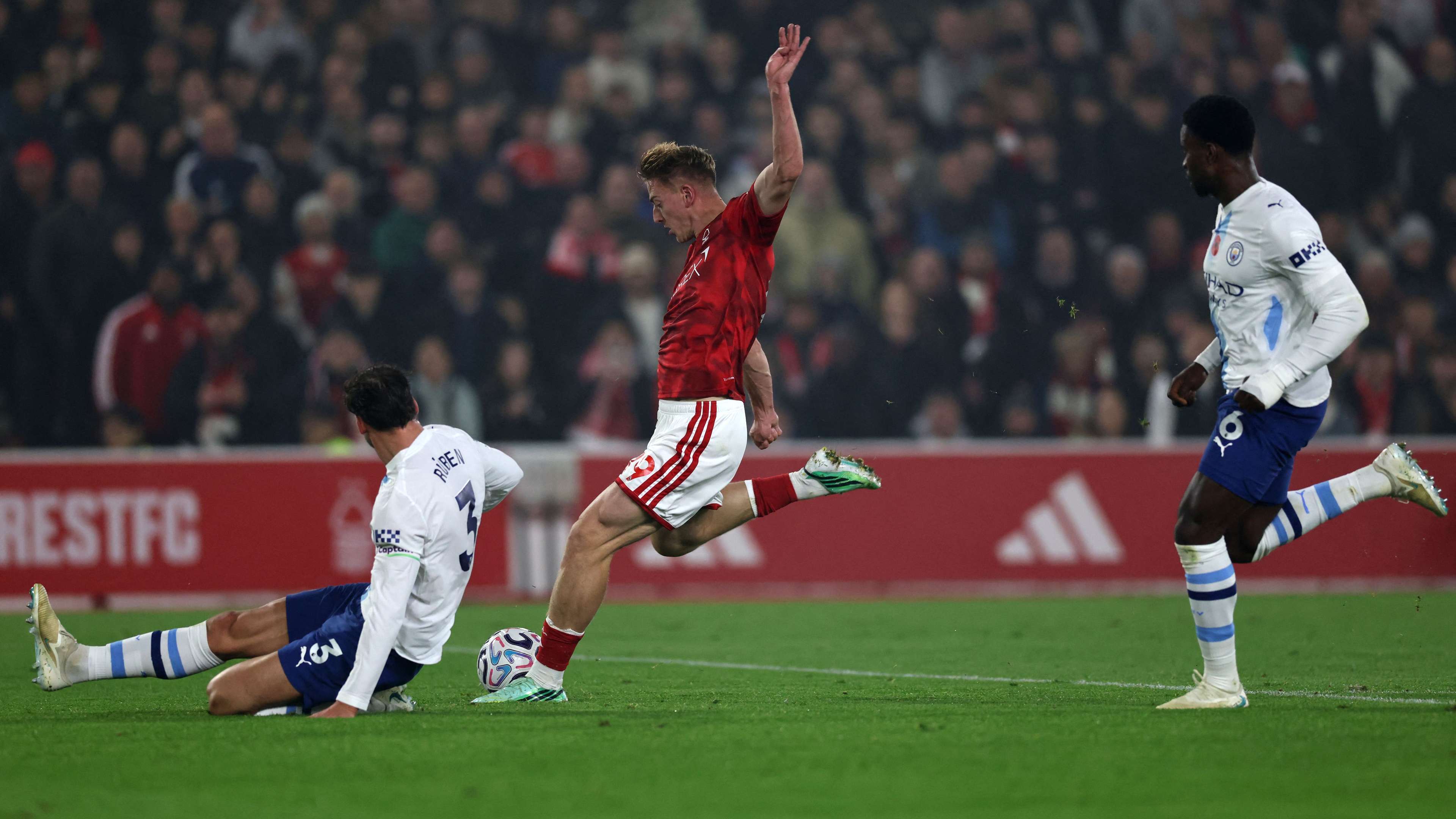
Manchester City’s difficult run in the Premier League continued as Nottingham Forest seized control with two goals inside the opening 18 minutes. The fast start brought back memories of a painful afternoon against Liverpool in 2019, when the champions also found themselves two goals behind before the contest had properly settled.
Brazilian defender Jair Cunha opened the scoring in the sixth minute, giving Forest an early advantage. Liam Delap then struck in the 18th minute, doubling the hosts’ lead and deepening the pressure on Enzo Maresca’s side. For City, the opening stages were a sharp reminder that even a team accustomed to controlling possession can be unsettled when an opponent attacks with speed and conviction.
A Rarely Seen Start in City’s Premier League History
The timing of Forest’s second goal made the setback particularly notable. According to Opta, it was the earliest Manchester City had fallen two goals behind in a Premier League match since their meeting with Liverpool in November 2019. On that occasion, City were trailing by two in the 13th minute.
Liverpool’s opening burst was similarly ruthless. Fabinho scored in the sixth minute before Mohamed Salah added a second seven minutes later, putting Jürgen Klopp’s side in a commanding position. The match eventually finished 3-1 to Liverpool, with Sadio Mané extending the lead shortly after half-time. Bernardo Silva scored City’s only goal in the 78th minute, but the late response could not change the outcome.
The comparison does not mean the two matches will follow the same script. It does, however, underline how unusual it is for City to lose control so quickly. The team have built much of their success on patient possession, positional discipline and the ability to limit opponents’ chances. When those safeguards break down early, City are forced to chase the game—and that can create further space for an opponent to exploit.
Forest Make Their Opportunity Count
Forest’s early goals reflected more than a slow start from City. They showed the value of taking risks at the right moment. A quick breakthrough can change the atmosphere of a match, energise the home crowd and force a visiting side to adjust its plan sooner than expected.
Once Forest moved two goals ahead, City faced a familiar tactical challenge: how to increase their attacking threat without leaving too much room behind their defence. Pushing more players forward can help create chances, but it can also invite counterattacks. Forest’s task was to stay organised, protect their lead and use the spaces that appeared as City searched for a route back into the contest.
For City, the response required composure as well as urgency. A team trailing early may be tempted to force passes or rush attacks, but those choices can make recovery harder. The most effective comeback attempts often begin with restoring control, moving the opposition from side to side and creating clear openings rather than relying on hopeful balls into the penalty area.
Three Consecutive Premier League Matches Without a Win
The Forest match arrived amid a troubling stretch for City. Defeats to Aston Villa, 2-1, and Brighton, 1-0, had already left the club searching for a response. Falling behind so quickly against Forest added another test at a time when every result mattered in the race near the top of the table.
City began the match second in the standings with 21 points. Arsenal had strengthened their position earlier in the day, beating Hull City 1-0 to reach 27 points. That gap placed extra importance on City’s immediate form: while one result does not decide a title race, repeated dropped points can give a rival valuable breathing room.
The league table also provides context for the pressure surrounding the performance. Teams competing for the title are judged not only by their best displays but by how they respond when results turn against them. A short run of defeats can expose weaknesses, yet it can also become a turning point if players and staff identify the problem and respond decisively.
What the Result Could Mean for City’s Title Challenge
There is no single explanation for a difficult run of form. Injuries, changes in selection, lapses in concentration and opponents’ tactical plans can all contribute. City’s challenge is to determine whether the recent setbacks share a common cause or represent separate matches in which small details went against them.
The early goals against Forest put the spotlight on defensive organisation and match preparation. Conceding once can happen in a competitive league, but allowing an opponent to score again so soon can make the recovery much more demanding. City will need to examine how Forest found space, how quickly the defence reacted and whether the team’s structure left too much room between its lines.
At the same time, the attacking response matters. City have often shown that they can create chances from sustained pressure, but a comeback depends on turning possession into meaningful opportunities. The key question is whether they can remain patient while raising the tempo—a balance that becomes especially important when the clock is working against them.
Prediction: A Demanding Test of City’s Resilience
Any prediction following such a dramatic opening should be treated with caution. Forest’s two-goal advantage gave them a strong platform, while City’s recent defeats made the task more complicated. Still, City’s quality and experience mean they cannot be written off simply because they fell behind early.
The likely pattern was clear: City would need to dominate the ball and search for a breakthrough, while Forest could concentrate on defensive shape and counterattacking opportunities. If City scored next, the pressure could shift quickly. If Forest stayed compact and threatened on the break, the visitors would face an increasingly difficult route back into the match.
Whatever the final outcome, the opening served as a warning for a side with title ambitions. Forest showed how quickly momentum can change in football, while the comparison with Liverpool’s 2019 win highlighted how rare—and damaging—such an early two-goal deficit can be for City. Their next challenge is not only to recover points, but to restore the control and consistency that have defined their strongest campaigns.