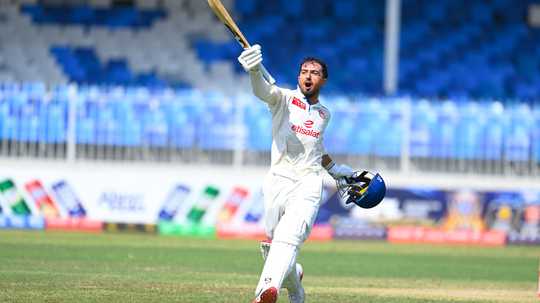

Rahmanullah Zadran’s Seven-Year Wait Ends With a Dream Test Debut
For Rahmanullah Zadran, a place in Afghanistan’s Test side was never simply a matter of talent. It was a goal that took years of patience, domestic performances and persistence to reach. When his opportunity finally arrived against Zimbabwe in the UAE, the right-handed batter made an immediate impression: he scored 113 on his Test debut, turning a long-awaited selection into a milestone he will remember throughout his career.
The century was especially meaningful because it came alongside Sediqullah Atal, Zadran’s childhood friend and former Under-19 teammate. The pair shared the crease for the first time in senior international cricket and added 206 runs for Afghanistan’s second wicket. Their partnership helped the hosts respond strongly after Zimbabwe had posted a formidable 504 in the opening match of the two-Test series.
A Partnership Seven Years in the Making
Afghanistan had lost opener Abdul Malik for 14 when Zadran joined Atal. Rather than allowing the early wicket to dictate the innings, the two batters settled into a steady rhythm. Zadran played with authority, while Atal provided dependable support, and their contrasting contributions gave Afghanistan a substantial platform.
The partnership also brought back memories of their Under-19 days, when the two friends first shared a cricket team. Although they had represented Afghanistan in the same squads at other times—including in the Asia Cup and the Shpageeza Cricket League—they had not previously had the chance to build an innings together at the crease.
“I got the opportunity to bat alongside Sediqullah Atal again after seven years,” Zadran told Cricbuzz. He said the experience felt familiar from the beginning: the pair exchanged advice, discussed the situation and trusted each other to play naturally. For Zadran, the stand was among the most rewarding partnerships of his career because it combined a major team contribution with a reunion between longtime friends.
Both batters went on to score centuries in the same innings, making the occasion even more memorable. A hundred on Test debut is a landmark for any player, but sharing that achievement with a close friend gave the moment an added personal dimension. Their performance also offered Afghanistan a timely reminder of the depth and experience developing within its batting group.
Patience, Domestic Cricket and the Road to Selection
Zadran’s journey to the national team was not identical to that of several of his Under-19 teammates. Some earned international opportunities earlier, while he continued to work on his game and wait for his turn. He said he did not view the delay as a reason to lose hope, describing selection and opportunity as matters that arrive at different times for different players.
Instead, Zadran focused on domestic cricket, where repeated competition helped him build confidence and experience. He believes that time in the domestic game prepared him for the demands of international cricket and may have made his eventual arrival more valuable. The patience required to wait, he suggested, was matched by the practical lessons he gained while continuing to perform outside the national side.
That background was important when he walked out to bat after Afghanistan had lost an early wicket. Zadran said he concentrated on staying positive, trusting his ability and taking the innings one ball at a time. Rather than trying to prove everything immediately, he aimed to play his natural game and make the most of the chance he had worked towards for years.
His approach proved effective. The century was not just a reward for one strong day; it reflected the accumulated effort of training, domestic matches and the belief that he could succeed at the highest level. For Afghanistan, his innings was also a positive sign ahead of the second Test, offering another potential option in a batting order that had been tested by Zimbabwe’s large first-innings total.
Disappointment at Missing a Double Century
Despite the achievement, Zadran left the crease with mixed emotions. He was run out for 113 while well established, and he admitted that losing his wicket in that situation was frustrating. Having built a strong start, he had hoped to turn his debut century into an even bigger score—and believed a double century was within reach.
That ambition reflects the confidence he carried into the match, but it also highlights the fine margins of Test cricket. A batter can spend hours building an innings, only for one moment to end the opportunity. Zadran’s disappointment was understandable, yet his 113 had already given Afghanistan a valuable contribution and ensured his first Test appearance would be remembered for more than the dismissal.
For players making a Test debut, the challenge is often to balance excitement with discipline. Zadran managed to convert the occasion into a substantial score, while his comments suggest he was already thinking about how much more he could have achieved. That hunger may serve him well as he continues to adjust to the longer format.
What to Watch in the Second Test
Afghanistan and Zimbabwe are scheduled to meet again in the second Test from November 13. Zadran will have another chance to build on his debut, though a repeat century is never guaranteed. Zimbabwe’s bowlers will have seen his strengths, and the conditions and match situation may present a different test. His ability to respond with patience and judgment will be as important as his shot-making.
For fans following the series, any cricket prediction about Zadran’s next innings should account for both his promising start and the uncertainty that comes with Test batting. His debut showed that he can handle pressure and make a major contribution, but the second match will offer a fresh challenge rather than a simple continuation of the first. Afghanistan will hope his confidence carries over, while Zimbabwe will look for ways to prevent another substantial partnership.
Whatever happens next, Zadran has already reached a landmark that took seven years to arrive. His Test century, shared with a childhood friend, brought together personal history and national ambition in a single innings. More than the score itself, the performance demonstrated the value of patience: Zadran waited for his opportunity, built his experience in domestic cricket and made the most of his moment when it finally came.
Now, with his first Test appearance behind him, the focus shifts to what he can do next. Zadran has made clear that he is not satisfied simply to have arrived. He wants to contribute, play long innings and help Afghanistan compete. His debut has given him a strong foundation—and the second Test will show how he builds on it.