
Usman Khawaja Says Australia’s Ball-Tampering Scandal Was a Team-Wide Affair
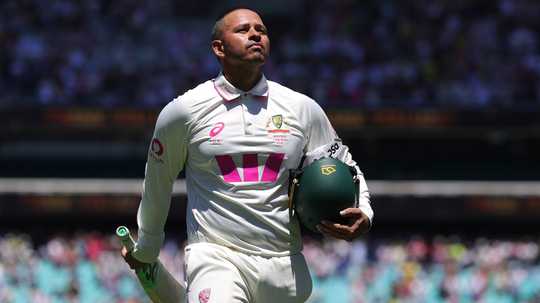
Former Australia batter Usman Khawaja has reignited debate over the 2018 Cape Town ball-tampering scandal, saying the use of sandpaper was known across the team and was not confined to the three players who received suspensions. His account challenges the version of events presented publicly in the aftermath and raises fresh questions about responsibility, Cricket Australia’s investigation and the long-term consequences for those involved.
Speaking to the Sydney Morning Herald and discussing the episode in his forthcoming autobiography, Sabr, Khawaja said the conduct was understood by players and staff. “It was all of us,” he said, rejecting the idea that the incident was solely the work of batter Cameron Bancroft, captain Steve Smith and vice-captain David Warner.
Khawaja also alleged that sandpaper had been used during the preceding Test against South Africa in Port Elizabeth, now known as Gqeberha. The claim adds a significant detail to an episode that has remained one of the most damaging controversies in modern Australian cricket.
What Happened in Cape Town?
The scandal came to light during the third Test between Australia and South Africa in Cape Town in March 2018. Television footage showed Bancroft concealing a small piece of sandpaper in his trousers after attempting to alter the ball’s condition. The images triggered an immediate investigation and a storm of criticism from fans, former players and cricket officials.
Smith later acknowledged that a group within the team’s leadership had discussed tampering with the ball. The fallout was severe: Smith and Warner were each banned from international and domestic cricket for 12 months, while Bancroft received a nine-month suspension. Smith was also prohibited from holding a leadership role in Australian cricket for a further period. Warner’s lifetime ban on captaining an Australian team was removed in 2024, and he subsequently became captain of the Sydney Thunder in the Big Bash League.
The sanctions focused on the three players most directly associated with the plan and its execution. But Khawaja says that framing did not reflect what he believed was the broader awareness inside the dressing room.
Khawaja’s Call for Collective Responsibility
Khawaja says he urged teammates to accept responsibility as a group, rather than allowing Smith, Warner and Bancroft to carry the burden alone. He recalled speaking to players in the dressing room after the match and telling them the incident should be treated as a team matter.
“We did this as a team,” Khawaja said, describing the position he had taken at the time. He acknowledged that this was not how events unfolded publicly, adding that the three sanctioned players were left to face the most visible consequences.
His remarks directly contradict a 2021 joint statement from Australia’s leading pace bowlers—Mitchell Starc, Pat Cummins and Josh Hazlewood—and spinner Nathan Lyon. The four denied knowing that the ball had been tampered with. Khawaja’s account therefore puts two sharply different recollections of the team’s awareness into the public record, although his claims do not by themselves establish what each individual knew.
Why Khawaja Says He Is Speaking Now
Khawaja said he had hoped the full story would emerge sooner, possibly from one of the players most affected by the sanctions. He said those individuals faced a difficult choice: speaking out could be dismissed as self-serving, while remaining silent allowed the existing version of events to stand.
In his view, another teammate needed to speak because Smith, Warner and Bancroft could not easily make the same claims without facing accusations that they were trying to shift blame. Khawaja said he did not want to reopen painful memories, but believed it was important to put his account on the record and give the three men a measure of what he described as justice.
He also recognised that the revelations could make life uncomfortable for people connected to the episode. Still, Khawaja said he considered honesty and a chance to move on more important than preserving silence. He suggested that some former teammates might feel relieved if the controversy could finally be discussed more openly.
Questions About Cricket Australia’s Investigation
One of Khawaja’s most striking claims concerns the investigation conducted by Cricket Australia after the Cape Town Test. He said he was never interviewed, despite sitting beside Bancroft during the match and believing he could have provided relevant information.
Khawaja said he expected the governing body to contact him but waited in vain. He has speculated that investigators may have known he wanted the team to accept collective responsibility and could have been prepared to speak candidly. That explanation is his interpretation; the available account does not establish why he was not interviewed.
His comments nevertheless renew scrutiny of how the inquiry was conducted, what questions investigators asked and whether the process captured the full range of knowledge within the squad. In a high-profile cricket investigation, the distinction between direct participation, prior knowledge and failure to report misconduct can be crucial. Khawaja’s account underscores why a clear record of interviews and findings matters when sanctions carry lasting personal and professional consequences.
A New Chapter in a Long-Running Cricket Debate
Khawaja said he spoke with Cummins before Australia’s recent tour of South Africa about his book and his intention to address the scandal. That conversation is notable because Cummins was among the bowlers who publicly denied knowledge in 2021. Khawaja’s comments do not disclose the substance of their discussion, but they show that he signalled his plans before the autobiography’s release.
The former opener retired from international cricket at the start of the year after the Ashes, closing a career that spanned major changes in the Australian team and the sport’s public culture. His decision to revisit Cape Town now gives his account added weight, while also inviting renewed debate about whether the team’s response in 2018 was complete.
For cricket supporters, the revelations are not simply a matter of revisiting an old controversy. They touch on leadership, team culture, accountability and how a sporting organisation should respond when misconduct is exposed. Any prediction about the effect of Khawaja’s claims should remain cautious: the comments may prompt further responses from former teammates or Cricket Australia, but they do not automatically settle the conflicting accounts.
What they do make clear is that the Cape Town scandal remains unresolved in the minds of some involved. Khawaja’s central argument is that the consequences fell disproportionately on three players, while a wider group shared responsibility. Whether his account changes public understanding will depend on how others respond and what further detail emerges from Sabr. For now, his intervention has reopened a defining chapter in Australian cricket—and renewed calls for a fuller explanation of what happened behind the scenes.