
Arsenal’s Carabao Cup Exit: What Arteta Reportedly Told Max Dowman After Red Card
Arsenal’s shock Carabao Cup defeat to Fleetwood Town ended with a dramatic red card, a tense exchange between players and a penalty shootout that sent the League Two side into the next round. But after the final whistle, attention also turned to a brief moment on the touchline: what did Mikel Arteta say to teenage prospect Max Dowman as the midfielder left the pitch?
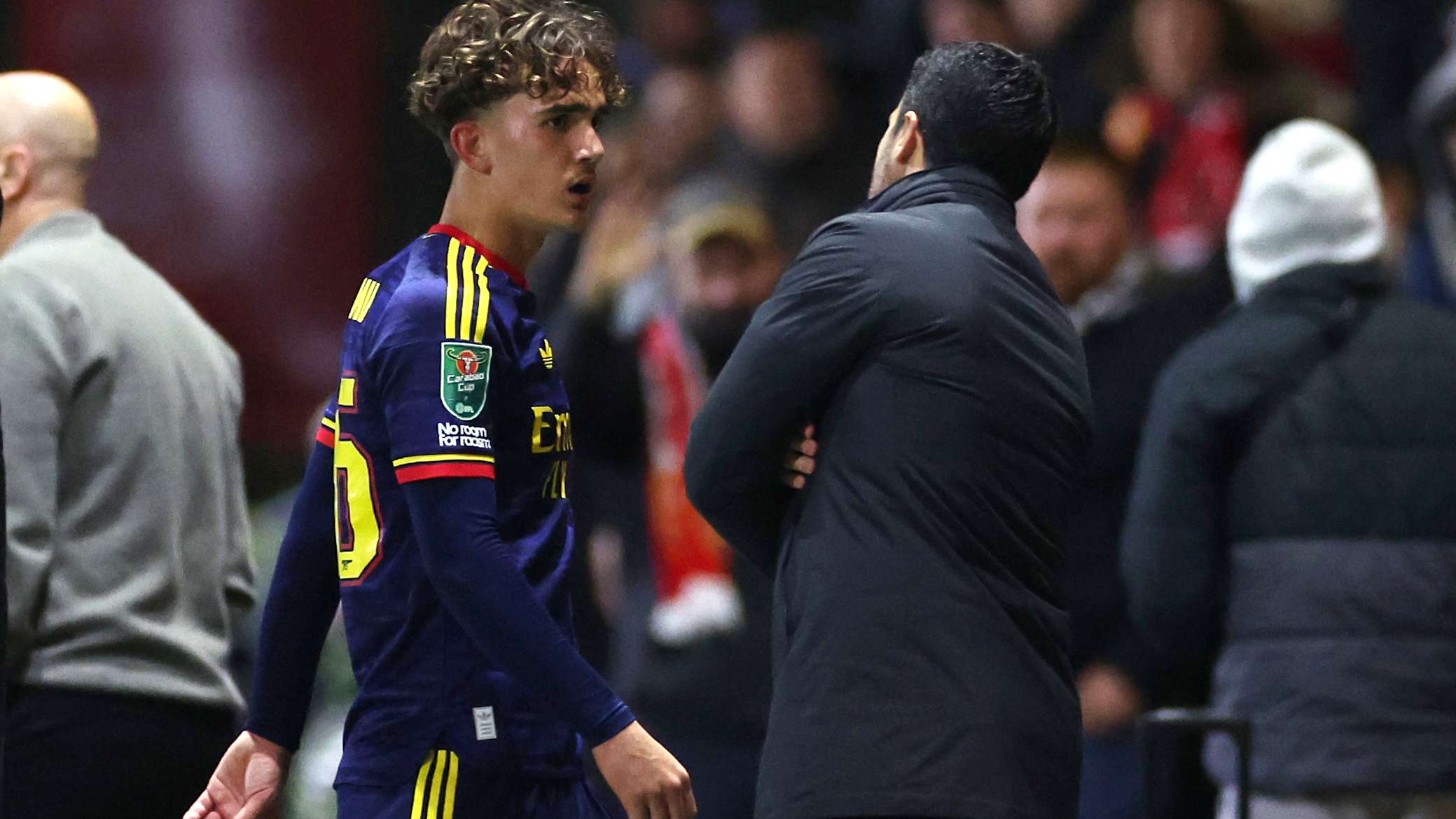
Speculation initially suggested the Arsenal manager had delivered a furious dressing-down after Dowman was dismissed late in the match. However, lip-reading expert Nicola Hickling offered a less confrontational interpretation. According to Football London, Hickling believes Arteta told the 16-year-old: “Go to the dressing room, Max.”
A promising performance ends in a costly dismissal
Dowman had been one of the young players attracting attention during the last-16 tie. The teenager showed confidence and composure in a high-pressure setting, competing against senior opposition and contributing to Arsenal’s efforts to progress in the competition. His involvement was a notable opportunity to demonstrate his potential on a prominent stage.
The evening changed in the 86th minute. Dowman kicked Fleetwood’s Harrison Neal and was shown a straight red card, leaving Arsenal to finish the match with ten players. The dismissal immediately raised the tension, with players from both teams becoming involved in a confrontation. What had been a competitive cup tie suddenly became a test of discipline and nerve.
For a young footballer, the incident is likely to be a difficult moment to process. Red cards can carry consequences beyond the immediate match, including suspension, and may prompt careful review by a club’s coaching staff. At the same time, one late challenge does not define a player’s career. How Dowman responds—in training and in future appearances—will be more important than the mistake itself.
Arteta’s brief message, according to a lip-reader
As Dowman walked past the Arsenal manager, Arteta leaned towards him and said something. The exchange was brief, and the precise words could not be confirmed from the moment alone. That uncertainty fuelled online discussion, with some observers assuming the Spaniard had reacted angrily to the dismissal.
Hickling’s reported reading points to a practical instruction rather than a public reprimand: “Go to the dressing room, Max.” If accurate, the comment may simply have reflected the usual procedure after a player is sent off. A dismissed footballer must leave the field and technical area, and the manager may have been directing Dowman away from the immediate confrontation.
Lip-reading accounts should be treated with caution, particularly when the exchange is short or filmed from an unclear angle. They can provide an interesting perspective, but they are not the same as an official confirmation. Neither Arteta nor Arsenal’s account of the incident is included in the reported interpretation, so the words remain attributed to the lip-reader rather than verified by the club.
Fleetwood complete a memorable cup upset
The red card was only one part of a remarkable night for Fleetwood. The League Two club held Arsenal to a 1-1 draw in normal time before winning the penalty shootout 5-3. The result eliminated the Premier League side from the Carabao Cup and delivered a major upset for the fourth-tier team.
For Fleetwood, the victory was built on resilience. Facing a club with greater resources and a deeper squad, they stayed in the contest long enough to force penalties, where composure proved decisive. Cup football often creates these opportunities: a determined underdog can turn a single match into a defining moment by defending well, taking chances and handling pressure from the spot.
Arsenal, meanwhile, will be left to consider how the tie slipped away. A draw after 90 minutes meant the outcome was decided by the shootout, but Dowman’s dismissal added another layer to the challenge. Playing with ten men late in a close match can disrupt a team’s shape, limit its attacking options and increase the physical burden on those remaining on the pitch.
What the result could mean for Arsenal’s young players
For Arsenal’s academy prospects, the match offered both encouragement and a lesson. Dowman’s selection and substantial involvement indicated that Arteta was willing to trust a young player in a demanding senior fixture. That opportunity itself is significant, even though the final minutes ended in disappointment.
Developing players are judged not only on technical ability but also on decision-making, emotional control and their response to setbacks. Dowman’s challenge will likely be reviewed as part of his development, with the focus on understanding the situation and making better choices next time. At 16, he has time to learn from the experience, and a single sending-off should be viewed in the context of a much longer career.
Arteta’s reported words may also be relevant to how the moment is interpreted. Rather than evidence of a heated confrontation, the brief instruction could suggest that the manager’s immediate priority was to get Dowman away from the flashpoint. Without confirmation, however, it would be premature to draw firm conclusions about Arteta’s feelings or any conversation that followed in the dressing room.
Looking ahead: prediction after a painful cup exit
Arsenal’s Carabao Cup campaign is over, while Fleetwood can celebrate a result that will be remembered as one of the competition’s standout surprises. The defeat may prompt questions about squad rotation, match management and discipline, but it does not automatically determine Arsenal’s prospects in their other competitions.
Any prediction about the team’s response will depend on how quickly the players refocus and whether Arteta can use the loss constructively. Arsenal have the depth and experience to move on, while the younger players involved can take valuable lessons from a high-stakes evening. For Dowman, the focus now is likely to be on learning from the red card and continuing his progress.
Fleetwood’s achievement, by contrast, offers a reminder of why knockout football remains so compelling. A fourth-tier side faced one of England’s biggest clubs, survived a late turning point and prevailed under penalty-shootout pressure. The result was a heavy blow for Arsenal’s cup ambitions—and an unforgettable night for Fleetwood.