
KL Rahul’s Century and Rishabh Pant’s Late Charge Put India in Control in Wellington
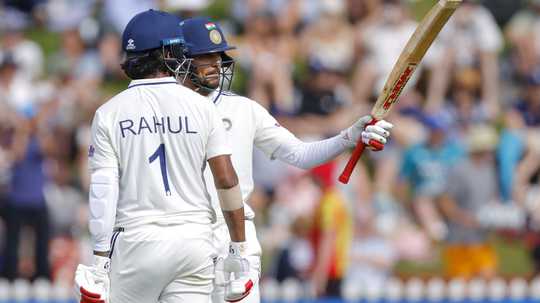
India seized control of the Test in Wellington after a remarkable batting display on the third day, piling up 486 for 4 to establish a 118-run lead over New Zealand. KL Rahul marked his first Test appearance in the country with a composed 136, while Shubman Gill came within two runs of a century. Devdutt Padikkal added a fluent 80, and Rishabh Pant finished the day unbeaten on 55 from just 55 deliveries.
The innings was notable not only for its volume of runs but for the depth of India’s contribution. Yashasvi Jaiswal had already made 85, meaning India’s top five all passed fifty in the same overseas Test innings for the first time. Rahul and Gill supplied the headline partnership, while Pant’s late acceleration ensured India turned a productive day into a commanding position.
New Zealand’s Patient Plan Meets India’s Resilience
New Zealand began the morning with a clear strategy: keep the ball on a disciplined line, make scoring difficult and use the wicketkeeper close to the stumps. With the surface expected to become slower and offer less bounce, the hosts appeared willing to wait for mistakes rather than force risky attacking fields.
The opening overs reflected that approach. Five of the first six were maidens, and Rahul and Padikkal had to concentrate on leaving well and defending securely. But the Indian pair did not allow pressure to become a stranglehold. They took singles when available and punished loose deliveries, steadily improving their strike rotation as the session wore on.
By the second hour, India had moved beyond 200. Padikkal reached another half-century, continuing an impressive run of form, while Rahul looked increasingly assured. The right-hander had shown patience against the seamers and was ready to attack when New Zealand introduced Glenn Phillips. Rahul cleared long-on for the first six of the match, pushing the partnership beyond 100 and signalling that India would not simply settle for survival.
Rahul moved into the nineties with a well-placed boundary through the covers. India went to lunch without losing a wicket in the morning session, adding 80 runs from 27 overs. The stand had become a substantial obstacle for a New Zealand attack that had started the day with discipline but was finding fewer ways to threaten.
Rahul Reaches a Milestone as Jamieson Breaks Through
Rahul continued after lunch and reached his 13th Test century with a single off Jacob Duffy. It was a significant achievement in his first Test outing in New Zealand, and his innings combined sound defence with selective aggression. He was supported by Padikkal, who benefited from a dropped chance at gully when Henry Nicholls could not hold on.
Padikkal made the most of the reprieve, finding the boundary regularly as the second-wicket partnership passed 150. New Zealand tried spin from both ends, with Phillips and Rachin Ravindra sharing a spell, but neither could break the stand. The hosts eventually turned to the second new ball as soon as it became available, and it brought the breakthrough they needed.
Kyle Jamieson produced a superb delivery to bowl Padikkal for 80, ending a partnership that had given India a firm platform. The left-hander had looked capable of making another three-figure score, but his innings remained a major contribution to the day’s momentum. India had scored 105 runs in the middle session and reduced the deficit to just 24 by tea.
Gill’s Aggression and Pant’s Power Push India Ahead
Gill joined Rahul with the pitch offering occasional low bounce, but the pair soon found ways to score. Gill opened his account with an edged four off Duffy and then struck several boundaries in the same over. His confidence grew quickly, and a six after tea took him past fifty and carried India into the lead.
The partnership between Rahul and Gill reached 91 before Rahul was dismissed, dragging a delivery from Nathan Smith onto his stumps while playing away from his body. His 136 had given India a commanding base, but Gill continued to keep the New Zealand bowlers from settling into a rhythm.
New Zealand used a review against Pant after an apparent edge while he attempted a hook, but replays showed the ball had come off his shoulder. India then successfully challenged an lbw decision against Gill, who survived Smith’s appeal after the decision was overturned. India passed 400 soon afterward, and Gill repeatedly answered pressure with boundaries, including a four and a six off Phillips as he moved into the eighties.
Pant initially played a supporting role, taking time to find his timing and giving Gill much of the strike. His first boundary came off a top-edged pull, but once he settled, the tempo changed dramatically. Pant attacked Duffy for two sixes and a four in one over, pushing India’s lead beyond 100. He reached his half-century from 55 balls and raised a century stand with Gill, contributing 55 of the partnership’s runs.
Late Wicket Keeps Gill Short of a Century
India added 142 runs in the final session, completing a remarkable 327-run day. Duffy endured a difficult spell, conceding 179 runs from 28 overs, but he had the final say in the day’s last over. Gill, on 98, was beaten by a delivery that went through the gate and hit the stumps, leaving the Indian captain visibly disappointed just short of a deserved century.
New Zealand also used its final review on the last ball of the day, appealing for lbw against Anshul Kamboj. The decision was not overturned, and India ended the day with Pant unbeaten and the advantage firmly in hand.
What the Score Means for the Test
India’s position is strong, but the match is not yet decided. New Zealand’s first-innings total of 368 means the visitors lead by 118, with six wickets still in hand. Pant’s presence gives India the opportunity to extend that advantage quickly, while the lower order will be tasked with adding runs if the hosts can remove him early.
The pitch’s slower pace and inconsistent bounce could become increasingly important as the game progresses. India’s batters have shown that patience, strike rotation and timely aggression can succeed on this surface. New Zealand, meanwhile, will need early wickets and greater control if it is to prevent the lead from growing beyond a manageable target.
For fans considering a cricket prediction for the remainder of the Test, India’s substantial lead and batting depth make the visitors the better-placed side at this stage. However, the outcome will depend on how effectively India converts its advantage into a fourth-innings challenge—and whether New Zealand can make the most of its next opportunity with the bat.
Brief scores: New Zealand 368; India 486/4 (KL Rahul 136, Yashasvi Jaiswal 85, Devdutt Padikkal 80, Shubman Gill 98, Rishabh Pant 55 not out). India lead by 118 runs.