
PCB Introduces Format-Based Central Contracts for Pakistan Men’s Team
The Pakistan Cricket Board (PCB) has introduced a new central-contract system for the senior men’s team, replacing its previous category-based structure with contracts linked to individual formats. The arrangement runs until June 30, 2027, and covers 38 players, including 19 placed in the Development category.
Under the revised model, players are contracted according to their roles in Test, one-day international (ODI) and T20 international cricket. Unlike last year’s list, which grouped players into categories ranging from B to D, the new system makes each player’s format-specific standing clearer. It also reflects the board’s effort to distinguish between established international responsibilities and longer-term development opportunities.
Only two players receive both Test and ODI contracts
Test captain Babar Azam and former T20I skipper Salman Agha are the only players named for both Test and ODI contracts. Notably, no player has been awarded a contract covering all three international formats, an indication that the PCB has chosen to define its commitments more narrowly rather than place a single group of players across the full calendar.
Four players have received Test-only contracts: Mohammad Abbas, Azan Awais, Sajid Khan and Saud Shakeel. Their selections point to a format-specific approach in which players can be recognised for their potential or value in the longer game without automatically receiving a place in the ODI or T20I contract groups.
Shaheen Shah Afridi, Pakistan’s ODI captain, has been awarded an ODI and T20I contract. Sahibzada Farhan, who leads the T20I side, has received a T20I-only deal. These allocations underline how the new structure is shaped around each player’s current international role, rather than a broad ranking that applies equally across formats.
Development contracts offer a route for emerging players
Half of the 38 contracted players are in the Development category, creating a substantial pathway for emerging talent. Several recent Test debutants—Razaullah, Tayyab Arif, Mohammad Taha, Ghazi Ghori and Saqib Khan—are among those awarded Development contracts.
That group is significant because central contracts can provide more than a financial arrangement. They can help players access structured preparation, coaching and clearer communication about their place in the national setup. For younger cricketers, a Development deal may offer a bridge between domestic performances and a sustained international career, even if it does not carry the same status as a senior format contract.
The size of the Development group also suggests that the PCB is seeking to broaden its pool of players available for future selection. A deeper bench can be valuable when Pakistan faces a congested schedule, injuries or changes in form. However, the effectiveness of the approach will depend on whether emerging players receive consistent opportunities to train, compete and move into the senior contract categories.
Mohammad Rizwan is the most prominent omission
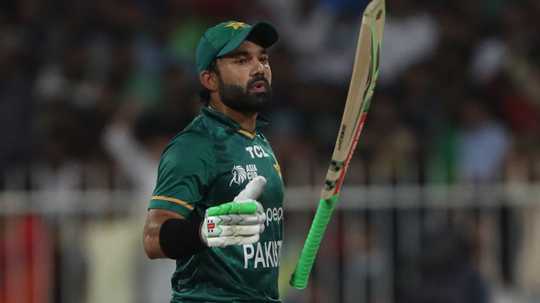
The most striking name missing from the new list is wicketkeeper-batter Mohammad Rizwan. He held a Category B contract last year, but does not appear among the players covered in the latest structure. Rizwan’s omission follows a period of off-field controversy and his departure from Pakistan’s tour of England before its conclusion.
His absence is likely to prompt discussion among supporters, particularly because Rizwan has been an important figure in Pakistan’s white-ball teams. Still, a central-contract decision should not automatically be read as a final verdict on a player’s international future. Selection, availability, performance and the board’s assessment of a player’s role can all influence contract decisions, and the PCB has not indicated through this list alone what future opportunities may arise for those omitted.
Rizwan is one of 13 players from last year’s contracts who have not been included this time. Saim Ayub and Hasan Ali, both previously in Category B, are also absent. Shan Masood has missed out as well, along with Abdullah Shafique, Mohammad Haris, Mohammad Nawaz, Noman Ali, Hussain Talat, Khurram Shahzad, Khushdil Shah, Mohammad Abbas Afridi and Mohammad Wasim Jnr.
What the new contract system could mean for Pakistan cricket
The format-based structure gives the PCB a more targeted way to manage its senior squad. Test cricket demands different skills and workload planning from T20 internationals, while ODI cricket requires its own balance of adaptability and specialist roles. Separating contracts by format may therefore help the board align its resources with the team’s needs in each competition.
For players, the system may also create clearer expectations. A Test-only contract, for example, identifies a player’s focus without implying that he must be part of every white-ball plan. Likewise, a T20I contract can recognise a specialist’s value in the shortest format. The arrangement could encourage more deliberate squad planning, although it may also lead to questions about how players move between contract groups as their form or responsibilities change.
There is no reliable prediction yet about how quickly the new structure will alter Pakistan’s results. Contracts alone cannot guarantee stronger performances; coaching, selection consistency, fitness management and domestic competition remain central. The model’s impact will become clearer over the coming months, as the team navigates its international schedule and the Development players seek to establish themselves.
For fans following Pakistan cricket, the announcement offers a useful snapshot of the PCB’s current priorities: a select group of established players assigned to specific formats, a large development pipeline and several notable omissions. The key measure of success will be whether the system produces a more prepared, competitive squad—and gives promising players a credible route into the senior team before the contracts expire in June 2027.