
India vs New Zealand 4th ODI: Team Changes, Weather Forecast and Match Prediction
India head into the fourth ODI against New Zealand with the series outcome already settled in one important respect: after the washout in Hamilton, the hosts can no longer win the series. New Zealand’s best remaining result is a draw, while India will look to make the most of the final two matches and test a reshaped lineup. The contest at Bay Oval in Mount Maunganui therefore offers more than a chance to add another result to the scorecard—it gives both sides an opportunity to assess players ahead of their upcoming Test commitments.
Rain has interrupted all three matches so far, making the forecast a major talking point for fans following the cricket series. Conditions appear more promising in Mount Maunganui, where clear weather is expected on Friday. That outlook should give the teams a better chance of completing a full game, although rain in the city a week ago is a reminder that New Zealand’s weather can change quickly.
Match details: When and where to watch
Match: Fourth ODI, India vs New Zealand
Date: Friday, November 13
Start time: 3:00 PM local time (7:30 AM IST)
Venue: Bay Oval, Mount Maunganui
New-look India face a batting reshuffle
India will take a different shape in Mount Maunganui, with Shreyas Iyer taking over the captaincy. Shubman Gill and KL Rahul are among the players leaving the ODI squad to join preparations for the Test assignment, alongside Anshul Kamboj and members of the coaching staff. Their absence creates valuable opportunities for players who have been waiting for a chance to establish themselves in the one-day setup.
Ishan Kishan is a likely candidate to open alongside Rohit Sharma, while Ruturaj Gaikwad and Tilak Varma are competing for a place in the middle order. The decision will depend on the balance India want: Gaikwad offers a composed top-order option, while Tilak can provide flexibility and a left-handed presence. Either selection would give the team management useful information about its batting depth.
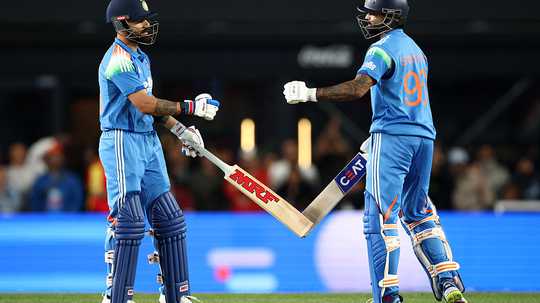
With Virat Kohli and Iyer expected to anchor the innings, the key question is how quickly the newer combination can settle. Bay Oval has not recently been a venue for frequent 300-plus totals, so India may need to value partnerships and smart rotation of strike as much as aggressive boundary-hitting. A steady start could allow the middle order to attack later, particularly if the pitch offers assistance to bowlers early on.
New Zealand also bring in fresh faces
New Zealand have made significant changes of their own. Finn Allen, Mitch Hay, Dean Foxcroft and Brett Randell have been added to the squad as several regular players depart to prepare for next week’s first Test at the Basin Reserve. Test captain Tom Latham is among those who have left the ODI group, leaving the hosts with a less familiar combination for this match.
Allen’s inclusion could add early-innings intent, while Foxcroft gives New Zealand another option in the middle order. The team will rely on experienced all-rounders and bowlers to provide stability around the new faces. Mitchell Santner is set to lead, with his left-arm spin and lower-order batting likely to be important if the surface proves slower or more challenging than expected.
Team news and probable playing XIs
New Zealand: Matt Henry may return after recovering from a head injury sustained in a training collision with Devon Conway. He has also been managing a low-grade quadriceps tear suffered during the second T20I, so his availability and workload will be worth monitoring. Blair Tickner remains unavailable while serving the ICC’s mandatory seven-day stand-down period after being struck by a ball while batting in the second ODI.
Probable New Zealand XI: Finn Allen, Tim Seifert (wk), Will Young, Nick Kelly, Michael Bracewell, Mitchell Santner (c), Dean Foxcroft, Kyle Jamieson, Matt Henry, Jacob Duffy, Matt Fisher.
India: Kishan is expected to be considered as Gill’s replacement at the top, while Gaikwad and Tilak are options to fill the vacancy left by Rahul. Mohammed Siraj could also feature, having last played an ODI against the West Indies. His experience and ability to generate movement could be particularly useful if the Bay Oval pitch offers early assistance.
Probable India XI: Rohit Sharma, Ishan Kishan (wk), Virat Kohli, Shreyas Iyer (c), Ruturaj Gaikwad or Tilak Varma, Naman Dhir, Axar Patel, Auqib Nabi, Mohammed Siraj, Gurnoor Brar, Arshdeep Singh.
Bay Oval conditions and match prediction
Clear conditions are forecast for match day, offering a welcome change after a series repeatedly disrupted by rain. The Bay Oval surface could nevertheless make batting demanding. Recent ODIs at the venue suggest that bowlers may have a meaningful role, and the last time a side passed 300 there was in February 2020, when New Zealand made 300 for five while chasing India’s 296 for seven.
That history does not guarantee a low-scoring game, but it points toward a contest in which disciplined bowling, careful shot selection and partnerships could decide the outcome. The team batting first may need to resist the temptation to force the pace before understanding the surface. For the chasing side, preserving wickets through the middle overs could be crucial if the pitch slows down.
Match prediction: India appear to have the stronger overall depth, but the number of changes makes this a less straightforward prediction than the series position might suggest. New Zealand’s home conditions and familiarity with Bay Oval could keep the contest close, particularly if their bowlers strike early. India’s experienced core—Rohit, Kohli and Iyer—may give them a slight edge, provided the new batting combination adapts quickly and the match is not affected by weather.
Players’ comments underline the value of adaptability
New Zealand wicketkeeper-batter Tim Seifert praised India’s young pace attack for adjusting to local conditions, noting that international teams must adapt to both the pitch and the opposition. His comments highlight a central theme of the series: success in New Zealand often depends on reading conditions quickly rather than relying on reputation alone.
India’s Auqib Nabi, meanwhile, stressed that skill matters more to him than raw speed. He described pace as an advantage but said the abilities developed in domestic cricket would be important at international level. His approach will be tested against a New Zealand lineup containing aggressive batters and players familiar with the demands of home conditions.
With both teams experimenting and a clearer forecast offering hope of uninterrupted cricket, the fourth ODI should provide a useful examination of squad depth. For India, it is a chance to see whether its emerging options can handle responsibility. For New Zealand, it is an opportunity to finish the series strongly and build confidence before the Test campaign begins.