
Al-Nassr’s AFC Champions League Elite hopes questioned by Fahad Al-Hariafi
Former Saudi Arabia international and Al-Nassr star Fahad Al-Hariafi has delivered a blunt assessment of the club’s prospects, arguing that the current squad is not equipped to win the AFC Champions League Elite without significant reinforcements. While he believes Al-Nassr can still compete for domestic honours, he says the demands of a long continental campaign expose weaknesses that cannot be ignored.
Al-Hariafi’s comments have added to the debate among supporters about the club’s transfer strategy, squad depth and season targets. His message was not that Al-Nassr lacks quality altogether, but that success across multiple competitions requires reliable alternatives in key positions—and a stronger balance across the squad.
Al-Hariafi calls for a left-back signing
Speaking on the television programme Dawrina Ghair, Al-Hariafi identified left-back as an area Al-Nassr should address. He said the club needs to strengthen before it can realistically expect to challenge the leading sides in Asia, especially in a competition where injuries, suspensions and fixture congestion can quickly test a team’s depth.
“Al-Nassr needs to sign a left-back,” he said, describing his pessimism about the club’s continental chances as realism rather than an attempt to discourage fans. He added that he hopes the team can win the Saudi Super Cup and the league, but urged supporters not to treat the AFC Champions League Elite as a realistic target with the squad as it currently stands.
That distinction is important. Al-Nassr may have enough individual talent to produce strong performances, but tournament football is rarely decided by a starting eleven alone. Teams must maintain their level over a series of demanding matches, often while balancing domestic fixtures and travelling across the region. In that setting, a shortage of dependable replacements can become a decisive weakness.
Squad depth and transfer choices under scrutiny
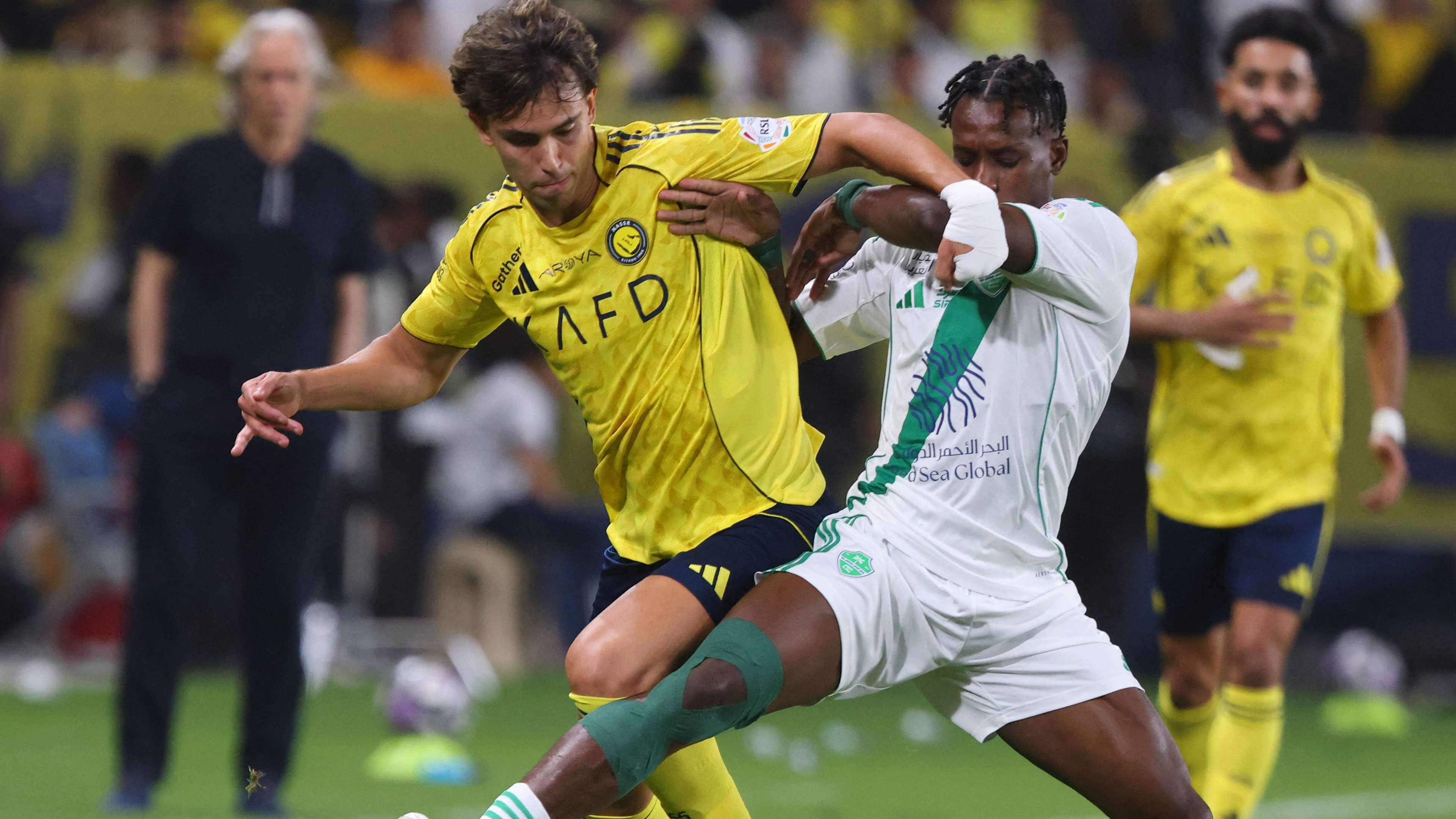
Al-Hariafi said Al-Nassr would find it difficult to sustain a deep run in the competition without fresh additions. He suggested that the team’s prospects could improve if Kingsley Coman returns to action, but argued that even his availability would not resolve every concern. The club, he said, still has several areas that need attention if it is to go toe-to-toe with rivals such as Al-Ahli, Al-Qadsiah and Al-Hilal.
His criticism also extended to the club’s recent recruitment decisions. Al-Hariafi said he would have preferred Al-Nassr to retain Marcelo Brozovic rather than sign Samuel Costa, a comment that reflects wider questions about how the club has allocated its resources. Transfers are judged not only by the reputation of the incoming player but by how well a signing fits the team’s tactical needs, improves depth and complements the players already in the squad.
For Al-Nassr, strengthening the defence and maintaining balance through midfield could be just as important as adding another high-profile attacker. A title challenge demands consistency, and that often comes from having players who can step in without forcing major changes to the team’s structure.
Domestic trophies offer a more realistic prediction
Despite his concerns about Asia, Al-Hariafi sees a more achievable route to success at home. He said winning the Saudi Super Cup would represent a successful and memorable season for Al-Nassr given the current group of players. The league, too, remains a significant target, although the competition from Saudi Arabia’s leading clubs means the team would need to deliver consistently over the campaign.
That assessment offers a more measured football prediction than simply writing off the season. Al-Nassr’s chances will depend on factors including player fitness, the return of key squad members, the form of its main rivals and whether the club can strengthen during the transfer window. A domestic trophy could provide early momentum, while a strong league run would demonstrate that the team can maintain its level over a longer schedule.
The Saudi Super Cup is scheduled to take place in Kuwait from 19 to 23 December 2026. Al-Nassr are set to face Al-Khaleej on 20 December at Jaber Al-Ahmad International Stadium, while Al-Ahli and Al-Qadsiah meet on 19 December. The winners will advance to the final on 23 December, leaving Al-Nassr two victories away from lifting the trophy.
The format gives the competition a sharp, high-stakes feel: there is little room to recover from a poor performance, and preparation can matter as much as long-term squad depth. For Al-Nassr, the semi-final against Al-Khaleej will be an immediate test of whether the team can turn its domestic ambitions into results.
Al-Hariafi also criticises Al-Ahli’s coach
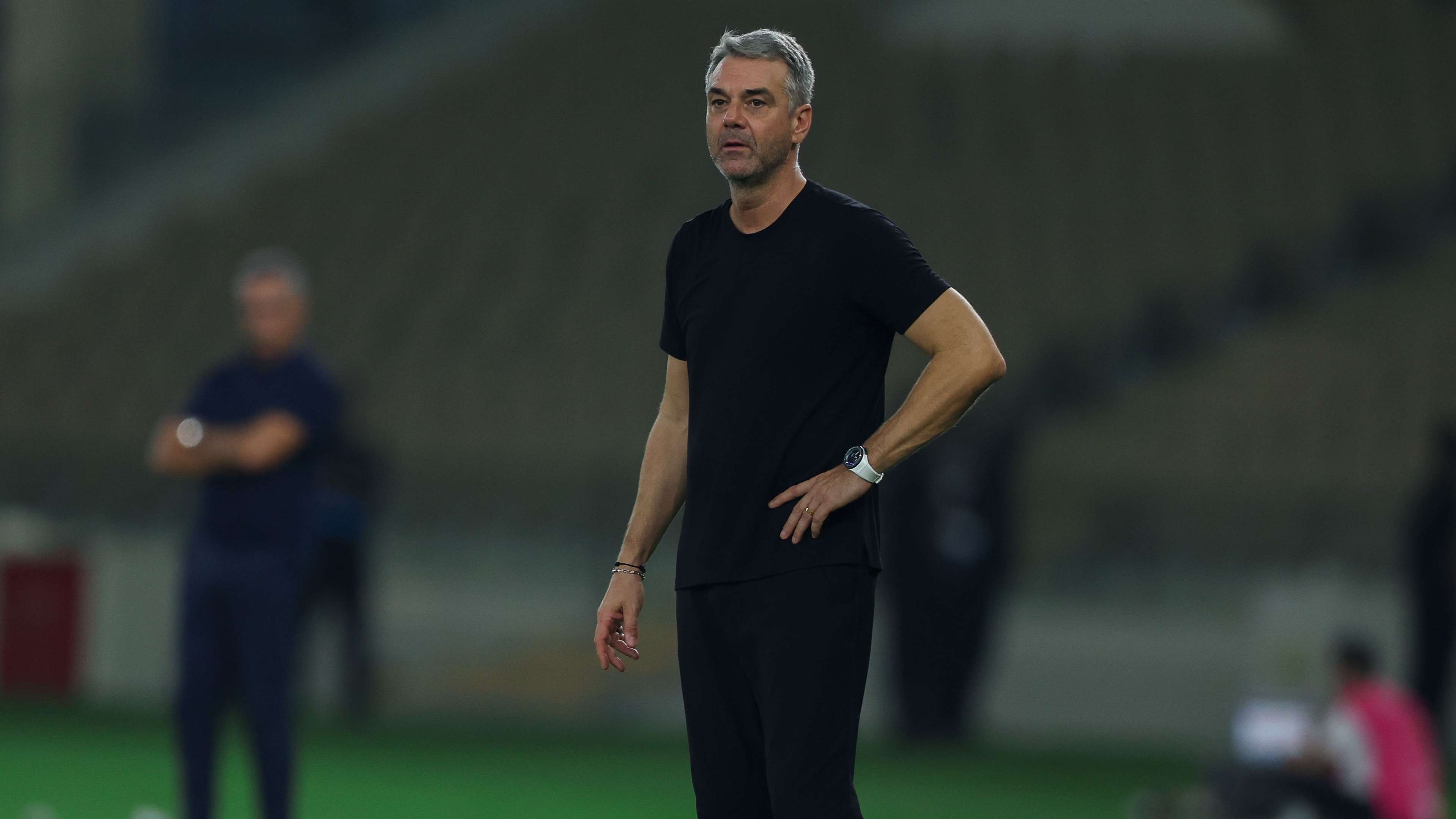
Al-Hariafi did not limit his comments to his former club. He also questioned whether Al-Ahli coach Marino Pusic is meeting the expectations of the club’s supporters. He argued that Pusic has yet to make a convincing impact and criticised his team selection, claiming that some players being used do not merit their places.
Al-Hariafi said the coach must correct the situation or consider leaving. The remarks are likely to intensify discussion around Al-Ahli’s performances, particularly as the club prepares to face Al-Qadsiah in the Super Cup semi-final. As with his comments about Al-Nassr, his criticism centres on whether a team’s choices and performances match the ambitions set by its supporters.
A demanding season ahead for Saudi Arabia’s leading clubs
Al-Hariafi’s assessment highlights the pressure facing Saudi Arabia’s top teams as they pursue domestic and continental success. For Al-Nassr, the central question is whether its current squad can deliver across several competitions—or whether targeted recruitment is needed to turn potential into a genuine title challenge.
His outlook is cautious, but not without hope. The Super Cup and league remain within reach, in his view, while the AFC Champions League Elite presents a tougher test unless the club improves its depth. The coming months, including the availability of key players and any transfer activity, will help determine whether that prediction proves accurate.